Introduction to one of the episodes – social networking sites
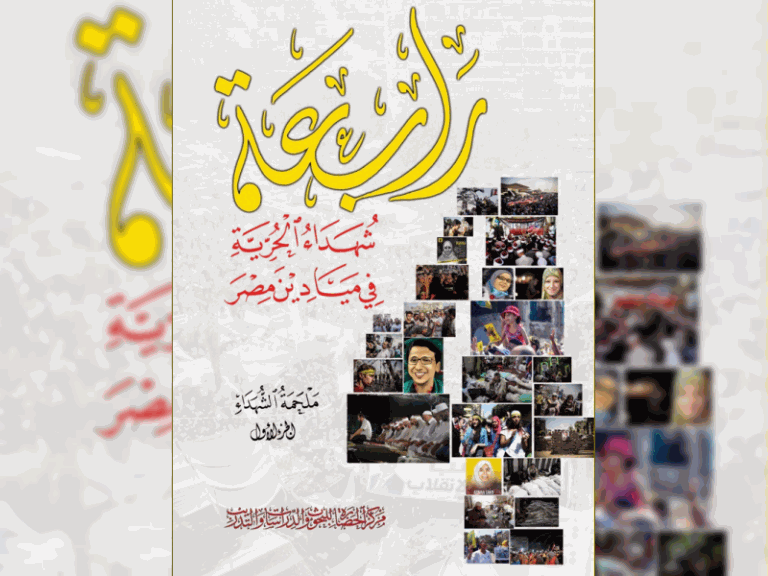
“It is time for you to leave, O state of pigs.” With this slogan, the Egyptian pharmacist Ali Abdullah founded his distinctive program on the YouTube network, for which he chose the name “Alesh Khana”, through which he presents a clear cultural dose, highlights the contradictions in the performance of the media, and addresses historical and political phenomena with rational evidence. He created his channel at the end of 2013, after the violent dispersal of the Rabaa al-Adawiya and Nahda sit-ins and the fall of thousands of victims. His views accelerated until it reached 22,136,983 views, making his channel occupy third place in achieving annual profits for Arabic programs on the YouTube network. Ali Abdullah’s name was inspired by the colloquial Egyptian phrase “alsh”, which means a kind of unjustified “joke” with no known purpose. As for the syllable “khana”, it is a borrowing from the Ottoman heritage in Egypt, which means an area or area. Ali Abdullah introduces himself to… Published He told him on the program’s Facebook page by saying: “I was born in December 1980, married and have 4 daughters, in order: Jannah – Aisha – Halima – Amina. Graduate of the Faculty of Pharmacy from one of the universities in Egypt and residing outside Egypt since 2005.” Regarding his interest in politics and participating in it, Ali continues: “I returned to Egypt with those who returned on January 28, 2011, secretly, without anyone knowing except the mother of the children, and I stayed with those who stayed in Tahrir until February 12, and then I returned to my work.” Regarding the reasons for his decision to launch the program, he says: “More than 10 of my friends, neighbors, and children I knew died in the dispersal. They were 6 years old and memorized the Qur’an in the mosque. I have not seen them since the day I traveled. They grew up and were martyred at the hands of the thugs who rule the country, not to mention the injured and the detainees,” according to his description. He continued: “In truth, I felt responsible. I was outside the country and not doing anything useful. I decided to focus on videos more and postponed the master’s degree, which I was close to finishing.”
Banner titles
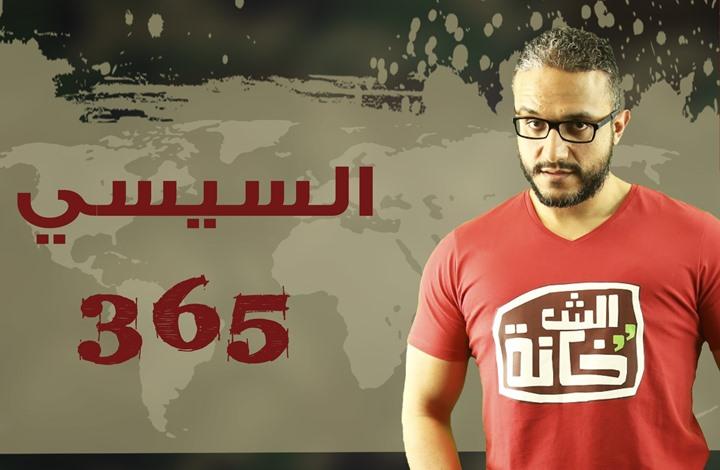
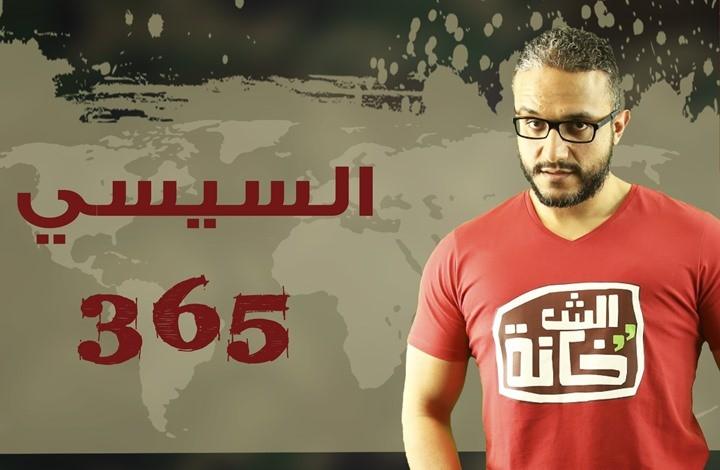
What distinguishes the program is the multiple series that cover dozens of episodes, as follows: 1- Balhajayes program: during which 67 videos were presented. 2- Five Politics programme: 10 videos were presented 3- Etakr Take Me Beside You programme: 18 videos were presented 4- Live broadcast: 11 videos were presented 5- Sinai: A special file about Sinai, 3 videos were presented 6- Iran: An analysis of the Iranian revolution was presented in 5 videos 7- Palestine: The story of the Palestinian uprising was presented in 8 videos 8- On What You Watch: 12 videos. 9- Military Doctrine Series: From Jihadism to Virginity Tests in 7 Videos 10- Algeria Revolution Series: The Black Decade in 6 Videos 11- A Guide to Civil War for Beginners in 5 Videos 12- Sisi 365: A review of Sisi’s first year in the presidency in 4 videos
Pause with one of its episodes
Playing connects your browser to YouTube. Privacy
One of the program’s episodes dealt with Canadian leftist Naomi Klein’s famous book, “The Shock Doctrine,” which talks about the topic of “disaster capitalism,” and which tells the stories of the American intelligence services’ interference in exploiting disasters in some countries to impose a certain economic pattern. The book emphasizes a psychological theory, which is the psychological shock that is followed by the loss of the shocked person’s ability to resist political and economic issues that he would have rejected in a situation different from the shock situation. The book demonstrates – through the stories of economic transformation in Chile, Argentina, and Britain during the Thatcher era – how shock was very central in imposing economic transformations. The book also goes through the story of the economic and political transformation in the former Soviet Union through Boris Yeltsin’s economic policies, his besiegement of Parliament, and his imposition of the transformation pattern with tank force. The “Alesh Khana” program tried to monitor the book’s examples on the Arab reality, in which observers believe that the shock theory was applied in one way or another. The episode begins by discussing the most prominent idea from Ali’s point of view in the book, which is about the file of psychological experiments related to trauma and the “blank slate,” where psychological experimentation laboratories had developed a theory of torture based on using torture to erase the victim’s beliefs and thoughts and then rebuild them again, and how those experiments were transferred to global policies.
To watch episodes of the program, click here Link.