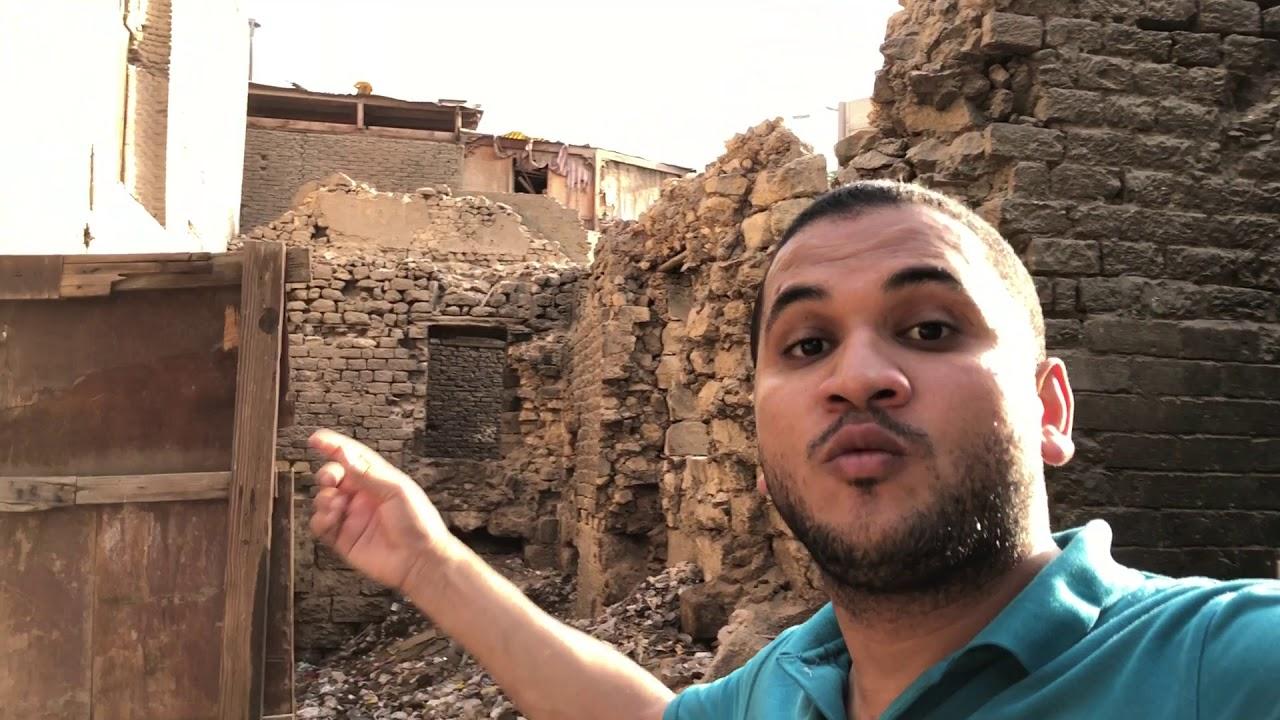
With a mobile phone camera, a remarkable abundance of knowledge, and a lot of challenge, historical researcher Youssef Osama sets off through the streets of Old Cairo, between the alleys and the alleys, bypassing walls and buildings around which garbage has accumulated, to wipe with his hands, his camera, and his free-flowing tongue the dust from banners bearing the names of the heroes of an immortal period in the history of ancient Egypt, the Fatimid, Ayyubid, and Mamluk states, and reveals the unprecedented neglect it has fallen into, and once again reveals its glorious face that contains within it. The greatness of Cairo and its Islamic leadership. Youssef’s initiative to introduce forgotten Islamic monuments in ancient Egypt was called “Mamluks”, and he launched a page for it on the Zarqa social media platform, Facebook, through which he broadcasts his periodic episodes, where he holds his mobile phone in a “selfie” manner and begins explaining the history of the place he is visiting, subsequently garnering thousands of likes, comments, shares, and reactions.
The idea of the initiative
Youssef Osama said, in a press interview, that his field of study is Islamic antiquities, and it is also his field of work, as he works as a researcher in Islamic history. The matter began about two years ago when some of his friends asked him to introduce them to the history of some Islamic antiquities, so he began taking them on tours to explain to them the history of these Islamic antiquities. Over time, a number of his friends began to invite other people he did not know. After a year of those tours, “Youssef” thought of filming videos of these tours and publishing them on his Facebook page, and these are the videos that began to be received. Great acceptance from viewers. At the beginning, the interaction was limited to those interested in historical affairs, until one of Youssef Osama’s videos achieved great popularity. It was a video about the “Al-Jabkhana” or the huge weapons factory that Muhammad Ali built to arm the Egyptian army, which is located in the Establ Antar area and is today facing conditions of great neglect. The video achieved 200,000 views on Osama’s page, in addition to tens of thousands of views on other pages that transmitted the video about him.
Initiative objectives
Osama confirms that Egypt has many forgotten and unknown monuments, and says: “If we succeed in marketing them, we can create the equivalent of 5 Moez Streets. I made 36 tours, not a single one of them was repeated,” adding: “We have, for example, a great Jewish heritage in the Jewish Quarter, which has three Jewish synagogues that we can, for example, market abroad. We also have the Red Darb Road and Bab al-Wazir Road, which can be turned into Moez Street for each of them, and there is also one in Bulaq Abu Al-Ela. Mosques and heritage unparalleled in the world.” Osama continues, saying: “There is a global trend to explore the antiquities of the Mamluk state. In the United States, there are specialized institutes to study the antiquities of the Mamluks, the state that was established on our land and Cairo was its capital for 276 years. Also, the American University’s publications on Egyptian history this year, for example, were mostly about the Mamluk state.”
Obstacles facing the initiative
Youssef asks the state to help him by granting him the necessary permits to film, stressing that the difficulty and danger of the places do not concern him much, but the difficulty he may face in not understanding what he is doing is more important, especially from some official bodies. He said: “One time, the antiquities police stopped me at the Jewish synagogue on one of the tours, and they asked to see the videos that I was filming and they started talking to me about them. After that, I preferred, for example, not to go again to the area of ancient Egypt.” Youssef Osama continued his speech: “I want what I do to remain officially, so that I can present my work and I am not afraid that my words will upset anyone or that they will understand that I am attacking the state or even antiquities inspectors when forgotten antiquities appear. I do not want money. What matters to me is that people learn and know their history. Myself, Egyptians know the treasure that is among them and they do not feel it.”
Initiative recommendations
Youssef Osama believes that there is a problem currently facing the state in caring for these antiquities, saying: “The state was exposed to difficult circumstances after the January 25 revolution. We had 12 million tourists entering Egypt and carrying with them hard currency. The state was taking this money and pumping it back into huge archaeological restoration operations such as the restoration of Al-Muizz Street, but since 2011 the number of tourists has decreased and all these initiatives have stopped.” Youssef believes that there is a problem in educating citizens about these forgotten antiquities of their history, continuing: “We must also educate people about the importance of these antiquities, and that they are not their private property or just neglected stones, but rather they are important antiquities and must be developed, and the citizen must be aware of the valuable antiquities surrounding him, and there must also be a guard for these antiquities.”
Pause with one of the initiative’s episodes
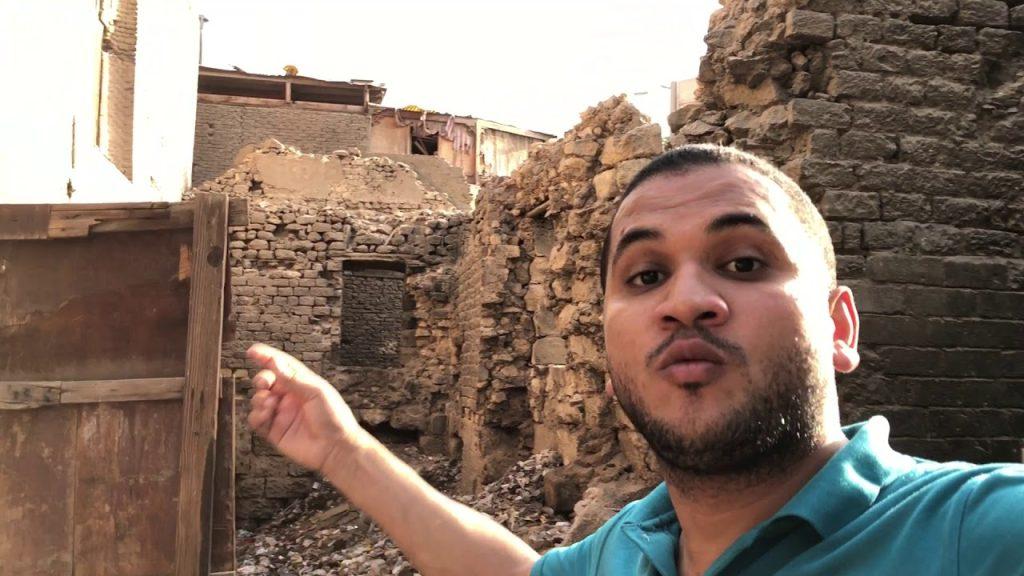
What distinguishes “Osama” is that he goes to unknown monuments that not many people have heard of or visited, and that is in difficult circumstances. Osama tells of the trip up the “Shaheen Al-Khalouti” Mosque, saying: “We rented a ladder from one of the educationists in the cemeteries located under the Mokattam Mountain, and he placed the ladder for us on the roof of one of the huge cemeteries. Then I and five of my friends took me climbing Mount Mokattam until we reached the interior of the Shaheen Al-Khalouty Mosque, and I started photographing.
Playing connects your browser to YouTube. Privacy
Unlike the pictures taken of the Shaheen Al-Khalouti Mosque from afar, there are not many pictures of the mosque from the inside, and Osama is considered one of the few who transferred a picture of the inside of the mosque, and even climbed its dilapidated minaret to explain from above the architecture of the building, and the most important landmarks inside it, such as the “Sufi retreats” or their holes in the heart of Mount Mokattam, and the religious importance of Mount Mokattam in the perceptions of early Muslims. Now, the tours that Youssef started among his friends two years ago have developed today on his page. Youssef explained that the last tour involved 45 people. There are also official bodies that have offered to make these videos professionally, and there is currently a request from Voice of Arab Radio to give him half an hour a week to introduce our forgotten antiquities.