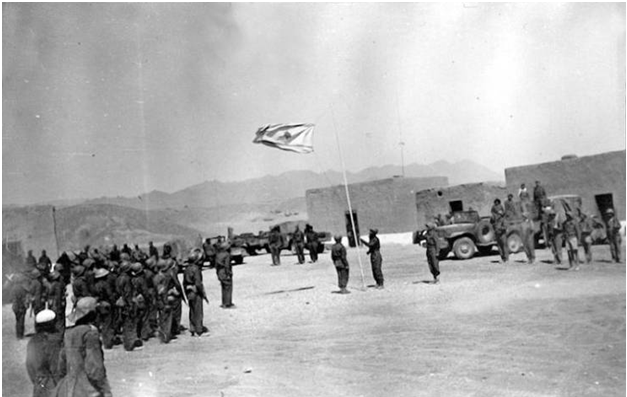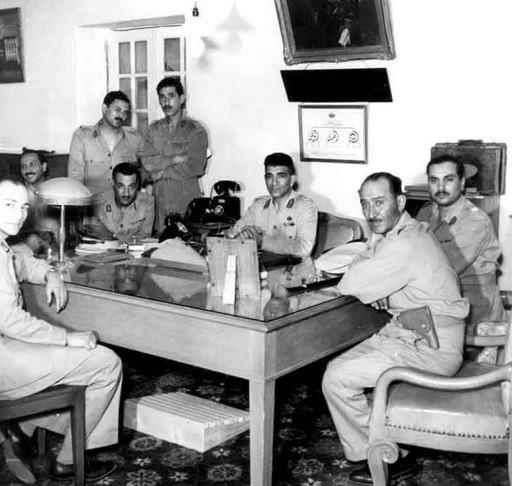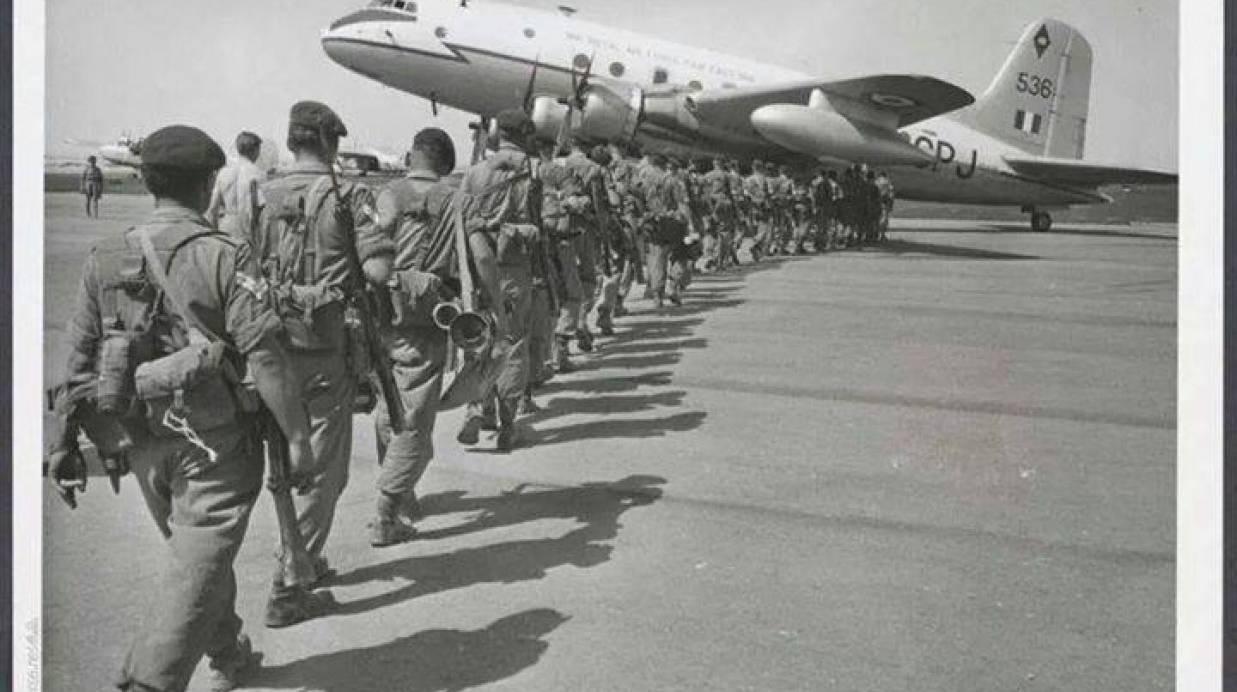
After a colonization that lasted 73 years, nine months and seven days, the last British soldier left the British base in the Egyptian Suez Canal on June 13, 1956, in implementation of the Evacuation Agreement (its official name: the Evacuation Agreement from the Canal Area) signed on October 19, 1954, between the British colonial forces and the Egyptian government formed after the army took control in July 1952, headed by Field Marshal Mohamed Naguib, and signed by the Prime Minister of Egypt at the time, Gamal Abdel Nasser. Although the July regime sought to attribute the evacuation to itself, and market it as one of the achievements of the army movement against the monarchy, the British military base in Suez was the last remaining British colonial base after the British emptied their camps in response to the texts of the 1936 treaty between royal Egypt and Britain, which stipulated that British forces would withdraw to the Canal Zone within eight years (i.e. in 1944), in preparation for the complete evacuation within 20 years at the end of 1956, under the pretext of ending Egypt was able to rebuild its army to take over the security of the Suez Canal, after the army was demobilized after the Orabi Revolution. Indeed, the first stages of the evacuation took place in 1945 when the British forces withdrew from the Cairo and Alexandria barracks, and King Farouk raised the Egyptian flag at the Citadel barracks in Cairo and the Kom el-Dikka barracks in Alexandria. The British forces were then stationed in the canal area.
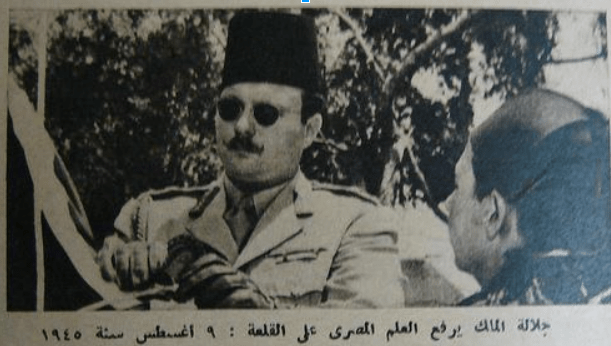
- The moment the Egyptian flag was raised on the castle
In October 1951, the negotiations of Mustafa al-Nahhas’s government with the British government faltered after the latter’s slowness in implementing the agreement, which led to Egypt announcing the unilateral cancellation of the 1936 agreement, and considering the British army an occupation army, and then declaring armed struggle in the Canal Zone. To add to the challenge, Egypt declared Sudan an integral part of Egypt, contrary to what was stipulated in the 1936 agreement regarding Sudan’s status remaining under British military rule and Egyptian administrative rule together, and King Farouk named himself King of Egypt and Sudan. With the army seizing power at the end of the same year in 1952, the new military government reopened channels of communication with British colonialism to activate the rest of the provisions of the 1936 agreement. However, Britain adhered to Sudan’s secession from Egypt before proceeding to complete the terms of the agreement requiring the withdrawal of the rest of its forces from the canal. On October 19, 1954, during the era of the late President Mohamed Naguib, the then Prime Minister of Egypt, Gamal Abdel Nasser, announced the signing of the evacuation agreement from the Canal Zone, without revealing its further details. A week later, Egyptian public opinion was preoccupied with the Manshiya incident, in which the Egyptian regime claimed that Prime Minister Gamal Abdel Nasser had been assassinated on October 26, 1954. Events accelerated, and on November 14, 1954, Mohamed Naguib was overthrown and a leadership council took over. The revolution managed the affairs of the country, headed by Gamal Abdel Nasser, who also continued to hold the position of Prime Minister. On January 1, 1956, Sudan gained self-rule after a referendum on its secession from Egypt. Immediately after Sudan’s independence, the British forces packed their bags and began to carry out the evacuation process from the last camp on the canal, with the last of their soldiers leaving on June 13, 1956, amidst the Egyptian media’s acclaim for the late President Gamal Abdel Nasser, as the savior of Egypt from the occupation and the most deserving of its leadership…which is what actually happened to him on June 23, 1956, when he assumed the position of President of the Republic, and continued to retain the position of Prime Minister.
Text of the agreement
The Council of Ministers, after reviewing the Constitutional Declaration issued on February 10, 1953, and Law No. 637 of 1954 approving the agreement, its two annexes, the exchanged letters attached to it, and the agreed upon minutes, concluded between the government of the Republic of Egypt and the government of the United Kingdom of Great Britain and Northern Ireland and signed in Cairo on October 19, 1954. Based on what was presented by the Minister of Foreign Affairs, it decided: Article 1 – Effective as of October 19, 1954. 1954 by agreement, its annexes, the exchange of letters annexed thereto, and the agreed minutes, concluded between the government of the Republic of Egypt and the government of the United Kingdom of Great Britain and Northern Ireland, signed in Cairo on October 19, 1954, the text of which is attached to this decision. Text of the Agreement of October 19, 1954: The Government of the Republic of Egypt and the Government of the United Kingdom of Great Britain and Northern Ireland, desiring to establish Egyptian-English relations on a new basis of mutual understanding and close friendship, have agreed to the following:
Article 1:
Her Majesty’s forces will be completely evacuated from Egyptian territory in accordance with the schedule shown in Part (A) of Appendix No. (1) within a period of twenty months from the date of signing the current agreement.
Article 2:
The Government of the United Kingdom declares the termination of the Treaty of Alliance signed in London on the twenty-sixth of August 1936, as well as the Agreed Minutes, the Mutual Memorandums, the Agreement on Exemptions and Privileges Enjoyed by British Forces in Egypt, and all other agreements arising from it.
Article 3:
Parts of the current Suez Canal base remain. It is shown in Appendix A of Appendix No. (2) in a usable condition and prepared for immediate use in accordance with the provisions of Article Four of the current agreement. To achieve this purpose, it is organized in accordance with the provisions of Appendix No. (2).
Article 4:
In the event of an armed attack by a country from abroad on any country that, upon signing this agreement, was a party to the Mutual Defense Treaty between the Arab League countries signed in Cairo on the thirteenth of April 1950, or on Turkey, Egypt shall provide the United Kingdom with the facilities that may be necessary to prepare the base for war and manage it effectively. These facilities include the use of Egyptian ports within the limits required by extreme necessity for the aforementioned purposes.
Article 5:
In the event that British forces return to the Suez Canal base area in accordance with the provisions of Article (4), these forces will evacuate immediately as soon as the fighting referred to in that article stops.
Article 6:
In the event of a threat of an armed attack from a country from abroad on any country that, upon signing this agreement, is a party to the mutual defense treaty between the Arab League countries, or on Turkey, consultation will take place immediately between Egypt and the United Kingdom.
Article 7:
The Government of the Republic of Egypt provides aircraft passage facilities as well as disembarkation facilities and aviation services related to the notified flights of Royal Air Force aircraft. The Government of the Republic of Egypt shall treat these aircraft with regard to permission for any flight, no less than it treats the aircraft of any other foreign country, with the exception of the states parties to the Mutual Defense Treaty between the Arab League countries. The facilities for disembarkation and flight services referred to above shall be granted at the Egyptian airports at the base of the Suez Canal.
Article 8:
The two contracting governments acknowledge that the Suez Maritime Canal – which is an integral part of Egypt – is a waterway of international importance from economic, commercial and strategic aspects, and express their determination to respect the agreement guaranteeing freedom of navigation in the canal signed in Constantinople on the twenty-ninth of October 1888.
Article 9:
(a) The United Kingdom Government may transfer any British missions to or from the base at its discretion. (b) The tasks may not exceed the amount agreed upon in Part (c) of Appendix No. (2) except with the approval of the Government of the Republic of Egypt.
Article 10:
The present Agreement does not affect, and shall not be construed as affecting, in any way the rights and obligations of the Parties under the Charter of the United Nations.
Article 11:
The annexes and attachments to this agreement are considered an integral part of it.
Article 12:
(a) This agreement will remain in force for seven years from the date of its signing. (b) The two governments shall consult during the last twelve months of that period. To decide what measures may be necessary upon termination of the agreement. (c) This Agreement shall terminate seven years from the date of its signing, and the United Kingdom Government shall transfer or dispose of such property as may then remain to it at the base unless the Contracting Governments agree to extend this Agreement.
Article 13:
The current agreement shall be considered effective from the date of its signature, and documents for its ratification shall be exchanged in Cairo as soon as possible. In recognition of the above, the authorized commissioners signed this agreement and affixed their seals to it. It was issued in Cairo on the nineteenth day of October 1954 in two copies in the Arabic and English languages. Both texts are considered equal in officiality.
Signatures:
Gamal Abdel Nasser H. A. Neteng Abdul Hakim Amer R. S. Stevenson Abdul Latif Al-Baghdadi R. Benson Salah Salem Mahmoud Fawzi, but what must be clearly pointed out is that the withdrawal of British forces from Egypt was the result of a long military and revolutionary struggle, beginning with Ahmed Orabi’s revolution against the invasion of British fleets and armies, the 1919 National Revolution led by Saad Zaghloul, the people’s uprising after the end of World War II, and the strike of all sects, including police officers who staged a sit-in in their clubs in October 1947 and April. 1948, and the armed struggle against the British forces in the Suez Canal immediately after martial law was lifted after the end of the Palestine War, and the continuation of this struggle after the establishment of the army movement in July, 1952, until the evacuation was achieved on June 18, 1956, after thousands of martyrs in a long path of struggle and sacrifices.