
A state of great panic prevailed throughout the world, especially the European continent and Britain, after news spread of the new strain of the emerging Corona virus, which began in Britain, where the media and virus experts reacted quickly to this development, in a proactive step to prevent potential risks.. But the question that imposed itself among the media and public circles: Has the development of the virus brought the vaccine battle back to zero? How can the world confront it? Are we facing another difficult year in 2021? Is the launch of the new chain part of a systematic war to control the world? Is it related to the criticism and attacks directed at vaccines and the rejection of them by many sectors? Dozens of countries in various regions of the world have moved to confront the new strain of the virus, and many of them imposed a flight ban, especially in Britain, which is witnessing a massive spread of the new virus. This development has led to passengers being stranded at airports and trucks queuing on highways after several countries closed their borders. As soon as news of the new virus spread, India, Pakistan, Saudi Arabia, Hong Kong, and Canada, along with a group of European countries, joined the growing list of countries that suspended flights with Britain, in an attempt to prevent this new strain of the virus from reaching them. British experts say that the new strain of the virus, which is striking London and southeastern England along with other regions of the world, is up to 70 percent more capable of spreading. However, the truth is that the information available about the mutated virus is not sufficient to form a clear picture about it, as evidenced by the controversy surrounding the world.
Between underestimation and exaggeration
After the World Health Organization confirmed that the new strain of the virus is highly contagious and capable of spreading very quickly, several medical voices rose to downplay this danger, the most prominent of which was the German virologist Christian Drosten, who confirmed that the infection rate of the new strain was 0.7 instead of 0.5, and he said, as reported by the German NTV channel: “I am not worried about this mutation at the present time.” In this context, the World Health Organization once again confirmed that the new strain of the virus is spreading at a faster rate, but it can be controlled, like other known strains of the virus. “The situation is not out of control, but it cannot be allowed to spread,” Mike Ryan, Executive Director of the Organization’s Health Emergencies Program, said in a press conference, urging countries to implement health measures that have previously been tried and tested.
Transformative properties
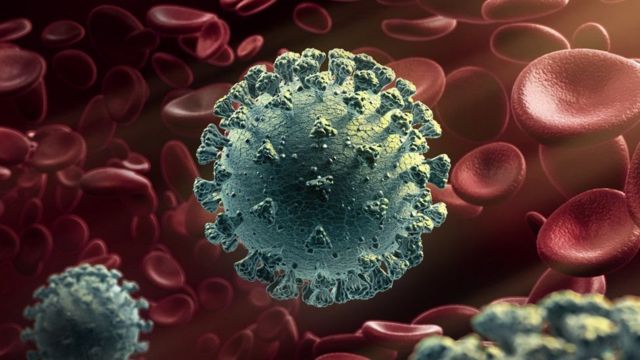
To understand what virus mutation means, we must know that viruses contain genetic material that can undergo modification (mutations or transformations appear) when they reproduce within the cells in which they spread, or through exchange between viruses (recombination or recombination). This often happens without negative consequences, but these mutations can give the virus a new advantage or characteristic that affects its survival. The new strain of the emerging coronavirus contains a mutation called “N501Y” in the coronavirus spike protein, which is a protrusion on its surface that allows it to attach to human cells to penetrate them, and thus plays a major role in viral infection. Since the beginning of the epidemic, the most common type of SARS-CoV-2 has carried a mutation called D614G in the protein itself. There are those who fear that the mutated virus will have a greater ability to resist the vaccines that have been developed, which will have a disastrous impact. However, most experts believe that this is not the most likely hypothesis. Even the hypothesis that the new strain spreads more quickly does not meet the consensus of all experts.
Vaccine war
But other analysts linked the timing of the announcement of the new mutation to the start of talk about finding a global vaccine for the virus. The German company “BioNTech”, which developed alongside the American company “Pfizer” the first licensed vaccine against Covid-19, announced that it is able to provide a new vaccine “within six weeks” if the virus mutates. Ugur Sahin, the company’s director of Turkish origin, said: “We are technically capable of producing a new vaccine within six weeks.” He added at a press conference in Mainz in western Germany: “In principle, messenger RNA technology allows us to begin directly producing a vaccine that completely mimics the new mutation” of the virus. Moncef Slaoui, advisor to the director of the US government’s “Warp Speed” program for developing and distributing vaccines against the virus, said that he expects laboratory experiments to show that the new strain will respond to current vaccines and treatments. The vaccine specialist and former pharmaceutical executive stressed that “there is no conclusive evidence that this virus is actually more transmissible, but there is clear evidence that there is more of it in the population.” Slaoui continued: “It may just be a classification that occurred in the shadows and we are now witnessing a mutation, or it may have a higher transmissibility… What is clear is that it is not more pathogenic,” which means that it has not been proven to cause a more serious disease. He explained that the National Institutes of Health had begun laboratory studies on the new strain to determine whether antibodies against the most widespread “Covid-19” strain would be effective against it, considering that “this is most likely the expected result.” But he warned against the assumption that it is impossible that the virus will one day, somewhere, be able to escape the protective response produced by the vaccine. “So we have to remain very vigilant.”
Talk about a conspiracy
The World Health Organization says that every ten people infected with the new strain of the virus can transmit the infection to 15 others on average, while the rate of transmission of strains previously known in Britain reaches 11 people. Despite this, the German Media Network (RND) website reported that the head of the “Doctors of the World” association, Frank Ulrich Montgomery, “questioned British Prime Minister Boris Johnson’s statements that the new strain of the virus could be up to 70 percent more contagious than the previous virus.” Montgomery added that “all of Mr. Johnson’s statements should be treated with extreme caution.” In light of the torrent of doubts and warnings about the British results about the new strain of the virus, the coming days remain full of the results of ongoing laboratory tests, which will reveal the credibility of whether the new strain represents a real threat and a decisive mutation in the process of humanity’s resistance to the virus, or is it just another commercial trick practiced by vaccine companies under the cover of government regulations or perhaps other goals.