
A full month has passed since what is believed to be the largest and most dangerous cyber attack targeting the United States. American officials confirmed that containing its repercussions may take years, after investigations revealed that the National Nuclear Security Administration was hacked during the recent cyber attacks. Hackers also penetrated the networks of the administration responsible for the nuclear arsenal, the Ministries of State, Defense, Treasury, and Energy, and private companies linked to the federal government. Despite this, many question marks still arise regarding the vast mystery surrounding this attack: its size, seriousness, techniques, repercussions, and most importantly: who is behind it? What information did he obtain from him that might threaten American national security, and perhaps global security as well? What is the secret behind the US President’s quick move to deny the accusation against Russia, which was quickly drawn to American attention as the first suspect responsible for the great hack? The hack raises questions about the fragility of the information and intelligence system of the United States, and raises questions about how hackers were able to benefit from the information they obtained? And whether we will see the results of this breakthrough in the coming months?
Nuclear breakthrough
The attack began with a “test run” in October 2019 when “harmless code” was modified. “In March, the operators behind this attack put malicious code into the supply chain, and they injected it there and that’s the backdoor that affected everyone.” Politico website quoted American officials as saying that the National Nuclear Security Administration was hacked during recent cyberattacks. It also reported that there is evidence that hackers penetrated the networks of the administration responsible for the nuclear arsenal, with the aim of espionage. The website said that officials at the Ministry of Energy were planning to notify the relevant committees in the House of Representatives and the Senate of the hack, and the ministry confirmed that the national security functions of the National Nuclear Security Administration were not affected by the cyberattack. In turn, Bloomberg Network reported that the cyberattack affected at least 3 American states, in addition to government agencies. The Cybersecurity and Infrastructure Security Agency, part of the US Department of Homeland Security, confirmed that US government agencies and critical infrastructure entities have been at risk of being hacked by hackers since at least March 2020, stressing that the hackers “demonstrated patience, operational security, and sophisticated craftsmanship in these hacks.” The security agency issued orders to government agencies to disconnect their devices from the “Solar Winds” program, which is believed to have been hacked and is used by many government agencies and private companies in the United States. The Politico magazine website also quoted American officials as saying that the hackers caused more damage to the Federal Energy Regulatory Commission than other agencies.
Accidental discovery
The strange thing is that the revelation of the breach was not issued by the parties that were exposed to it. Rather, the first warning came from the American cybersecurity company FireEye, which informed the American intelligence agencies of a major security breach that appeared to have been carried out by a government entity, targeting “government agents.” The Intelligence Committee of the US House of Representatives confirmed that it had received a briefing about the hack from US intelligence agencies, and the Chairman of the Committee and Member of Congress Adam Schiff said – in a statement – “The seriousness and duration of this attack show that we still have significant and urgent work ahead of us to defend our important information and networks, and we must move faster than our adversaries are doing to adapt to this.”
There are no satisfactory answers
After discovering the hack, the Oversight and Homeland Security Committees in the US House of Representatives announced the opening of an investigation into the cyber attack against government agencies. The New York Times reported that investigators believe that revealing the extent to which American networks were affected by the hacking operation will take months, adding: “The hackers used attack methods that pose a grave danger to the federal government.” According to the newspaper, federal officials issued an urgent warning that hackers of government systems used various techniques, adding that the methods used in hacking indicated a “skillful adversary” willing to spend significant resources to maintain its secrecy.
Trump raises controversy
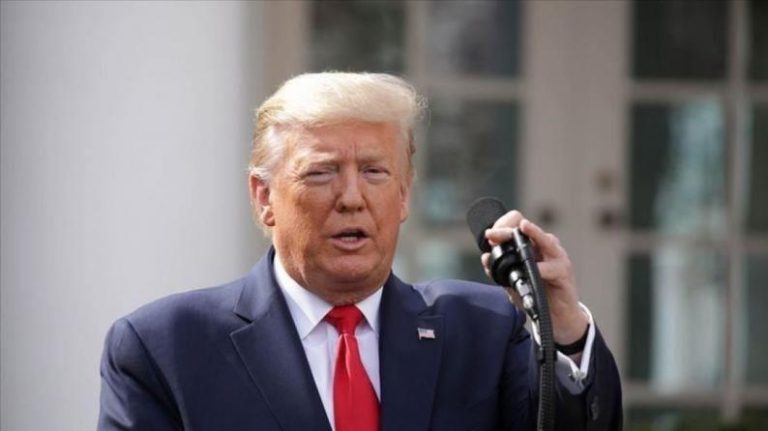
As expected, President Donald Trump did not miss the opportunity to stir up controversy, and was quick to cast doubt on the magnitude of the hack, and denied the accusation against the expected rival, Russia. Trump published two tweets on Twitter – in which he disagreed with his Secretary of State, Mike Pompeo, who directly accused Russia of involvement in electronic piracy operations. Trump downplayed it, saying that the issue of electronic piracy is not as huge as claimed by what he described as the fake media. Trump’s denial of the accusation against Russia angered a number of his opponents in Congress, who had previously accused him of colluding with Moscow to help him win the 2016 presidential elections. This accusation was at the heart of the investigation later led by special investigator Robert Mueller, and led to the current president not being convicted. In the context of reactions to the outgoing president’s position, the Chairman of the House Intelligence Committee, Democrat Adam Schiff, described Trump’s tweet about the hacking operation as “another scandalous betrayal” by the president of American national security. Schiff said that Trump’s tweet appeared to have been written at the Kremlin headquarters (the Russian presidency), adding that it was “another vile display towards (Russian President Vladimir) Putin,” and another reason to support Trump leaving office as quickly as necessary. For his part, Democratic Representative Jason Crow said that it is time to talk seriously, and that a dangerous adversary to the United States has now reached the American defense, intelligence, security systems, and financial institutions. Crowe, a member of the Intelligence and Armed Services Committees in the House of Representatives, indicated that Trump downplays this attack, which is considered the largest in American history, and shifts the blame away from Russia, threatening to issue a veto on the Defense Ministry budget and expel defense and cybersecurity officials.
A top priority for Biden
On the contrary, US President-elect Joe Biden said that “there is a lot that we do not know about the cyber attack that targeted American companies and government and federal agencies,” but he considered that “what we know about this attack constitutes great concern,” and he pledged to punish the parties involved in the hack. Biden said – in a statement issued by his transition team – that his administration will make cybersecurity a top priority at all levels of government, and will make dealing with this violation a top priority once he takes office on January 20. He added that his administration will advance cybersecurity as an imperative necessity, stressing the importance of not being limited to defense, and the necessity of disrupting Washington’s opponents and deterring them from launching major cyberattacks in the first place. He also stressed that his administration would impose heavy costs on those responsible for such harmful attacks, in coordination with US allies and partners, saying, “The adversaries of the United States must know that, as president, I will not stand idly by in the face of cyber attacks targeting the country.” President-elect Joe Biden had threatened the Russians, individuals and entities, who were behind the widespread cyberattack, stressing that cybersecurity would be among the priorities of his administration, which is supposed to take power on January 20, which is now close enough for the world to discover the nature of this anticipated American response.