- “Very nice magic trick! Every time France is at its worst economically and socially, it comes to us saying that the problem is in Islam.” A French blogger addressed Macron.
If France’s audacity to officially attack Islamic symbols was not enough to arouse shock and anger among the Muslim masses, it is certainly certain that the official Arab reaction, as well as some statements by elites close to the ruling regimes, is sufficient to arouse all feelings of disapproval and astonishment among the demonstrators who came out in support of Islam from the poor markets of Herat in Afghanistan to the upscale neighborhoods of Amman and the universities of Islamabad.
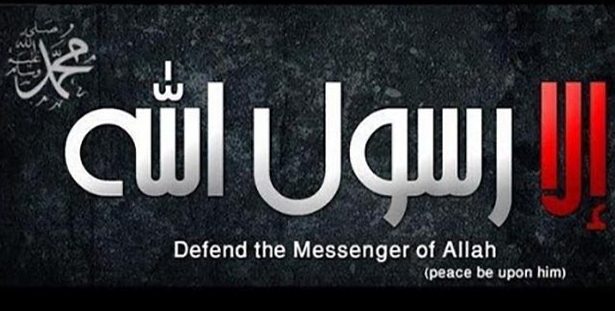
Over the past weeks, social media platforms have been ablaze with active calls to boycott French products, in response to successive statements by French President Emmanuel Macron, in which he directly attacks Islam, in addition to the official government institution in France’s justification for insulting cartoons of the Prophet Muhammad, may God bless him and grant him peace, and publishing them on government institutions in a photo for several hours.
Beginning in Paris, where Macron stated – without understandable introductions – in a speech, Friday, October 2, 2020, that Islam is facing a global crisis, the first time a Western president has made accusations against Islam as a religion in general and explicitly. Macron also said that “France must confront Islamic isolationism that seeks to establish a parallel regime and deny the French Republic,” adding during a visit to the poor suburb of Les Miro in Paris: “What we need to fight is Islamic separatism… The problem is an ideology that claims that its laws should be superior to the laws of the Republic.”
Field narrowing
The French transformation was not only at the level of statements, as hours after Macron’s speech, right-wing media circles quickly began presenting details of a draft law against “emotional separation,” which aims to “confront religious extremism and protect the values of the French Republic.” The draft law emphasizes imposing stricter control on Islamic associations and mosques, and “preventing practices that threaten gender equality,” including “virginity certificates” that some Muslim families are keen to obtain before marriage.
In what appears to be a coordinated French government move, Macron’s call came days after Interior Minister Gerald Darmanin’s statements regarding the attack that targeted the old headquarters of the satirical newspaper Charlie Hebdo. The attack, carried out by a man of Pakistani origin, resulted in two people being seriously injured, as the French minister said that his country is “at war against Islamic terrorism.”
The minister stated that “32 attacks” had been thwarted in France over the past three years, explaining that this was “almost equal to one attack every month,” at a time when Western countries, including France, are witnessing terrorist attacks launched by far-right supporters, without statements being issued in France specifically denouncing the far-right movements or considering them “terrorism,” according to the reactions that emerged from the statements of Macron and the Minister of the Interior on social media platforms.
Türkiye… is what is meant
It cannot be overlooked that Macron’s statements came at a time when Turkey’s relationship with France had reached its worst stage of tension in years. Many analysts inside and outside France linked Macron’s recent statements to his hostility towards Turkey, in light of the multiple political files that Paris and Ankara are confronting, whether in Libya or the eastern Mediterranean, and recently in the conflict between Azerbaijan and Armenia.
In Libya, France supports the militias in eastern Libya led by Khalifa Haftar, in exchange for Turkey’s support for the Government of National Accord in Tripoli, which is recognized internationally, by Europe, and by the United Nations. France stands with Greece in the latter’s dispute with Türkiye over their maritime borders in the eastern Mediterranean.
Many believed that Macron’s statements were part of a campaign targeting Islam in general and all Muslims, and not just fighting extremism, as Western officials and their allies from some Arab regimes in the region say, which increases the severity of turmoil and instability around the world despite the Corona epidemic, which requires cooperation to combat it.
Institutional rejection
The most prominent statements rejecting the French attack came from Al-Azhar Al-Sharif, which announced its rejection of Macron’s statements about Islam, stressing on Saturday, October 3, 2020, that they are “racist and inflame the feelings of two billion Muslims,” in a statement by the Islamic Research Academy at Al-Azhar Al-Sharif, two days after the Sheikh of Al-Azhar, Ahmed Al-Tayeb, rejected the statements of the French Interior Minister in which he spoke about “Islamic terrorism.”
Al-Azhar’s statement explained that “the recent statements issued by Macron accused Islam of false accusations that have no relation to the true religion,” and added: “We strongly reject those statements and confirm that they are racist statements that would inflame the feelings of two billion Muslims.” He denounced “the insistence of some on attaching false accusations to Islam or other religions such as separatism and isolationism,” stressing that this insistence is “a shameful confusion between the reality of what religions call for in terms of a call for rapprochement between humans and the architecture of the earth, and the exploitation by some of the texts of these religions and their use to achieve despicable purposes.”
The Sheikh of Al-Azhar, Dr. Ahmed Al-Tayeb, responded to Macron’s statements, saying, “At a time when we are seeking with the wise men of the West to promote the values of citizenship and coexistence, irresponsible statements are being issued that use the attack on Islam as a cover for achieving flimsy political gains. This uncivilized behavior against religions establishes a culture of hatred and racism and generates terrorism.”
The Mufti of the Sultanate of Oman, Sheikh Ahmed bin Hamad Al-Khalili, also strongly attacked the French President, criticizing his statements, which the Mufti described as an unprecedented attack on the Islamic religion by the President of France, a country that prides itself on freedoms, democracy and equality.
Public anger
As for France, bloggers and politicians criticized Macron in particular for choosing a term that provokes disagreement and strife within society, they said. Bodies and associations representing Muslims also expressed their fear that Macron’s statements and his plan would contribute to the spread of hate speech and push some to confuse the Islamic religion with the actions of extremists.
Some Arab commentators and members of the Muslim community in France read in Macron’s speeches “a clear targeting of them and their religion over other religions and communities.” They believe that his plan does not primarily aim to fight terrorism, but rather represents “a return to traditional French policies of trying to sever any cultural relationship of Muslim minorities in France with their countries of origin.”