
““A rapprochement towards reconciliation between Fatah and Hamas away from Arab or international guardianship and sponsorship, hosted this time by the Turkish city of Istanbul.” This is how the news invaded Palestinian and international news sites, considering this an inevitable result of the Gulf rush towards normalization with the Israeli occupation, in light of Mahmoud Abbas feeling threatened following repeated media talk about the possibility of replacing him, and bringing Muhammad Dahlan, advisor to the Crown Prince of Abu Dhabi, to the head of the Palestinian Authority..
However, despite this, the history between Fatah and Hamas does not make it easy to believe that this rapprochement will occur, as despite the talk about holding legislative and presidential elections within six months, this raises several questions, the most important of which is: Will the road be paved for those elections? How fair is it? What if Hamas wins it again, as happened in the 2006 elections?
A sudden rapprochement
The Palestinian leadership and the factions are preparing to hold a meeting of the general secretaries in the coming days, in order to approve a set of understandings that took place during lengthy meetings that lasted over two days between two delegations from “Fatah” and “Hamas,” which were held at the Palestinian consulate in Istanbul, and were briefed by the rest of the factions, in order to end the years of division, the main basis of which is to hold general elections in a row, after the Palestinians decided to abandon the cloak of Arab sponsorship for reconciliation..
Given the confidence of the Palestinian street in the Turkish sponsorship of the understandings, a positive atmosphere prevails in the Palestinian street in a way that has not been seen before, as the Palestinians look forward to ending years of disputes and paving the way for national unity, the first of which will be the normalization of Arab regimes’ relations with the occupation, and the plans for settlement expansion and annexation, a major reason for this..
The reason: normalization
The rapprochement currently taking place between Fatah and Hamas, the largest Palestinian organization, came after a series of Turkish contacts between two teams of leaders, where at the beginning of the agreements resulted in the arrangement of mass national activities denouncing the American “Deal of the Century” and the Arab normalization plans, until those contacts matured, to be followed by Hamas’ participation in the Palestinian leadership meeting, opposing the normalization agreements, before an agreement was made, after an absence of seven years, to arrange a meeting for the general secretaries of the factions, headed by President Mahmoud Abbas between Ramallah and Beirut, and the agreements that came between them to form a committee that presents a vision for comprehensive reconciliation.
In the midst of arranging for the formation of the committee, and in order to make its work successful, the Fatah and Hamas movements held at the headquarters of the Palestinian Embassy in Istanbul, and far from any sponsorship, whether Arab or regional, dialogue sessions based on bilateral work. They were able this time, and despite the fact that for the first time the sessions did not include the presence of mediators, they were able to bring their views very close on many issues that had previously constituted a “powder keg” that everyone was afraid to approach for fear of exploding, in addition to agreeing to hold a new and close meeting of the secretaries-general. To approve the understandings to emerge in a unified national form, within the vision of reconciliation, which aims to settle differences and bring Hamas into the Palestine Liberation Organization..
Broad understandings
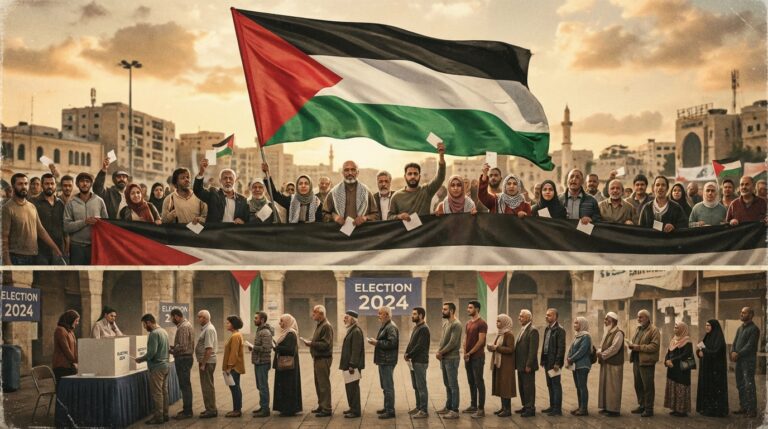
The head of the Fatah movement’s delegation to the Istanbul dialogues, Jibril Rajoub, while talking about what happened in Turkey, said that it was agreed with the leadership of the Hamas movement to hold sequential Palestinian elections, a legislative council, followed by presidential elections, then National Council elections, pointing out that the elections will be on the basis of proportional representation, and according to an interconnected progression not exceeding 6 months, and he said, “We agreed that elections by proportional representation are the way to build the political system and achieve political partnership.””.
He pointed out that an intensive national strategic dialogue took place, and a clear vision was reached for the mechanisms for building national partnership through elections according to proportional representation, pointing out that in the coming days, mechanisms for building partnership through general elections will be developed. Regarding the results of the elections, if they are held, Rajoub explained that Fatah is committed to the outcomes of the legislative elections, which he said must “form a national coalition government.””.
The statements and positions of Hamas leaders were completely similar to the statements of the leadership of the Fatah movement regarding reconciliation, in a scene that reflects the extent of the rapprochement currently occurring between them. Hossam Badran, a member of the Hamas political bureau, who participated in the recent dialogues, said that it focused on discussing how to implement the outcomes of the meeting of the general secretaries, and “completion of the structure of the unified leadership of the popular resistance that we agreed to form, and reaching a complete national partnership in all files.””.
He stressed that the dialogue in Istanbul is “a continuation of what we agreed upon in the meeting of secretaries, and during which it was agreed upon the necessity of returning to the Palestinian people, who have the original and sole right to choose their leadership, and to represent them in institutions through elections.” He added, “We want to go to the elections with a great deal of consensus, followed by the formation of a Palestinian national unity in which all segments of the Palestinian people participate, including those who won the elections and others.” He stressed that the two movements agreed to implement steps to prepare the atmosphere, and that these elections will not be organized until our people feel confident in the success of this step..
Decisive round
But the questions about the integrity of those elections and commitment to their results are the focus of the next stage, which appears to be an extension of those understandings that were reached in November of last year, following a round of talks led at the time by the head of the Central Elections Commission, Hanna Nasser, commissioned by President Abbas, and obtained approval from the factions, including Hamas, for full proportional elections, starting with the legislative ones, then the presidential ones, over a period of three months, after which communications on the matter faltered, due to technical differences between the two parties, and the lack of The Palestinian leadership obtained guarantees to hold it in occupied Jerusalem.
It is currently expected that a meeting of the factions’ secretaries-general will be held soon, which is planned to be at the beginning of this November, to be held via television link technology between Ramallah and a foreign capital, perhaps Beirut, or through the participation of the secretaries-general, each according to their current place of residence, during which what was recently agreed upon between Fatah and Hamas will be presented, after the two movements held internal meetings and consultations that carefully discussed the Istanbul understandings, where the leadership of the Fatah movement announced its approval of those understandings, but the coming days will come. It will reveal how serious these positive statements are.