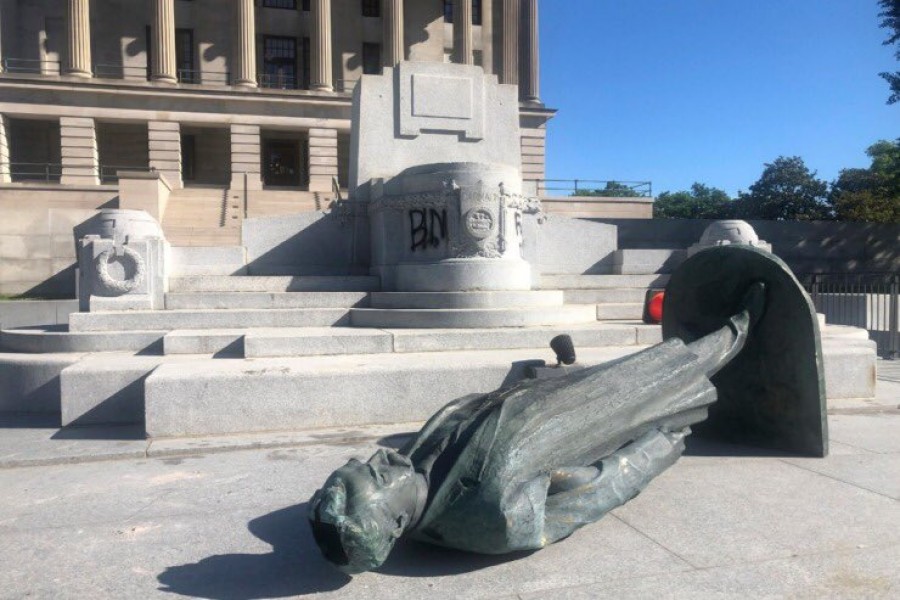

For a few minutes, the young black American man, George Floyd, while groaning under the knee of the man, resisted the white American policeman, repeating: I cannot breathe, until his soul was exhausted. Those nine minutes revealed the falsity of the claim about the slogan of the American dream, whose idea easily collapsed in front of millions of American people and hundreds of millions of viewers around the world, revealing at the same time the true image of the American political system with some of its brutal tools, the symbol of which is the hard-hearted “American soldier” that is still rooted. In the widespread demonstrations that took place around the world in solidarity with Floyd, the movement to topple statues of colonialists and slave traders returned to activity, amid widespread participation this time from whites before blacks, and from indigenous people in North and South America, and it actually resulted in the toppling of a number of statues, while political regimes and white elites adhered to defending other statues. The toppling and defacing of a number of statues representing slave traders or colonists in the United States and Europe in recent days was nothing but an extension of a protest movement initiated by a number of Africans in several countries, years ago, as a campaign began specifically in 2015 to remove a number of statues representing colonialists.
Africa password
The beginning was at the University of Cape Town in South Africa, when she led a student campaign that year to remove the statue of British leader Cecil Rhodes from the entrance to the university, due to his racist positions and support for the white minority in the face of the black population, in addition to his colonial role in two South African countries, which he named after him, Northern Rhodesia and Southern Rhodesia, which today became Zambia and Zimbabwe. Weeks later, another statue of the same colonialist fell in Zimbabwe itself, which was named after him, and was completely destroyed with axes, amid the joy of the residents of the capital. Then, in the Kenyan capital, Nairobi, in 2015, a statue of the former British Queen Victoria was toppled, and then the statue was beheaded by unknown persons. But this step was widely welcomed among Kenyans. The same anger occurred in the Congo towards statues of colonialists, especially the former King of Belgium, Leopold II, whose statue was removed in 1960, 7 years after the country’s independence. But in 2005, the same statue went up again in the Colonists’ Park, which includes a number of statues of figures who had a prominent role, whether in colonialism or the slave trade in the country. That campaign extended to the toppling of a statue of slave trader Edward Colston, the beheading of a statue of Christopher Columbus, and the vandalization of a bust of former King Leopold II in recent protests.
A desperate defense from racists
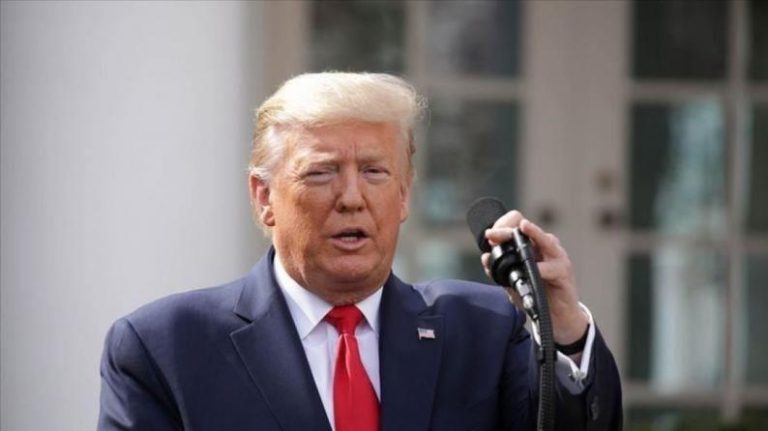
However, at a time when popular mobilization against racism has reached a new scale throughout the world, racists from the political elites and right-wing movements have continued to desperately defend statues representing historical figures linked to the history of slavery or colonialism, most notably the French and American governments. US President Donald Trump announced his categorical refusal to remove the names of Confederate generals from military bases in the United States. Trump said in a tweet on Twitter that “some have suggested renaming up to ten of our legendary military bases.” He added, “These military bases have now become part of the great American heritage,” stressing that his administration “will not even consider this possibility,” and concluded by saying, “Respect our army!” As for French President Emmanuel Macron, he considered that removing statues of figures who committed crimes against other peoples in the history of France was “erasing history,” stressing that he would not allow them to be removed. Although he acknowledged that a person’s “address, name, and skin color” may reduce his chances of success in French society, he did not address the systematic police violence against people of non-white skin, including immigrants, refugees, and citizens in France. Since the start of the Floyd demonstrations, anger over statues has spread from the United States to Europe. Anger seemed understandable in light of the current popular uprising against racism, and against the Western legacy linked to colonialism, the slave trade, and the torture of indigenous people.