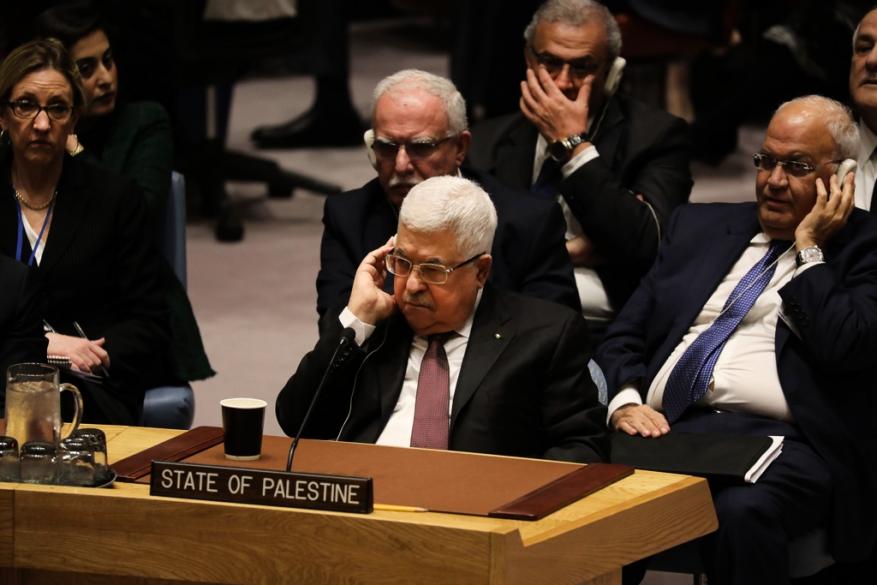

On May 20, 2020, Palestinian Authority President Mahmoud Abbas announced during a meeting of the leadership of the Palestine Liberation Organization at the presidential headquarters in the city of Ramallah in the occupied West Bank that “the PLO and the State of Palestine have become absolved from all agreements and understandings with the American and Israeli governments, and from all obligations resulting from them, including security agreements,” anticipating Israel’s decision to annex a third of the West Bank, including the settlements. Since last year, with the Israelis and Americans beginning to promote what is known as the “Deal of the Century,” the Palestinian Authority has threatened more than once to withdraw from these agreements, including the security coordination file, but the most important question is: Can the Authority actually withdraw from these security agreements?
Long history of coordination
To understand the whole story, you must first know what security coordination is between the Palestinian Authority and the Israeli occupation, as coordination is part of the final status arrangements announced by the Oslo Accords of 1993, and subsequent agreements such as the Taba Agreement of 1995, the Washington Agreement of the same year, and the Wye River Agreement of 1998. Under these agreements, Israel was granted the full right to control security in the common areas in the West Bank in cooperation with the Palestinian security services, and to form a joint committee to supervise operations. Storming or arresting suspects planning or carrying out operations that threaten Israeli security. Security coordination takes several forms, including conducting joint Palestinian and Israeli patrols; To ensure the security of the Palestinian areas, pursue resistance weapons, arrest those suspected of planning or carrying out operations against Israeli targets, target infrastructure for any activity that poses a threat to Israeli security, and return Israeli settlers who enter Palestinian villages and suburbs.
Abbas.. renewed coordination
Abbas announced his withdrawal from security coordination in Cairo, but it seemed as if he was retracting his position after his return from it, when he indicated in a conference held with the commander of the General Intelligence Service, Major General Majid Faraj, and the leaders of the security services, that he “will stop security coordination if the American administration does not back down from proposing the deal of the century,” which indicates that there is no final decision requiring the continuation or cessation of the security relationship with Israel. Israeli media reported that the Palestinian Authority informed Israel that it would not stop security coordination with it, but would reduce it. For example, the Authority would abandon preventing Palestinian demonstrators from reaching points of contact with the Israeli army, as it had previously done. According to the media, Palestinian President Mahmoud Abbas sent a handwritten letter to Israeli Prime Minister Benjamin Netanyahu, in which he threatened to stop security coordination and completely change the rules and foundations of dealing with Israel if he implemented the plan to annex the Jordan Valley and settlements to Israel’s sovereignty.
Impossible withdrawal
The Middle East Eye website quoted Palestinian officials as saying that Abbas’s threat to cut off security cooperation with Israel seems impossible, because stopping it would lead to armed clashes between occupation soldiers and Palestinian police if they entered the Authority’s areas, which means realizing the hypothesis of the collapse of the Authority in the West Bank. Former member of the Executive Committee of the Palestine Liberation Organization and member of the current Central Council, Abdel-Jawad Saleh, said in a press statement that “the Palestinian Authority considers continued coordination with Israel to be its main role for which it was established, and if it harms this file, this means its downfall, the collapse of the Fatah movement, and the burial of the settlement project, which is the only strategy of the Authority remaining before the Israeli side.”
Abbas’s normalization history
Abdel-Jawad Saleh also confirmed that “the decision to stop security coordination has been on the Palestinian President’s table since 2015, and he has received approval from all PLO institutions to implement it, but he explicitly does not want to stop it.” Saleh confirms that Abbas “bragged in leadership meetings that he is cooperating on security issues with Israel and the United States of America, and Israel is reassured by this position.” This is evidenced by his recent meeting with Arab foreign ministers, when Abbas highlighted his close relationship with the American Intelligence Agency (CIA), and said that it was satisfied with the performance of the Palestinian security services in combating terrorism.
Israel is ready
The Dean of Al-Awda College for Security Sciences in the Gaza Strip, Hisham Al-Maghari, commented in a press statement on Abbas’s recent announcement, saying, “Abbas’s threats to stop security coordination with Israel are no longer useful, in light of the security services being controlled by parties in leadership positions who communicate directly with their Israeli counterparts to report any activity that might pose a threat to Israel’s security in return.” Al-Maghari added, “Israel has developed several scenarios in anticipation of any sudden Palestinian move, including encircling the West Bank with military brigades, dismantling the institutions of the Palestinian Authority, and reactivating the policy of village ties.”
Israel controls power
In terms of numbers, the value of American financial support for the Palestinian security services reaches $100 million annually, despite the US administration imposing a financial blockade on the Authority since 2017, focusing on financing operational programs allocated to the infrastructure sector in Palestine, UNRWA, and the Authority’s budget. However, American support for the security services has not stopped. This is why Abdel Sattar Qassem, professor of political science at the Palestinian An-Najah University, said in a press statement to Arab Post that “Abbas’s use of the card to stop security coordination is an attempt to throw ashes in the eyes, and to place the international community before its responsibilities by exerting pressure on Israel to stop implementing the deal of the century, and fearing that stopping security coordination will have catastrophic consequences for the stability of the region.” In general, the authority does not hide its fears that stopping security coordination will lead to events that its rivals, especially Hamas, may exploit, which is preparing for an opportunity that will enable it to reactivate its armed cadres in the West Bank. To carry out attacks against Israeli targets, such as its effective and annoying military force in the Gaza Strip.