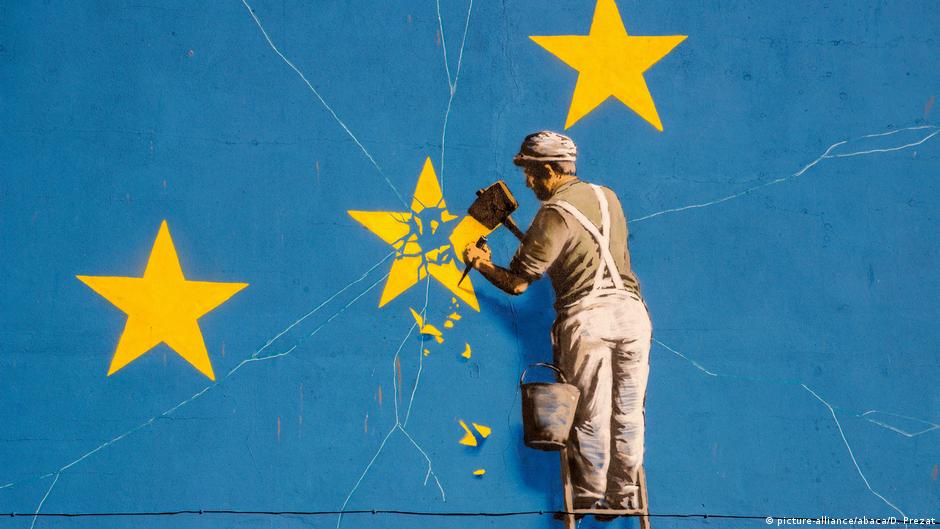

The first rain is a drop, and most of the fire is from small sparks… facts that cannot be overlooked in history lessons, and the Corona crisis has opened the door to a real and serious question: Is the European Union “united” enough to withstand a real and effective test? Let’s leave the answer to the Corona virus. On April 2, the Swiss medical device company “Molenlick” announced that France had, in a “disturbing and inappropriate act,” seized for itself a shipment that included millions of medical masks and gloves, while it was passing through its territory, heading towards Italy and Spain, which are the two European countries most affected by the Corona virus crisis until then. What’s new?. Days before that incident, Germany also seized a shipment of medical masks that China had sent to Italy through German territory. Germany tasted from the same cup, when the Americans succeeded in seizing a shipment containing 200,000 masks that Berlin had purchased for the police, while they were being shipped at the airport in Thailand. Nearly a week ago, another European country, the Czech Republic, seized a shipment of medical materials while it was on its way from China to Italy. As for Italy itself, which is so far the main focus of the disease in Europe, it also seized a shipment of 1,840 ventilators that were supposed to arrive in Greece. This, in short, is the current situation in the European Union countries. Suddenly, the slogans of solidarity and unity collapsed and were trampled under the feet of member states, while each country tried to survive on its own, even if it would transcend any moral or political considerations in order to achieve this.
Italy feels let down
In this context, Italian newspapers launched a violent attack on the European Union in the wake of the decision to postpone the adoption of strong measures in the face of the economic repercussions of the outbreak of the new Corona epidemic. Italian Prime Minister Giuseppe Conte threatened during the summit, which was organized via video, not to sign the joint declaration if the Union did not adopt strong measures “accompanied by innovative financial instruments that are truly appropriate for a war that we must fight together.” Germany and other northern European countries had rejected the appeal of nine countries, including the most affected Italy, for collective borrowing through “Corona bonds” to help cushion the economic blow of the epidemic. The newspaper “Fato Quotidiano” chose the headline, “Conte says Europe is dead and to hell.” La Repubblica, which has a traditionally pro-European Union political line, was also entitled “Europe is Ugly.” In turn, the newspaper “Corriere della Sera” considered that “if the European Union lacks an agreement, this means that the European project itself has ended.” Portuguese Prime Minister António Costa criticized what he called the “repeated triviality” of the Dutch government, which is usually one of the strongest advocates of EU budget discipline. He said: “This talk is abhorrent within the framework of the European Union. That is precisely the word: abhorrent.”
Solidarity crisis
As the main focus of the new Corona virus moved from China to Europe in the first half of last March, terrified European governments turned their backs on each other, and many of the pillars on which the European unity project was based collapsed, and each country rushed to acquire as much medical equipment and supplies as possible, without caring about the fate of its neighbors. There is now a major crisis of solidarity among the member states of the European Union, during which the non-rich European countries feel fragile and alone in the face of the epidemic that continues to spread at great speed, not only because they lack the necessary medical supplies, but also because they feel that the strict austerity measures that were imposed on them during the past decade have contributed to weakening their health sectors in a way that has now made them helpless in the face of the repercussions of Corona. The current selfish actions would cast a shadow over the European Union’s attempts to build joint security and defense capabilities. If member states cannot rely on each other to combat a disease, how can they cooperate in the face of armed external aggression? This state of self-restraint prompted European Commission President Ursula Funder Leyen to issue rare harsh statements to member states. During a speech she delivered before the European Parliament on March 26, she expressed her regret at the way many European capitals have dealt with the crisis so far, saying: “When Europe really needed each other, many looked out for themselves first.”
Even powerful countries were ignored
In recent days, the soft power of the European Union as an entity has taken a major hit. The media hype caused by Chinese and Russian aid to Italy, which is helpless in the face of the virus, was larger and more widespread than that which accompanied the huge economic stimulus plan of 750 billion euros announced by the European Central Bank. Italy had appealed and pleaded with the countries Migraine In the European Union in order to urgently supply it with the medical equipment and supplies that it desperately needed as the virus got out of control, but no European country volunteered to provide it with what it needed. Rather, each country was keen to store its supplies in anticipation of the spread of the virus among them. In violation of European Union rules, Germany banned the export of crucial medical supplies. Until now, Germany – the largest and strongest economy on the Old Continent – has not been generous in helping Italy and Spain, which are the most affected and also the poorest in Europe. There is little sense of responsibility on the part of Germans for what is happening to many of their EU partners. This situation raises the question among many about what the European Union is if this were the case in times of real crises.
Will the European project collapse?
Over the past decade, Europe has survived an extraordinary series of crises, including a financial crisis in 2008, a debt crisis in 2012, a security crisis in 2014 caused by Russia, a migration crisis fueled by conflicts in Syria and Libya, an internal democratic crisis caused by Hungary, and last but not least the crisis of Britain’s exit from the European continent, the second largest economy on the European continent. But the failed European response so far to the Corona virus crisis constitutes one of the biggest and most dangerous threats that the Union has faced since its inception, especially since the current crisis comes at a time when the European project is not experiencing its best days. What makes the current situation more dangerous is that the northern European creditor countries do not seem interested in the fate of the southern European debtor countries. Now, France and Germany, the main sponsors of the European Union, are divided, with Paris defending the poor south, while Germany stands as a champion of the well-off north, which refuses to bear more of the south’s financial burdens. At a time when the European economy is heading towards recession, EU leaders disagree about issuing so-called “Corona” bonds that aim to share the financial burdens resulting from the Corona crisis with European countries. Germany and the Netherlands lead the opposition to these bonds, while nine countries, including France, Italy and Spain, push for them. finally, andThe coronavirus crisis will most likely not cause the collapse of the European Union, but what is certain is that if the lack of tangible solidarity among its members continues, the crisis will leave it as a hollow and meaningless entity. More dangerously, the European Union’s accelerating decline means that one of the fundamental pillars of the Western democratic world is being severely shaken at the same time that Russia and China are presenting competing visions for the future.