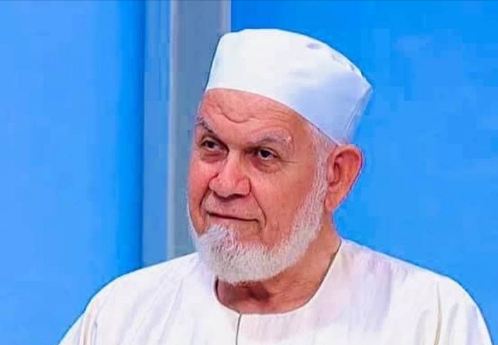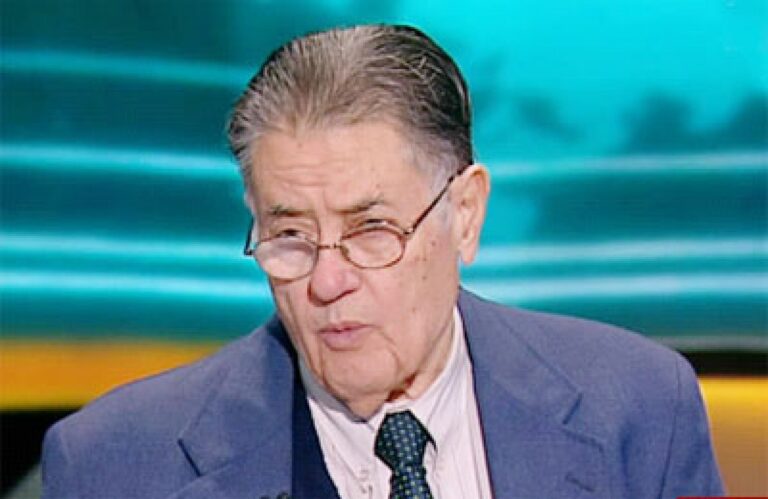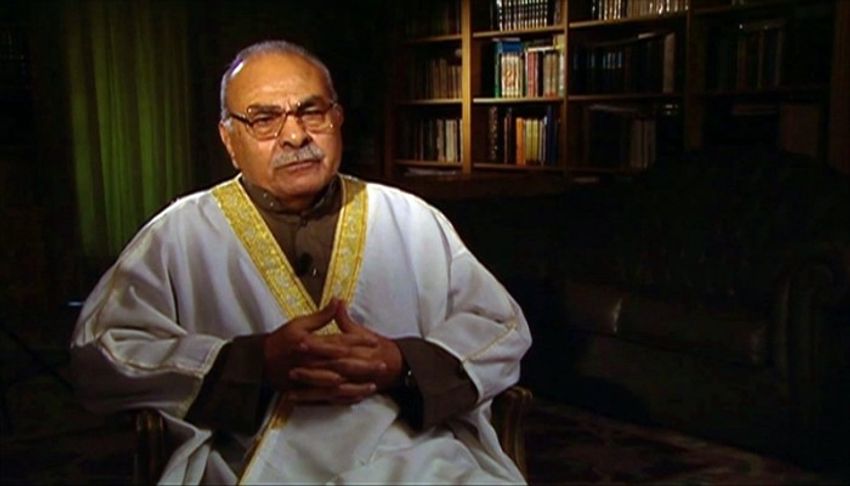

The scholar Muhammad Amara, a member of the Council of Senior Scholars at Al-Azhar Al-Sharif, passed away from our world on the evening of Friday, February 28, 2020. He remained stationed on the intellectual frontiers of Islam for decades, repelling the attacks of the aggressors, and repelling the raids of the raiders. Dr. Muhammad Amara, may God have mercy on him, was a member of the Council of Senior Scholars and the Islamic Research Academy at Al-Azhar Al-Sharif. He went through intellectual transformations that moved him from the Marxist trend to defending Islamic thought. He was famous for being one of the “independent Islamists” who defended the message of Islam, its nation, and its contemporary issues.
His upbringing and studies
Muhammad Amara was born in the Qalin Center of Kafr El-Sheikh Governorate in Egypt in December 1931 AD, and he memorized the Qur’an and its presence in the village book. His national and Arab interests began to grow when he was young, and his first article published by the newspaper “Masr Al-Fatat” was entitled: “Jihad for Palestine.” Can we guarantee the date of publication, until he studied for a doctorate in Islamic sciences, specializing in Islamic philosophy – Faculty of Dar Al-Ulum – Cairo University in 1975. That is, he graduated from his doctorate at the age of 44?? He obtained a Master’s degree in Islamic Sciences, specializing in Islamic Philosophy – Dar Al-Ulum College – Cairo University, 1970 AD. Then he obtained a BA in Arabic Language and Islamic Sciences – Dar Al-Ulum College – Cairo University, 1965 AD. He revised the dates and placed a master’s degree before his doctorate. He received many awards, medals, certificates of appreciation, and shields, including the “Friends of the Book Society Award, in Lebanon in 1972 AD,” the State Encouragement Award in Egypt in 1976, and the Medal of the Islamic Intellectual Current, Founding Leader, in 1998 AD.
Scholarly work
He investigated the works of the most prominent figures of modern Islamic intellectual awakening, Jamal al-Din al-Afghani, Muhammad Abduh, and Abdul-Rahman al-Kawakibi, and wrote books and studies on the figures of Islamic renewal such as: Dr. Abd al-Razzaq al-Sanhuri Pasha, Sheikh Muhammad al-Ghazali, Rashid Rida, Khair al-Din al-Tunisi, Abu al-Ala al-Mawdudi, Sayyid Qutb, and Hassan al-Banna, and among the notables of the companions, Ali ibn Abi Talib. He also wrote about ancient and modern Islamic thought trends and heritage figures such as Ghaylan. Al-Dimashqi, and Al-Hasan Al-Basri. Among his most recent books on modern thought are: “Religious Discourse between Islamic Renewal and American Change,” “The West and Islam – Where is the Wrong… and Where is the Right?”, “Articles on Religious and Non-Religious Extremism,” “Islamic Law and Western Secularism,” “Our Future between Islamic Renewal and Western Modernity,” “The Crisis of Modern Islamic Thought,” “Intellectual Creativity and Civilizational Specificity,” and many others.
His most prominent works
| Marxist interpretation of Islam. | The Mu’tazilites and the problem of human freedom. | Features of the Islamic curriculum. |
| Islam and the future. | Our modern renaissance between secularism and Islam. | Arab battles against the invaders. |
| The new raid on Islam. | Jamal al-Din al-Afghani between the facts of history and the lies of Louis Awad. | Sheikh Al-Ghazali: The intellectual site and intellectual battles. |
| Awareness of history and history making. | Heritage and future. | Islam and pluralism. |
| Intellectual creativity and cultural specificity. | Dr. Abd al-Razzaq al-Sanhouri Pasha: Islamic state, civil society, and law. | Islam and politics: responding to the suspicions of secularists. |
| The Islamic University and the national idea. | Dictionary of economic terms in Islamic civilization. | Omar bin Abdul Aziz. |
| Jamal al-Din al-Afghani, the awakener of the East and the philosopher of Islam. | Muhammad Abduh: Renewing the world by renewing the religion. | Abu al-Ala Maududi. |
| The Complete Works of Rifa’a al-Tahtawi, (edited). | The Complete Works of Jamal al-Din al-Afghani, (edited). | The Complete Works of Sheikh Muhammad Abduh, (verification). |
| The Complete Works of Abd al-Rahman al-Kawakibi, (verification). | The Complete Works of Qasim Amin, (edited). | The Complete Works of Ali Mubarak, (edited). |
| Messages of Justice and Monotheism, (investigation). | The Book of Money by Abu Ubaid al-Qasim bin Salam, (verification). | The battle of terminology between the West and Islam. |
| Al-Quds Al-Sharif is a symbol of conflict and the gateway to victory. | This is our Islam: summaries of ideas. | The Islamic awakening in Western eyes. |
| The West and Islam. | Abu Hayyan Al-Tawhidi. | Ibn Rushd between the West and Islam. |
| Cultural affiliation. | Pluralism: the Islamic vision and Western challenges. | The conflict of values between the West and Islam. |
| Dr. Yusuf Al-Qaradawi: The intellectual school and the intellectual project. | When Egypt entered the religion of God. | Islamic movements: a critical view. |
| The rational approach in Arabic studies. | Cultural model. | Renewing the world by renewing the religion. |
| Constants and variables in modern Islamic awakening thought. | Nullification of the Book of Islam and the Principles of Governance. | Progress and reform through Western enlightenment or Islamic renewal? |
| The French campaign hangs in the balance. | Global Civilizations: Stampede or Conflict. | Islamic conflict over Jerusalem and Palestine. |
| Jerusalem between Judaism and Islam. | Religious and national minorities: diversity and unity or fragmentation and penetration. | The Sunnah of the Prophet and human knowledge. |
| The threat of globalization to cultural identity. | Our future is between Islamic universalism and Western globalization. |
His contributions and features of his writings
He contributed to many specialized intellectual periodicals, participated in many scientific seminars and conferences, and obtained membership in a number of intellectual and research institutions, including the Supreme Council for Islamic Affairs and the Higher Institute for Islamic Thought. Dr. Amara’s writings and research, which he enriched the Arab Library, which reached 200 books, were characterized by a renewal and revival vision, contribution to intellectual problems, and an attempt to present a renaissance civilizational project to the Arab and Islamic nation at the stage in which it lives. The most important thing that distinguishes his thought is his belief and defense of the unity of the Islamic nation, and strengthening its legitimacy in the face of some people’s denial of it, to the point that he was described as the theoretician of the Islamic movement. The thinker belongs to the moderate school and calls for it. He says that it is “universal moderation” that combines the elements of truth and justice from opposite poles, creating a new position that differs from the two different poles, but the contrast is not complete. Islamic rationalism combines reason and transmission, and Islamic faith combines faith in the world of the unseen and faith in the world of testimony. Islamic moderation means the necessity of clarity of vision as this is an important characteristic of the Islamic nation and Islamic thought. It is necessary to address Dr. Mohamed Emara’s presidency of the editorship of Al-Azhar magazine after the January 2011 revolution, and the development he brought about in it and the writing of a number of writers for the magazine, and the boom that this brought about in the magazine’s distribution and the increase in its readership. In June 2011, Dr. Ahmed Al-Tayeb, Sheikh of Al-Azhar, appointed the Islamic thinker Mohamed Amara as editor-in-chief of Al-Azhar magazine.
His death
Muhammad Amara’s son announced in a statement published on his account on the social networking site “Facebook” on the evening of Friday, February 28, 2020, the death of the great thinker and Islamic preacher Muhammad Amara, saying: “My father, the Islamic thinker and member of the Council of Senior Scholars, Dr. Muhammad Amara, passed away… My father, may God have mercy on him, died after a short period of illness that did not exceed three weeks.” He added: “My father, may God have mercy on him, died quietly and without any pain or suffering, surrounded by his small family and praying for my mother and for all his children, grandchildren, and loved ones. He said to each one of them: I love you… and I am satisfied with you,” and he continued: “My father, may God have mercy on him, died while recommending that he complete his intellectual projects, books, and research.”
His commandments
He referred to a number of commandments for his father’s lovers, saying: “There are some commandments for students and everyone who loved my father, may God have mercy on him, or learned something from him, even if simple, which are to hold funeral prayers or prayers in absentia for my father in the largest possible number of cities in the world, in all countries of the world, and to spread the ideas of Dr. Muhammad Amara among people everywhere, whether by publishing his books, articles, speeches, recordings, or recorded clips from his programs and lectures that he published on the Internet, written, audio, watching, or even in Our daily words and conversations, and finally, to tell about Dr. Muhammad Amara and his ideas to those around you and those you know. This is how we revive the lives of our scholars and those who are credited to us.”