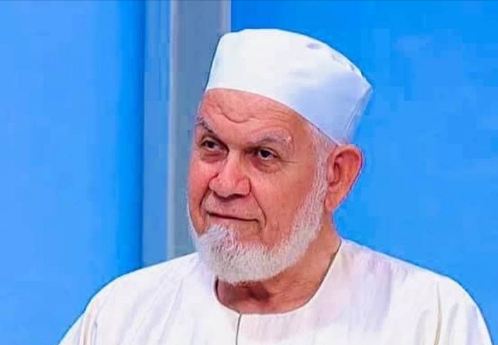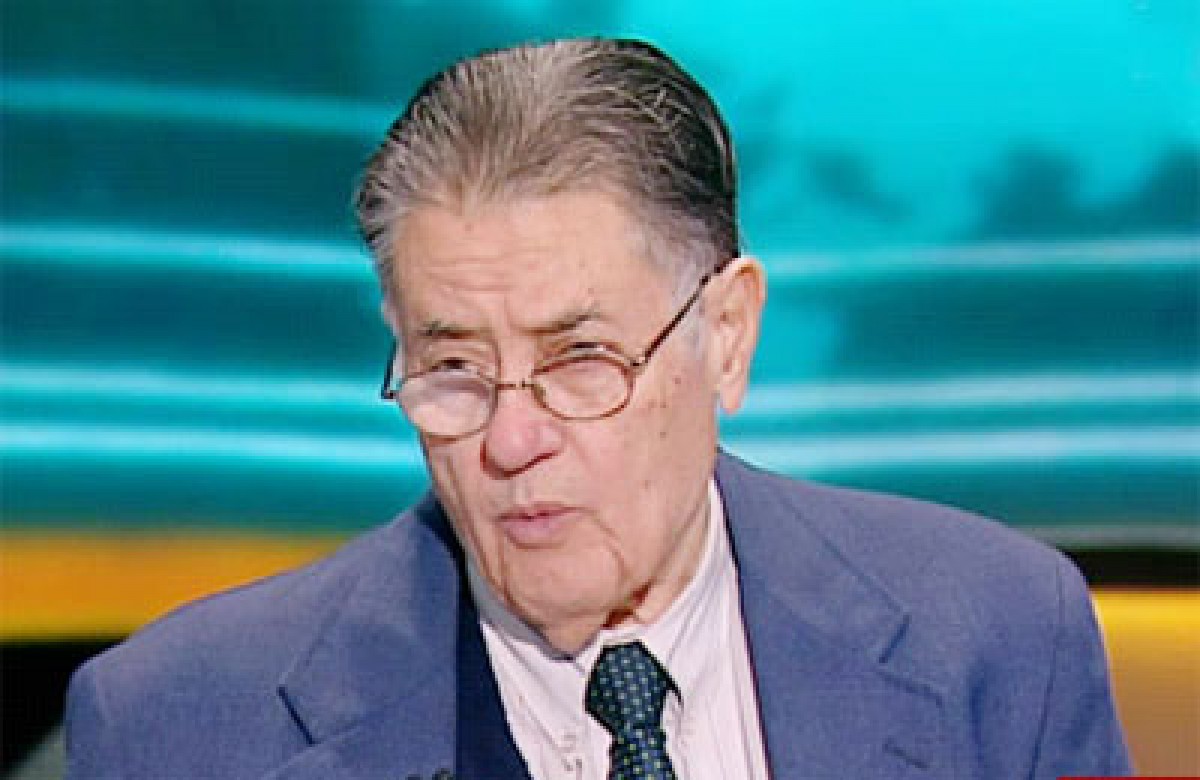

Since the army took control of the atmosphere of political life by force in Egypt in the summer of 2013, the new coup regime has been keen to impose a narrative that deceives the Egyptian people into aligning the army leaders behind the new movement, especially those military figures that the Egyptian people revere, and who were among the leaders of the glorious October War of 1973. But one position was enough to break that illusionary narrative, and his appearance on screens rejecting the military coup represented a living memory for the Egyptian people, until his departure at the end of last month, December 26, 2020, after 7 years he spent an expatriate outside his country and paid the price for his noble positions. The Egyptian military and strategic expert, Major General Abdel Hamid Omran, died in London, after suffering from illness, at the age of eighty years. He was one of the Egyptian military personnel who opposed the military coup in Egypt, since its beginning in July 2013, when he was forced to leave the country.
Long history
Major General Omran participated in all modern Egyptian wars, starting with the tripartite British-French-Israeli aggression in 1956, then the wars of 1967 and 1973, against the Israeli occupation of Sinai. After graduating from the Military College, he worked in the Air Defense Force, and also worked in the National Security Service in counter-espionage. Major General Omran is a classmate of Field Marshal Muhammad Hussein Tantawi, the former head of the Military Council, which ruled Egypt after the revolution of January 25, 2011. He also taught at the Military College, and among those who studied under him there was Lieutenant General Sami Anan, the former Chief of Staff of the Army.
With the revolution
With the January Revolution, the Egyptians knew Omran for his biased positions toward the revolution, as he sent several messages to the army commanders, most notably his message on February 4, 2011 before Mubarak stepped down, when he called on them to save the nation from “the foolishness of the current government, which has lost its senses.” He also called on them to protect the people and the protesters in Tahrir Square at the time, and to save them from the thugs of the National Party. During the outbreak of conflict between the revolutionaries and the military council, Omran wrote the military council a letter in which he said, “I ask you, in the name of the October War, not to try to oppress and defeat the people. Let the Egyptian army remain a protector of the Egyptian revolution, and not an enemy of it. Do not slip into the Syrian model, as events drag each other on. Please live as heroes, and leave with dignity, for you are dearest to our hearts.”
Against the coup
The late Major General opposed the military coup against elected President Mohamed Morsi. He also strongly condemned the massacre of the dispersal of the Rabaa sit-in, in which hundreds of supporters of the late president were killed. He said that the dispersal in this manner was primarily due to Sisi’s intention to get rid of the only political faction competing with him in the coming days and remove it from the scene. Omran held Al-Sisi responsible for the international condemnations of the army leadership, saying that Al-Sisi “harmed the institution of the armed forces and its leadership at the global level, as no Egyptian military leadership had ever been condemned by an international organization,” in reference to reports by international organizations about the massacre.
Deep sadness
Social media activists mourned Major General Omran, stressing that he was a role model for the army commander, whom Egyptians love and respect. Some of them enumerated the late Major General’s intellectual and political virtues, especially his endurance of exile for the sake of the word of truth, which he believed in. Others called on the army leaders to follow the late approach of respecting the will of the Egyptians and keeping the army away from politics and the economy, stressing that this is the approach that makes the Egyptian army a strong, professional army that defends Egypt and its people and supports the Arab and Islamic nations. The tweeters also compared Imran, who fought in all the wars fought by the Egyptian army, against the Zionist entity, and Abdel Fattah al-Sisi, who did not fight a single war, and despite that he granted himself the highest military rank of “Marshal,” and they recalled Imran’s position on the Rabaa dispersal massacre, when he attacked Sisi and held him responsible for the blood that was shed. The account of the late honorable Egyptian Revolutionary Council mourned: “Today, Egypt lost in London one of its knights who did not lose the compass of patriotism, was not tempted by gains and positions, and did not betray the covenant. Major General Abdul Hamid Omran, a supporter of the revolution, who preferred political asylum to participating in working for the Zionists, betraying honor, and neglecting the land, has passed away to God’s mercy. And to God we belong, and to Him we shall return.” The tweeter, Amira Abu Al-Futouh, expressed her shock: “How shocked I am at the passing of the brave knight, Major General Dr. Abdul Hamid Omran. Only two days ago, he prayed for me that God would protect me and protect the honorable people of the nation, and today I pray to God to have mercy on you.” May the highest paradise reside in you.” Tweeter Ahmed Abdo tweeted: “We belong to God and to Him we shall return.. The death of Major General Dr. Abdel Hamid Omran, one of the national leaders of the Egyptian army and a military and strategic expert in London. He was a free and honorable man. He rejected the military coup, and was subjected to many harassments, so he chose London as a self-imposed exile. Mahmoud Gamal commented: “Today, Egypt lost one of its noblest and most honorable men, a man who was filled with love for Egypt… a patriotic man of a unique style. When I met him, I learned from him what it means to love the nation. The honorable Free Major General Abdel Hamid Omran departed from our world today. To God we belong, and to Him we shall return. Oh God. Have mercy on him.” Ahmed Hammam affirmed: “Major General Abdul Hamid Omran is the only military man whose ruling I support with all my heart because he is a thinker, highly educated, and a statesman.” Nouna Muhammad wondered: “Do those who perch on our chests and break our necks agree to ship the body of the late Major General Abdul Hamid Omran from Britain to Egypt to be buried in the country he lived his life defending and died in his old age to being a stranger for it.” Alaa Irfan compared a generation between The late general and the current generation: “2020 refuses to go away before it strips us of all the honest people from the true Egyptian military generation that was not tainted by corruption, chauvinism, or fanaticism. A generation that knew its enemy and fought him and did not deviate from him or make peace with him. A generation of leaders from whom we learned a lot and a lot. Major General Abdel Hamid Omran joined Major General Adel Suleiman under the protection of God.”