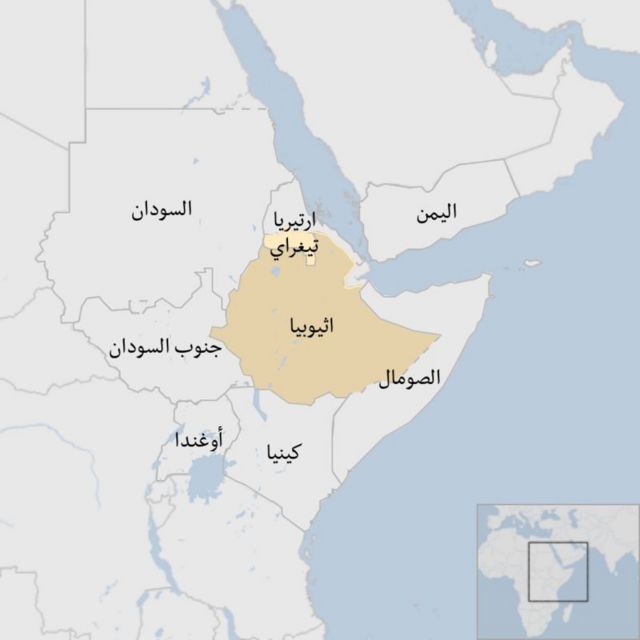

In late February 2020, the Nile Basin region was preparing to receive the news of the signing of a historic agreement between Egypt, Ethiopia, and Sudan after overcoming more than 90% of the points of disagreement between them, and announcing the imminent signing of the final agreement on the Renaissance Dam under the auspices of Washington. However, without warning, Ethiopia apologized for participating in the signing round, leaving questions about the causes and consequences, and most importantly: What might the Egyptian reaction be now?
A sudden move
Ethiopia surprisingly announced on February 26, 2020, that it had asked the United States to postpone what was expected to be the final round of talks related to the Renaissance Dam, without providing details about the reasons for this unexpected shift. The Ethiopian move is of course surprising, because the delegations of Egypt and Sudan had already arrived in the US capital, where the last round of talks between the three countries was scheduled to be held in Washington. But it is clear that the internal calculations of the Ethiopian Prime Minister – who faces a difficult electoral challenge next summer – made him retreat from signing the agreement proposed by the American administration.
A critical Egyptian position
There is no doubt that the Egyptian regime is now facing a critical situation, in light of the few or no alternatives available for action, and its neglect of the elements of power that it had by signing the Sudan Agreement in 2015 and giving up the Egyptian rights to the Nile waters. Most likely, this is what encouraged the Ethiopian side not to make any concessions that it is not forced to make. From a legal standpoint, Addis Ababa bases its position on the Declaration of Principles that was signed in Khartoum between Al-Bashir, Sisi, and Abiy Ahmed in March 2015, which is the only legal document signed by Egypt, Ethiopia, and Sudan, and gives Addis Ababa rights that it did not dream of obtaining before signing it. Time is now also largely in Abiy Ahmed’s favor, as it is expected that the construction of the dam will be completed and the filling phase of the reservoir will actually begin, next July, which puts more pressure on the Egyptian side, which may find itself forced to be honest with the people about the truth of the situation, after it became clear that the American mediation did not achieve any results, as the Egyptian regime was promoting through the local media outlets it controls.
Egypt loses Sudan too..
On March 4, 2020, Egypt turned to the League of Arab States in search of Arab support in the face of Ethiopian intransigence in the Renaissance Dam negotiations. The League actually issued a supportive resolution, but Sudan officially reserved the resolution. The League of Arab States approved a resolution that “rejects any infringement on the historical rights of Egypt, rejects any unilateral measures taken by Ethiopia, and stresses the necessity of Ethiopia’s commitment to the principles of international law,” according to the description of the Secretary-General of the League, Ahmed Aboul Gheit, at the conclusion of the 153rd session of the League Council. However, the Sudanese side did not show any enthusiasm for the decision during the discussions, despite the emergence of broad Arab momentum and support from all Arab parties. It even requested that Sudan’s name not be included in the decision, and that the Sudanese side said that the decision was not in its interest and that the Arab League should not be involved in this file. It expressed its fear of what this decision might result in an Arab-Ethiopian confrontation. The Sudanese position on the Renaissance Dam crisis is not ambiguous, and it is based on the perspective that the Renaissance Dam does not represent harm to Sudan, but rather the opposite is true, and this is what Dr. Alaa Yassin, advisor to the Minister of Irrigation for Dams and Nile Water and the official spokesman for the Renaissance Dam file, recently stressed that “there are many advantages that accrue to Sudan from the dam, the first of which is that Egypt is the actual downstream country and not Sudan through which the river passes, and therefore it gets its full share of the water, and the second of these advantages is that the dam brings benefit Sudan has something similar to what the High Dam achieves for Egypt, as it is 15 kilometers from the Sudanese border. “The third advantage is that the dam that is grown on the Blue Nile, and on which one crop was grown annually due to the lack of water flow, will be planted with two crops after the construction of the dam, because water will flow in the Blue Nile throughout the year,” Yassin added, “The fourth advantage is related to the silt that accumulates in front of the Sudanese dams, which will decrease greatly, without costing them any burdens.” Financially, Sudan incurs $12 million annually for the cleansing process in front of the dams, and then this amount will be saved.”
What does Egypt have now?
The truth is that we can answer: “You do not have much.” Aside from frankness and revealing the facts, the options before the Egyptian government remain almost non-existent, except the threat of the military option, which is what Abiy Ahmed had anticipated when he declared that he was ready for such an option, despite the fact that no official Egyptian statements have been issued regarding the military option.