 Under the slogan “One Belt, One Road,” Chinese President Xi Jinping announced, for the first time in October 2013, a Chinese initiative to establish infrastructure projects in dozens of countries on the continents of Asia, Africa and Europe. The new Chinese initiative, described by observers, as the “21st Century Silk Road” initiative, referring to the similarity between the Chinese initiative and the ancient Silk Road that connected China to Europe.
First conference
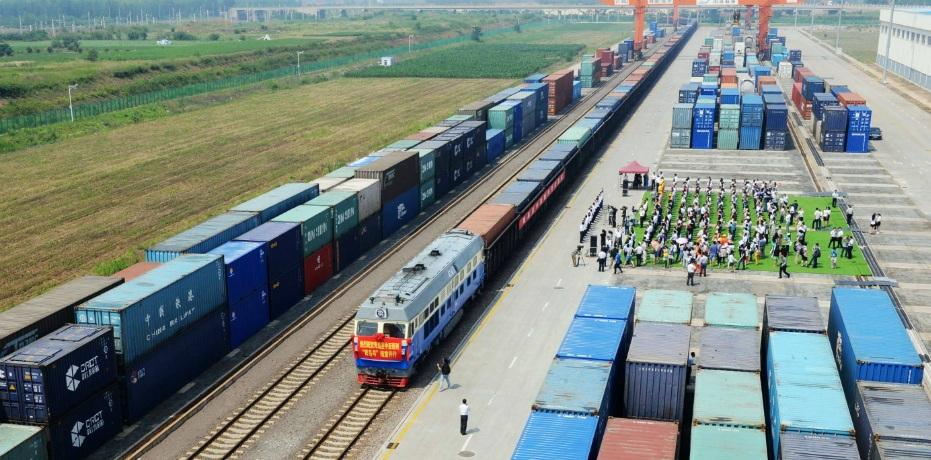
In May 2017, the Chinese capital, Beijing, hosted an international conference to celebrate the official launch of the initiative under the title “The Belt and Road,” where the word “Belt” refers to a network of land roads and railway lines linking dozens of Asian and European countries and is called the “Silk Road Economic Belt.” While the word “road” refers to a network of maritime shipping lines linking Asia, Africa, Europe, and Latin America and is called the “Maritime Silk Road.”
Number of countries
The Belt and Road Initiative includes 71 countries from Asia, Africa, Europe and Latin America, together comprising about half the world’s population and about a quarter of the world’s gross domestic product. China has succeeded in mobilizing broad international support for this project, in which it has currently spent more than $210 billion, while estimates indicate that its investments will exceed one trillion dollars. China pledged to invest up to $150 billion annually in countries participating in the initiative. Dozens of countries from Panama in Latin America to Madagascar and from South Africa to New Zealand announced their official support for the project.
The Land Branch
The land branch of the initiative includes 6 land corridors and a sea corridor. The land corridors are the new Eurasian land bridge, which extends from western China to western Russia, the China-Mongolia-Russia corridor, which extends from northern China to eastern Russia, and the China-Central Asia-Western Asia corridor, which extends from western China to Turkey. The China-Indochina Peninsula Corridor, which extends from southern China to Singapore, the China-Pakistan Corridor, which extends from southwestern China to Pakistan, and finally the Bangladesh-China-India-Myanmar Corridor, which extends from southern China to India. As for the sea corridor, it extends from the Chinese coast through Singapore and the Indian Ocean to the Mediterranean Sea through the Red Sea and the Suez Canal, all the way to Europe. So far, China has invested in about 42 ports along the route of this corridor, of which the Suez Canal region and its shipping corridor are an essential part.