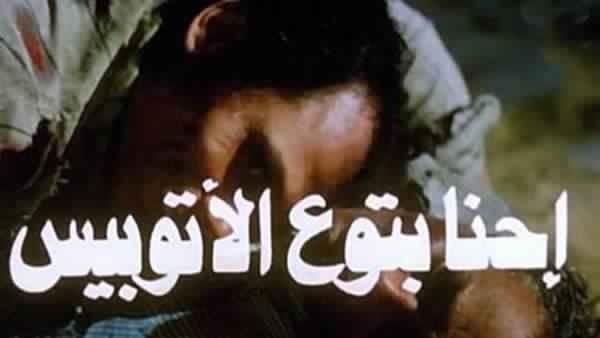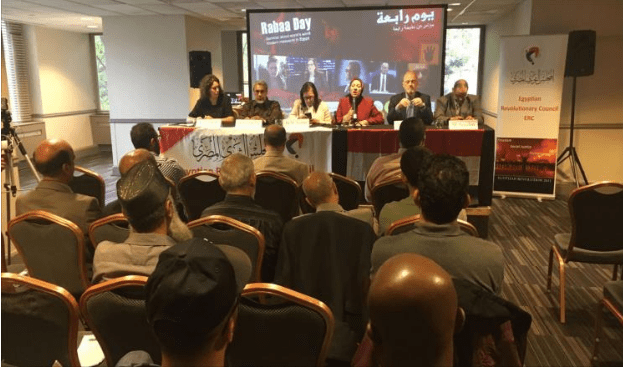
The Egyptian Revolutionary Council and a number of Egyptian-British associations in London organized a “Rabaa Day” symposium on August 11; To commemorate the fifth anniversary of the dispersal of the Rabaa and Nahda sit-ins in Egypt on August 14, 2013, which resulted in more than 670 deaths and about 4,400 injuries, according to reports from the Egyptian Ministry of Health, while Human Rights Watch confirms in a report that the number of victims exceeded a thousand dead. The conference opened with a documentary presentation of the massacre, summarizing its prominent events from the call for a sit-in on June 28, 2013 until the massacre occurred on August 14 of the same year, highlighting the suffering of the victims and pictures of the martyrs and detainees. After that, Dr. Talaat Fahmy, the official spokesman for the Muslim Brotherhood, delivered a speech via Skype in which he greeted the families of the martyrs, the injured, and the victims, and stressed the continuation of the national struggle “until God Almighty completes His victory over His faithful servants,” he said. Dr. Talaat narrated scenes that he personally witnessed in the square during the sit-in, and he mentioned a song that one of the sit-ins was repeating during the dispersal of the sit-in, the words of which were: “I am an Upperlander and not a coward, and I am coming to die in the square,” citing that the sit-in knew that the sit-in was not a recess or an outing, but rather a national struggle against the coup plotters. Regarding the massacre, Dr. Talaat said that it was not against the Muslim Brotherhood, but rather targeted the entire people of Egypt, who came out from all walks of life declaring their rejection of the coup against constitutional legitimacy and the gains of the January Revolution. It also targeted breaking the will of the nation and the Arab Spring revolutions. He concluded his speech by describing the Rabaa massacre as a victory and not a defeat, stressing that the blood of the martyrs will not be in vain, and that it will ignite the revolutions of free people until victory and salvation are achieved for Egypt and its people. The audience also listened to the accounts of a number of eyewitnesses who participated in the peaceful sit-ins at the time of the massacre. It was started by Ali Hussein, a journalist and human rights activist, who was present at the events since they began. He narrated the facts of the first attack on the sit-in, which began with its launch on June 28 through the Military Engineers Street, near Ammar Al-Manayfa, where he confirmed that the officers’ buildings were being shot from inside the houses. Recalling memories of the dispersal of the sit-in, Hussein recounted the first moments of gunfire on the day of the dispersal, and mentioned the story of one of his companions who was completely burned by napalm bombs that were dropped by army planes over the sit-ins. He also mentioned the story of three young men who were targeted by army planes with napalm bombs and burned completely in less than 30 seconds. Then he confirmed that the completion of the dispersal of the sit-in took place at the moment the Al-Manayfa Building fell. As for the eyewitness, Ali Ezzat, he said that he thought that the army would not dare to fire bullets until he witnessed the massacre of the guards on July 5, 2013 and saw the bodies of the sit-ins divided by the bullets. He was certain at that time that the army would break up the sit-in at any cost. Ezzat considered that the Rabaa massacre was “the real terrorism practiced by the military, and through it he worked to send a message to the people that the revolution had ended after this incident,” but he failed when people came out again after the massacre in Ramses Square in Cairo and in other governorates of Egypt, and his struggles have not stopped until today, according to him. As for the human rights researcher, Ahmed Al-Attar, he said that the army was not only seeking to break up the sit-in, but rather it wanted to cause the largest possible number of casualties, as most of the injuries were in the head and chest, and there was no chance of survival in the sit-in. Al-Attar said that the army personnel were shooting at anything moving in the vicinity of the square, and they even chased the bodies into Al-Iman Hospital, where the bodies of the martyrs were collected. He confirmed that a number of the bodies were stolen by the security forces, and have not appeared until now. Maha Azzam, head of the Egyptian Revolutionary Council, also gave a speech in which she explained that the goal of this symposium “is not only description and documentation, but planning and preparation for the return to Egypt and liberating its squares from the corrupt clique,” as she described it. Azzam considered that “the massacre was not directed against one faction, but rather against all the Egyptian people. It is a crime against every Egyptian citizen, and against all of humanity,” saying that “it is a shame that the perpetrators remain free outside the dock despite all the human rights and legal reports that documented their crime.” Dr. Anas Al-Tikriti, founder and president of the Cordoba Foundation, gave a speech in which he stressed the importance of documenting the events of the Rabaa massacre, as it is one of the milestones in the history of modern Egypt, and a sign that shapes the features of that difficult period that the Arab region witnessed. Al-Tikriti said that the Rabaa massacre will not be erased from the memory of Egyptians and the history of their great struggle to seize their freedom and establish a free democratic system that guarantees a safe and secure life for everyone, and establish a system that respects human rights and seeks to strengthen them and redress grievances to its people. This was followed by a speech by British journalist Emilia Smith, who spoke about the violations in Sinai and the displacement of people and civilians there, stressing that the continuation of these violations is evidence of “the regime continuing its approach that it began in Rabaa and Nahda with continued repression and the bloody approach.” The Secretary of Foreign Policy of the Freedom and Justice Party, Muhammad Sudan, participated in an intervention in which he spoke about what he called the “Rabaa community,” which was formed in the square among the protesters, and witnessed the entire month of Ramadan with its worship and rituals. Sudan said the Rabaa community was “a community It was distinguished by the participation of a number of activists from different cultures and backgrounds, who came only to deliver the message that they wanted to live freely, and that they succeeded in expressing the Egyptian people who wanted to live in freedom and dignity, while the military met those demands with blood and killing.” Dr. Daoud Abdullah, Deputy Secretary-General of the Muslim Council of Britain and director of the Middle East Monitor website, also gave a speech in which he stressed the importance of documenting the events of the Egyptian revolution and the events of the Arab Spring, with the Rabaa massacre at its heart. Al-Adawiya, the largest political massacre in the modern history of Egypt. Abdullah pointed out that the closure of newspapers and channels opposing the coup, and the violations against journalists, were a symbol of the approach taken by the coup in wasting public freedoms and freedom of expression. Abdullah stressed the necessity of adopting the reports of international human rights organizations as “important documents that must be continued to build upon, and to follow up on the cases filed in Britain and abroad, in order to reach the conviction of the accused, and begin their pursuit through the European capitals through which they pass.” At the end of the symposium, a number of artists organized an art exhibition in which they expressed through artistic paintings the suffering of the victims and those missing in prisons since the massacre.
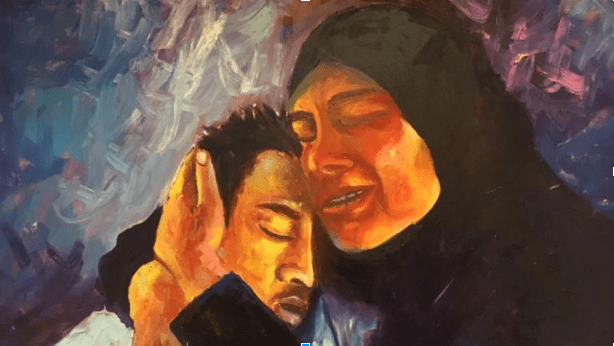
Visual artist Mukhtar Abdullah participated in embodying the image of the child Ramadan, who lost his mother in the massacre, shouting, “For God’s sake, Mama, wake up,” saying that those shouts and their innocence do not leave his ears. He considered that what he called “documentation with art” is “a tribute to the victims and a reminder to the world that the perpetrators are still far from punishment, and their lives should be fulfilled by bringing the perpetrators to international justice.” It is noteworthy that a number of international human rights organizations have classified the massacre of the peaceful dispersal of the Rabaa and Nahda sit-ins as “the largest mass killing of demonstrators in Egypt’s modern history.” Human Rights Watch said in a report that Egyptian security forces “carried out one of the largest killings of demonstrators in one day in the history of the modern world.”