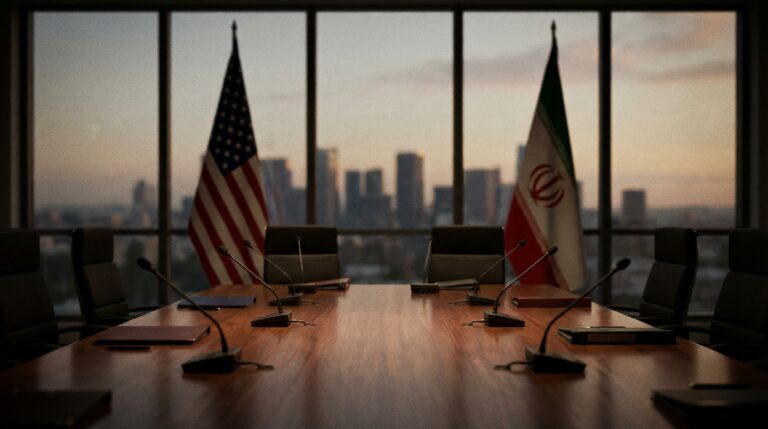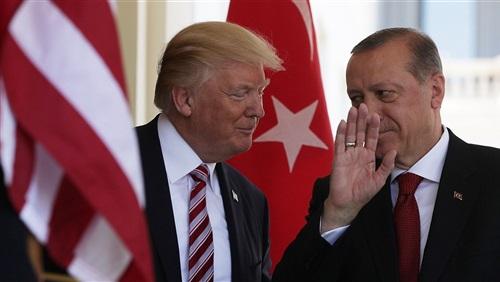
Türkiye woke up on the morning of August 10th A series of penalties Economic sanctions announced by US President Donald Trump include raising Turkish steel and aluminum import duties by 50 and 20 percent, days after imposing other sanctions on the Turkish Ministers of Interior and Justice, in response to Ankara’s refusal to release American Pastor Andrew Brunson, who is under house arrest in Türkiye. The US sanctions against Turkey come within a larger context, which is an economic war that Trump is waging against the United States’ prominent opponents. On the 7th of the same month, Trump announced the imposition of a new package of sanctions against Iran, which stipulates ending financial transactions and banning the import of raw materials and some industrial products. He also announced that on the 22nd of August, a new set of US sanctions imposed on Russia will enter into force. Immediately after Trump announced his sanctions, economic experts expected that… These sanctions have a negative impact On the economic climate of these three countries, especially since it sparked almost similar reactions from the leaders of the three countries, and led to a sudden decline in local currencies and a partial collapse of the three stock exchanges.
Initial reactions
And in First official response Following Trump’s decisions, Turkish President Recep Tayyip Erdogan called on the Turkish people to prepare for a national battle against their enemies in the economic field, after the decline of the local lira. As for the Russian Kremlin, it considered the upcoming package of anti-Russian sanctions illegal, and Iranian President Hassan Rouhani was the most severe, as he commented, saying: “The United States will regret this,” but he did not specify what he meant by that as a threat.
Turkish response
Procedurally, Türkiye was the most assertive Its economic response On the US sanctions, Erdogan’s call received a wide response and a response from citizens who worked to redeem deposits and sell fixed assets to devalue the currency, in addition to widespread calls to dispense with American manufactures in favor of others, local or global. Then came Erdogan’s decision to impose a package of sanctions on American exports at the rate of 140% on alcohol, 120% on cars, and 60% on tobacco imported from the United States, adopting the principle of reciprocity. Erdogan’s decisions bore fruit quickly, as the local currency (lira) partially rose again at the end of the first week of movements, and the stock market also recovered after two days of rapid decline to record stability in the trading curve.
Rallying supporters
However, it seems that what was missed in the battle was only the first round, as regional movements by the allies of both sides quickly revealed, the most prominent of which was Qatar Declaration Supporting the Turkish economy with $15 billion in the form of new investments, deposits and guarantees, during the visit of the Emir of Qatar to Ankara, in light of the economic crisis taking place in Türkiye and the collapse of the lira against the US dollar. Qatari Foreign Ministry spokeswoman Lulwah Rashid Al Khater said, via her Twitter account, that “there is no doubt that the stability and security of our sister Türkiye and its economic and political security are the stability and security of the entire region.” She added, “Qatar, which was founded on the principles of true Islam and the values of Arab chivalry, continues to adhere to its honest approach. It does not let its brothers down, nor does it deny them their standing with it, but rather returns kindness with something better.” As for Ali The other sideEgyptian newspapers revealed the conclusion of a deal between Riyadh and Cairo to fight Turkish interests in the Arab region, after a meeting held on Wednesday, August 15, between Egyptian President Abdel Fattah El-Sisi and Saudi King Salman bin Abdulaziz, in the Saudi city of NEOM. Under the title “Egyptian-Saudi agreement against Türkiye,” I wrote Vito newspaper Al-Masryah: “The visit brought understandings and rapprochement between the two brothers aimed at reviving the Arab project in the region and curbing other projects, which found the opportunity to penetrate the body of the nation, during the past years.”
The turbulent future
tensions in US-Turkish relations It has existed since the era of the Obama administration, but the latter preferred not to drag these relations into an open conflict, while Trump does not hesitate now to go to war with Erdogan, who announced his refusal to submit to the White House, with a series of joint sanctions for Türkiye, Russia, and Iran. The prominent expert and first deputy head of the Center for Political Technologies in Moscow, Alexei Makarkin, commented to the Russian newspaper “News.Re” on Trump’s statements by saying, “The relative simultaneity of sanctions against Russia, Iran, and Turkey is affected by many factors. It is clear that Trump does not understand the value of his allies, and wants to move forward without considering the potential risks of his decisions, and this contradicts the policy pursued by Barack Obama.” As for the Director of the Center for Middle East Conflict Analysis at the Institute of the United States and Canada, affiliated with the Russian Academy of Sciences, Orientalist Alexander ShumilinIt is believed that the simultaneous sanctions against Tehran, Moscow, and Ankara are an apparent circumstantial position rather than a deliberate one. Shumilin stressed, “The American sanctions put Russia, Turkey, and Iran in the same boat, which makes it necessary for the three countries to cooperate with each other, but I do not expect any strong rapprochement to emerge between them.” According to this expert, “The problem is that each of the three parties has different goals and intentions. For example, Turkey will not prefer to remain in the same boat with Russia and Iran, while Iran will choose to get closer to Russia. For its part, Russia does not mind staying in the same boat with both Turkey and Iran.” Shumilin believes that Moscow will try to exploit the contradictions between Ankara and the West, but strategically it is impossible to guarantee a long-term alliance with Turkey, but they can benefit from each other at the present time.” As for the expert and member of the Russian International Affairs Council and the Valdai International Club, Maxim SwashkovHe stressed that the imposition of sanctions against Russia, Turkey, and Iran at the same time cannot be considered a mere coincidence, but rather there are premeditated intentions. Pointing out that “these sanctions are evidence of the direction the United States is taking with those it considers its opponents, or allies who have deviated from the path.”