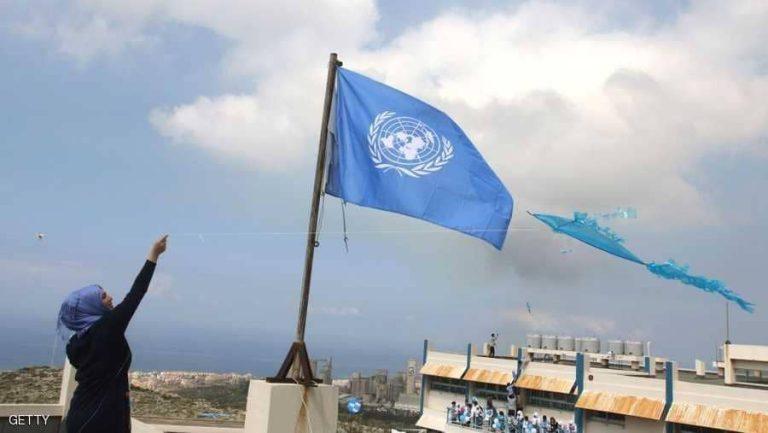
During your trip in New York City, you can clearly notice the flags of 193 countries flying in front of a majestic building decorated with a banner bearing two large English letters (UN) in the heart of the city. You are now in front of the main center of the United Nations headquarters, and the flags that you see are the flags of the member states. The United Nations is an international organization whose stated goals are cooperation in the areas of international law, international security, economic development, human rights, and achieving world peace. It was established in 1945 after World War II to replace the League of Nations, to stop war between countries and create a space for dialogue between them. Several sub-organizations work under its umbrella to achieve their tasks. United Nations documents confirm that it has two main goals: peace and human dignity. If fighting breaks out between two or more countries, anywhere, the United Nations may be asked to intervene to try to stop it. After the fighting stops, the United Nations may put in place the necessary measures to prevent it from happening again. But the United Nations tries above all to address problems and conflicts before they escalate and lead to fighting. One of the primary goals of the United Nations is to identify the causes of war and to find means to eliminate them.
Foundation headquarters
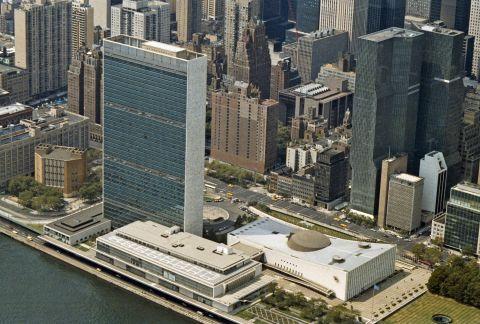
The main center of the United Nations consists of several buildings located adjacent to the East River in New York City, and the three main buildings are the General Assembly building, the General Secretariat building, the Conference Building, and in a smaller building, next to the General Secretariat building, there is the library. Member states of the United Nations have donated many equipment and works of art to the United Nations buildings. The flags of all member states fly in front of the main center.
Broad powers
Given the powers granted in the organization’s charter and its unique international character, the United Nations can work on issues facing humanity in the 21st century, such as issues of peace and security, climate change, sustainable development, human rights, disarmament, terrorism, health and humanitarian emergencies, gender equality, governance, food production, and many others. The United Nations provides its members with a forum to express their views through the General Assembly, the Security Council, the Economic and Social Council, and other organs and committees. By facilitating dialogue among its members, as well as hosting negotiations, the organization has become a mechanism for governments to find areas of agreement and resolve their problems with each other.
The reality of the institution
The United Nations was able to control some conflicts and prevent them from developing into major wars. It also helped people in many parts of the world to gain their independence and improve their living conditions. However, the dispute between the member states prevented the organization from taking full and effective measures to maintain peace, and the severe financial crises led to its weakening and the absence of its role in many major conflicts, especially in the Middle East region, and major countries and entities ignore the implementation of its decisions, most notably the Zionist entity.