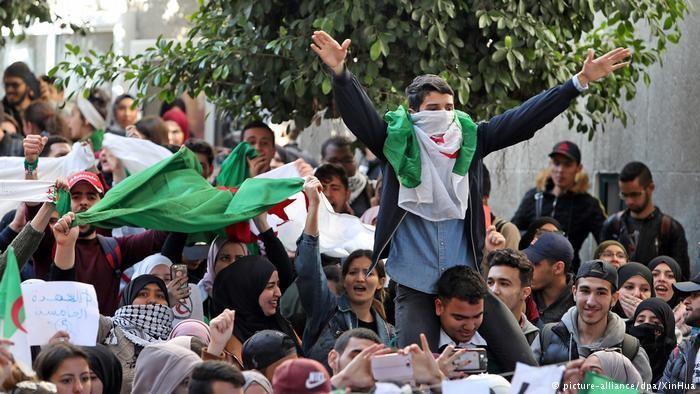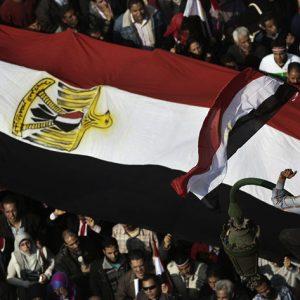
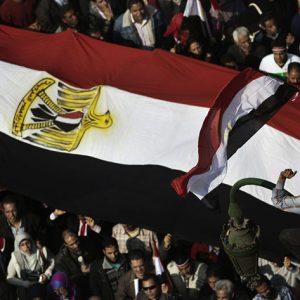
At a time when the role of youth movements in the Arab region has declined after reaching a high peak following the Arab Spring revolutions, this study published by the “Edraak Center for Studies and Consultations”(1) By researcher Mahmoud Gamal(2) Titled “Social movements in Egypt after 2011 – from rising role to declining status“, to monitor the development of the phenomenon of social movements in Egypt, especially with regard to the openness of the public sphere and their increasing role in the midst of the events of January 25, 2011, then their status declined and they turned violent in light of attempts to close the public sphere since the ouster of President Mohamed Morsi in July 2013. The role of social movements, especially youth, has emerged in the Egyptian political arena since the founding of the Kifaya Movement in 2004 and the subsequent establishment of similar movements that had the largest role in mobilizing and mobilizing for the events of the January 25 Revolution. 2011, such as the “April 6 Youth Movement” and the “We Are All Khaled Said” movement, which played a major role in electronic mobilization during the events. The influence of this phenomenon later extended in a more effective and organized manner following January 2011, and its role varied between political, social, educational, and mobilization, whether it was peaceful mobilization following the resignation of former President Mubarak on February 18, 2011, or violent mobilization following the removal of former President Mohamed. Morsi on July 3, 2013, as these movements gained influence and expanded their role as a result of the decline in the role of traditional parties in the period before the revolution, and they became seen as a democratic alternative to the traditional parties and entities that were exercising a decorative role to beautify the image of the regime of former President Mubarak, while the role of violent movements expanded after Morsi’s ouster as a result of the closure of the public sphere to political activity, which declined after the issuance of Law No. (107) of 2013 regarding the organization of political activity. Demonstrations and public meetings, which restricted the freedom of many activists and young leaders such as Ahmed Douma, Alaa Abdel Fattah, Ahmed Maher, founder of the April 6 Movement and others, in addition to the escalation of the wave of political repression, especially after the dispersal of the Rabaa al-Adawiya and Nahda sit-ins in August 2013. This paper is based on studying the development of the phenomenon of social movements in Egypt, especially with regard to the openness of the public sphere and the escalation of their role in the midst of the events of January 25, 2011, and then the decline of their status. And its transformation into violence in light of attempts to close the public sphere since the ouster of President Mohamed Morsi in July 2013. In this context, the paper addresses the study of three main aspects. The first aspect deals with a reading of the theoretical framework related to social movements in order to employ it to understand the Egyptian situation and its various political transformations. The second aspect relates to studying the case of peaceful change and the opening of the public sphere after 2011 and its effects on the development of the peaceful political effectiveness of social movements in Egypt. While the third aspect deals with the study of attempts to liquidate these movements through propaganda. Negativity, until the issuance of Law 107 Regarding demonstrations, then the state of violent change after the closure of the public sphere following Morsi’s ouster in 2013 and its repercussions on fueling movements of a violent nature such as: Popular Resistance, Ajnad Misr, Revolutionary Punishment, the Sawa’id Misr Movement (Hasm), and others. • Download: To read the entire article and download it from Here. �������������������������������������������
Footnotes:
(1) Edraak Center for Studies and Consultations: An independent studies and consulting institution, founded in Syria/Aleppo, in 2014 AD. The center is concerned with strategic studies and anticipating the future in the Middle East region, and gives special attention to the Syrian issue, the developments of events therein, and all related Arab and international situations. (2)Mahmoud Gamal: Researcher in political science, especially issues of democratic transformation and the sociology of religion. He obtained a master’s degree in social and human sciences on the subject of “Mosque Management Policies and Religious Discourse: Studying the Political Presence in the Religious Space in Egypt after 2011.” He has many published research papers.