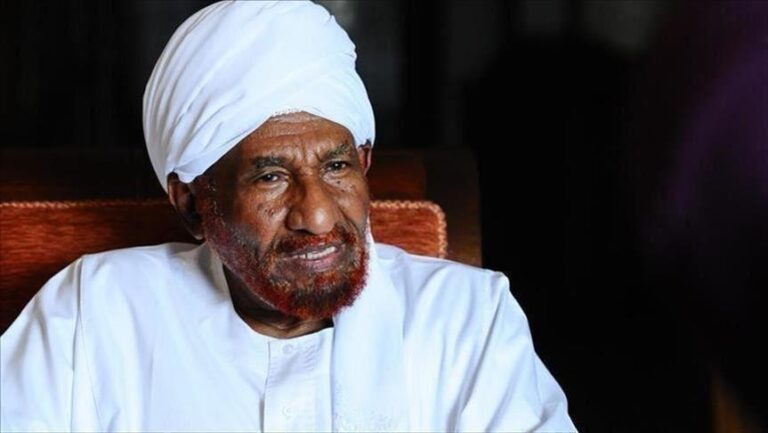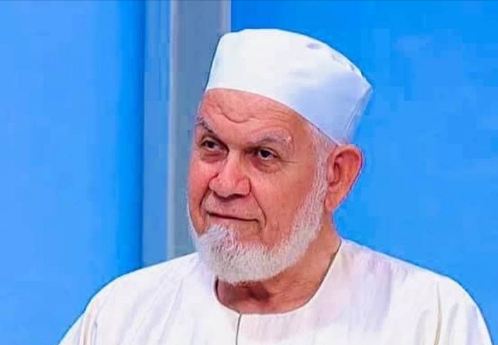

Among the many tragedies that the year 2020 brought us, the passing of the eloquent farmer Abd al-Rahman Shukri, head of the Farmers’ Syndicate and MP in the Revolutionary Parliament, remains the one that inflicted it on the path of the Egyptian revolution and the cause of the marginalized in Egypt, after the man paid the price for his word and rose far from the land he had always defended and its farmers. As usual, speaking out for the truth, Hajj Abdul Rahman Shukri died, at the age of 77, after suffering a coma following his participation in a television program defending the Nile water that was wasted by the military regime in Egypt. Hajj suffered a brain hemorrhage and was detained in a hospital in the Qatari capital, Doha, until he met his Lord, Thursday, December 24th. Hajj Abdul Rahman always defended the issues of farmers in the face of tyranny, and refused to compromise on his principles. He was one of the first faces that those who rejected the coup knew during their journey with the foreign media over a period of about 7 years. People always knew from his words the words “the Renaissance Dam, the waters of the Nile, Egyptian wheat, long-staple cotton, sugar cane, agricultural fertilisers, the military’s oppression of the farmer, and Sisi’s revenge on the Egyptians.”
A journey of struggle
One of the most prominent things recorded by his positions was his exposure of the conspiracy against Egypt’s agricultural sector, that “the government is colluding with businessmen to raise the prices of fertilizers.” In another interview, “Shukry” confirms that “the Egyptian farmer was subjected to great injustice in setting the price of wheat. He explained that the government rejected a million and a quarter tons of wheat from the farmers, under the pretext that the wheat is green.” He added that “Abdel Fattah al-Sisi’s mistakes are paid by the Egyptian farmer,” and pointed out that “the government killed, washed, and buried the Egyptian farmer and did not pray in the end.” He must respond.. God bless you, Egyptian.” Among his sayings: “Egypt was cultivating 2 million acres of cotton, and was exporting oils and all cotton products, even raw cotton, and more than 35% of workers in the Egyptian market were working in this field, but under the leadership of Mubarak and Abdel Fattah Al-Sisi, all this goodness was destroyed.” Regarding the Renaissance Dam, he said: “The operation of the Renaissance Dam will lead to a decrease in Egypt’s share of the Nile waters, adding that agriculture consumes 40 billion cubic meters of Nile water to irrigate 8.5 million acres of agricultural land, and each acre needs 5 thousand cubic meters per year, and the decrease in Egypt’s share causes the agricultural land to become barren.” He stressed, “Egypt must first adhere to its historical rights to the Nile’s waters before looking for any alternatives to the water shortage.” Regarding the recent Corona crisis, Shukri said: “During the Corona crisis, farmers were exposed to major crises due to the lack of health insurance for them in light of the shortage of hospitals, the absence of preparations, the lack of supplies, and the shift of health units in the countryside to vaccinating children and promoting family planning and birth control programs.”
Long struggle
Haj Abdul Rahman Shukri was working as an employee at the Agricultural Research Center in Beni Suef, after studying at the Faculty of Arts, Cairo University. At the beginning of his political career, he joined the Vanguard Organization, after which he left it and joined the Brotherhood. He was one of the active members in the field of agriculture, and was able to convince many farmers from the Wasti Center in Beni Suef Governorate to join the Brotherhood organization. The coup newspaper, Al-Watan, claimed that “Haj Abdul Rahman is accused of burning police facilities – 36 facilities in Beni Suef – and was sentenced in absentia in a military case in a west Cairo court, along with 120 others in February 2016, to 25 years. He is one of the leaders of the Rabaa sit-in, and was one of the most prominent preachers on its platform.”
Obituaries and eulogies
Following the announcement of the death of Hajj Abd al-Rahman, Dr. Mohamed al-Saghir, Undersecretary of the Ministry of Endowments in the government of Dr. Hisham Qandil, commented on the death of the head of the Farmers’ Syndicate, saying: “Hajj Abd al-Rahman Shukri, the Egyptian parliamentarian and head of the Farmers’ Syndicate, has passed away to God’s mercy after his speech on Al Jazeera Live in supporting the farmers and preserving the waters of the Nile. He was the knight of this field and we consider it a good ending. May God bless him with his mercy and raise his rank and sincere condolences to his family.” And she loved him.” Dr. Abdel Tawab Barakat conveyed this message from him hours before his departure via his Facebook account, and it said: Hajj Abdel Rahman says: “Those who were forced by the tragedies and crimes of the coup to leave their homelands… and bid farewell to their homes, loved ones, and neighbors… Good morning to those who prepared their departure bags and put inside them the laughter of their mothers, the embraces of their fathers, the smiles of their children, and the tears of their wives.” He added: “Good morning to those traveling to their destinies… to those who They carry high hopes in their hearts… for those who take with them a large supply of longing… to eat from it whatever satisfies their psychological and emotional hunger… for those who are far from their memories, their childhood, and their friends… for those who do not know what the future holds for them… for those who sacrificed their places, seats, beds, and pillows… to be a crossing bridge to the happiness of those they loved… for those who left their hearts in the soil of the homeland… for those who choked on the lesson of separation… for whom They spent years of distance and burning.” He continued: “For those whose loneliness has become a refuge to which they turn in a moment of nostalgia… for those who smell the bread of the homeland in the smell of the past… even though the homeland did not provide them with better ways of freedom or livelihood… for those who console themselves with a phone call, an email, or a picture of a cartoon rose… for those who miss the rituals of their lives that they grew up with and are familiar with… for those who walk in the streets of exile and their hearts beat loudly from the sound of their families… For those who are tired there… for those who are in pain… for those who cannot return… and cannot bear any more… for those whose mother, father, or someone dear to them died, and the circumstances did not allow them to say goodbye.” He concluded by saying: “For those whose wife gave birth to a child whose exile prevented him from receiving his cries and seeing his features… For those who have begun to borrow a lot of patience from the pockets of hope… For those who dream of returning… and wish for stability… For those imprisoned behind the bars of departure… Peace be upon you in your homelands and outside your homelands… So do not become weak, nor be sad, and you are superior if you are believers.”