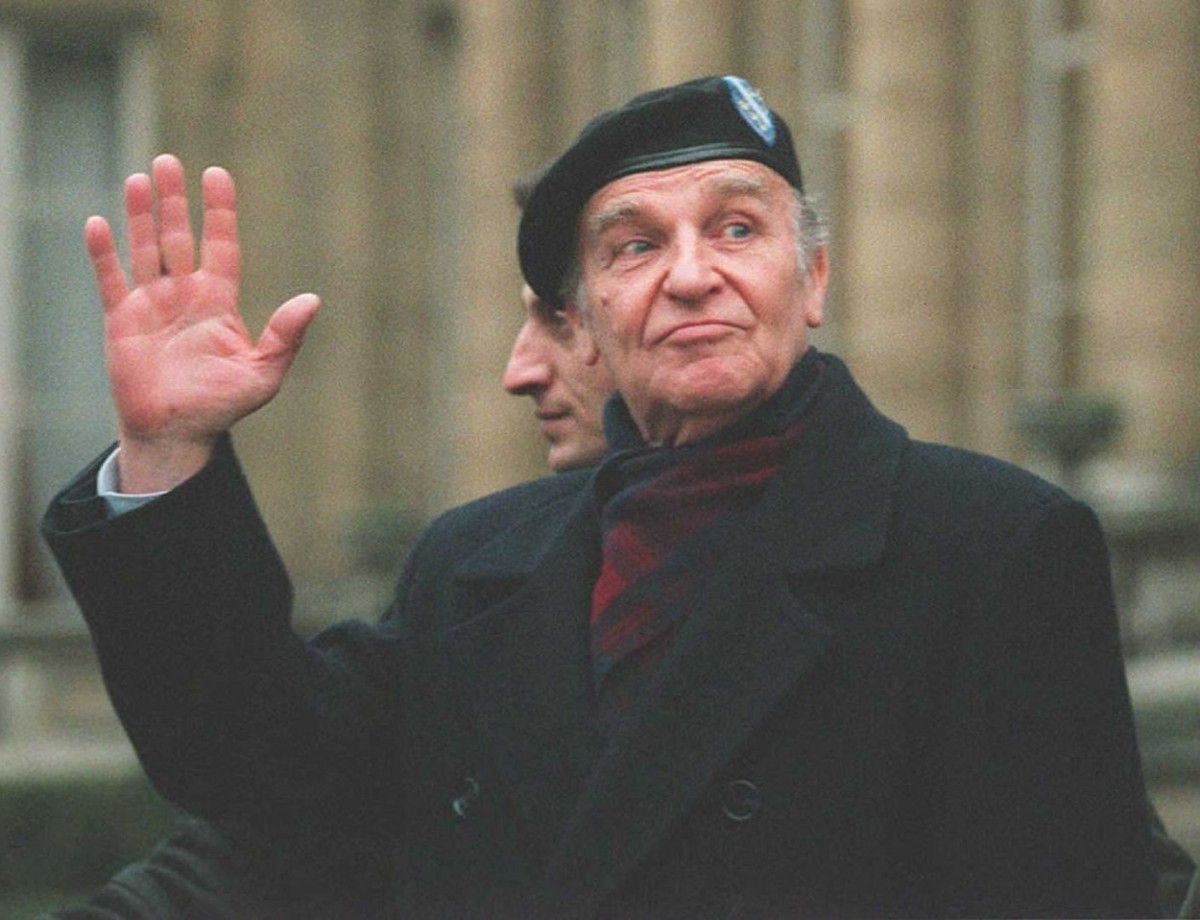

A unique political and cultural hero, he was born in Eastern Europe to lead a suffering Muslim nation. He lived a life full of intellectual and political struggle, which included many years behind bars before he became the first president of the Republic of Bosnia and Herzegovina after the end of a bloody war during the 1990s. He presented a renewed intellectual project for Islamic thought in a regional circumstance that included his country being subjected to communist occupation.
The Bosnian people of Bosnia and Herzegovina suffered a huge humanitarian tragedy, from which they were eventually spared, and Bosnia recovered after the war, receiving support for reconstruction. Although the Bosnians have not forgotten the genocide they experienced, the efforts of Alija Izetbegovic “Dido”; That is, “grandfather” in the Bosnian language, as his people call him. She succeeded in putting an end to long suffering. Who is the wise leader of Bosnia, Alija Izetbegovic?
Busy life
Begovic is the Bosnian leader and Muslim thinker who wrote history by saving Muslim Bosniaks from war and establishing an internationally recognized sovereign and independent state for them. This month marks the 17th anniversary of his death.
Alija Izetbegovic was born in the city of Bosanski Samac in 1925. He spent his youth during World War II fighting fascism and then communism, and he paid the price for his struggle with years of his life spent in prisons.
Begovic was imprisoned for the first time in 1946 during the reign of the Yugoslav dictator Tito, and was released from it in 1949. He entered prison for the second time in 1983, after he was sentenced to 14 years in prison, on charges of separatism and seeking to establish an Islamic state, due to his book “The Islamic Declaration”, which was published in the seventies, and then he was released at the end of 1988, with the Yugoslav government releasing all Detainees on charges related to verbal dissent.
Political struggle
Begovic established the Democratic Action Party in 1990, with the aim of ending the Bosniak Muslim feeling of inferiority in their homeland, providing them with the opportunity to influence the political arena, and to provide an example of coexistence between the ethnicities existing in Yugoslavia under the name (Socialist Federal Republic of Yugoslavia), which included each of the following six countries: Serbia, Croatia, Slovenia, Macedonia, Bosnia and Herzegovina, and Montenegro.
In 1991, after the division of the Soviet Union, Slovenia, Macedonia, and Croatia declared their independence from the Yugoslav Federation, and a year later, the Republic of Bosnia and Herzegovina seceded. In the first multiparty elections that the Republic of Bosnia and Herzegovina witnessed, in 1990, one of the six republics that made up Yugoslavia, the Democratic Action Party strengthened its strength by winning 86 of the 240 seats in Parliament.
After Slovenia and Croatia declared their independence from Yugoslavia, a referendum on the independence of Bosnia and Herzegovina was held on March 1, 1992, in which 63% of Bosnia and Herzegovina’s voters participated, most of whom voted in favor of independence, but the Bosnian Serbs did not participate in the referendum.
Bosniak leader
With the Republic of Bosnia and Herzegovina declaring its independence from Yugoslavia, the leader of the Bosnian Serbs, who is currently being tried at the International Court of Justice in The Hague, Radovan Karadzic, and Slobodan Milosevic, who died in 2006 during his trial in The Hague, began the war against the newly independent republic.
The Bosnians succeeded in organizing themselves quickly, created an army and a war government for their republic, and began their struggle, for which they paid the death of thousands, the rape of thousands of Bosnian women, in addition to the torture witnessed by those who were detained in collective camps, and the demolition of homes, mosques, and historical monuments.
The Bosnians were subjected to massacres, the most brutal of which was the Srebrenica massacre in 1997 1995However, the world continued to turn a blind eye to the atrocities of the war in Bosnia, until pressure from the international community resulted in the signing of the Dayton Peace Agreement on November 1, 1995, which led to an end to the war.
Creative philosopher
In contrast to the image of the main leader, Begovic presented a renewed intellectual project for Islamic thought in a regional situation that included his country being subjected to communist occupation, and his people suffering for a long time from the scourges of war. He wrote – in the spirit of the European Muslim writer, artist, and philosopher – his most important book, “Islam between East and West,” during his imprisonment, trying to transcend the clash of civilizations to see humanity guided by the inspiration of heaven.
The late Egyptian thinker Abdel Wahab El-Messiri described the late President Begovic as “the only hardworking mujahid in the world now.” Al-Mesiri added that Begovic was a thinker and head of state who “analyzed Western civilization and demonstrated the nihilistic, materialistic cognitive model inherent in its sciences and its dominant model, then confronted it and resisted its attempt to exterminate his people.”
Unique leader
Alija Izetbegovic led his people during the years of war, and despite his poor health, he continued to lead his country during its recovery from the effects of the war, until he left the presidency of Bosnia and Herzegovina in 2000.
On October 19, 2003, after suffering from illness, the “wise leader” died and was buried according to his will in a simple grave among the graves of the martyrs in the “Kovaci” cemetery, after he rejected a plan that the government was preparing to build a luxurious shrine for him.
In general, the late Bosnian President Begovic seemed like an exception in the 20th century to the problems of Plato’s idea expressed by Popper. He was an educated, non-totalitarian president. He founded a party that won a parliamentary majority after a democratic competition. He participated in ruling his country as a member of the Bosnian Presidency from 1996 to 2000, and as President of the Council twice, alternating with Serb and Croat representatives, before retiring from political life and resigning from official positions. He wrote in his memoirs, “I am a president elected by the people.”