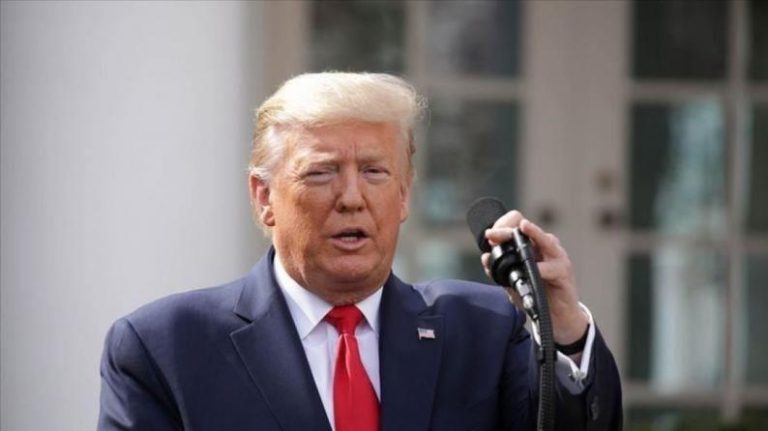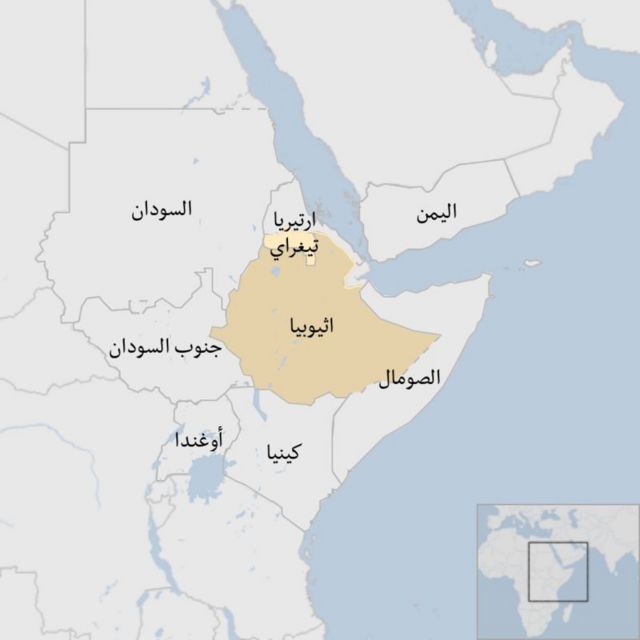

In an unexpected surprise from the African country known for its support of the Palestinian cause, White House spokesman Judd Deere announced on Friday, October 23, 2020, that Israel and Sudan announced the normalization of their diplomatic relations under the supervision of US President Donald Trump, who completed this agreement via a phone call with Israeli Prime Minister Benjamin Netanyahu and his Sudanese counterpart, Abdullah Hamdok, making Sudan the third Arab country to establish relations with Israel within two months, after the UAE and Bahrain.
As expected, Netanyahu quickly welcomed the agreement, and said to Trump: “We are expanding the circle of peace so quickly thanks to your leadership.” Netanyahu added that his government is taking steps towards normalizing relations with Sudan, saying that this represents a “new era” in the region. He added that Israeli and Sudanese delegations will meet soon to discuss trade and agricultural cooperation.
As for Khartoum, it confirmed the normalization of its relations with Israel, according to what was stated in a tripartite statement issued by Sudan, the United States, and Israel, broadcast by Sudanese official television, and confirmed by Sudanese Foreign Minister Omar Qamar al-Din, who said, “What happened today is an agreement on the steps for normalization, and the final decision on this matter will be taken by the legislative institutions after their formation is complete. They have the right to do so.”
The start is early
The indications of this agreement came early, specifically last February, when the head of the Sudanese Transitional Sovereignty Council, Lieutenant General Abdel Fattah al-Burhan, held a meeting with Israeli Prime Minister Benjamin Netanyahu in Uganda. Then, a Sudanese government source revealed that a joint American-Israeli delegation visited Khartoum, met Al-Burhan, and discussed with him about normalizing Sudanese-Israeli relations.
Prior to the statement about normalizing relations, the US administration revealed Trump’s intention to remove Khartoum from the list of states sponsoring terrorism. The White House said that Trump notified Congress “of his intention to formally rescind Sudan’s designation as a state sponsor of terrorism.”
The White House described the move as a “pivotal turning point” for Khartoum seeking to emerge from decades of isolation. Congress did not obstruct Trump’s decision, but it must also approve legislation granting Sudan immunity from other claims, including what the White House confirmed by Sudan transferring $335 million into an account to help victims of terrorism and their families.
Sudan has been seeking for years to remove its classification as a state sponsor of terrorism, which has hindered its attraction of foreign investments because the companies that may risk angering Washington or exposing themselves to prosecution are limited. It seems that Sudan has discovered that the path to the heart of Washington begins from Tel Aviv, and it did!
A stab at the Palestinians
In turn, the Palestinians denounced the agreement, and the Presidency of the Palestinian Authority confirmed in a press statement that “no one has the right to speak in the name of the Palestinian people and the Palestinian cause, and that the Palestinian leadership will take the necessary decisions to protect the legitimate interests and rights of our Palestinian people.”
Wasel Abu Youssef, a member of the Executive Committee of the Palestine Liberation Organization, said that Sudan’s accession to “the normalizers with the Israeli occupation state constitutes a new stab in the back of the Palestinian people, a betrayal of their just cause and a departure from the Arab Peace Initiative.”
He continued, saying from Ramallah in the occupied West Bank: “This step and the previous steps by the UAE and Bahrain will not shake the faith of the Palestinian people in their cause and the continuation of their struggle until the establishment of their independent Palestinian state with Jerusalem as its capital.”
For his part, the official spokesman for the Hamas movement, Hazem Qassem, considered in a statement the normalization of relations between Sudan and Israel “a political sin that harms our Palestinian people and their just cause and harms Sudanese and Arab interests.”
The Sudanese are angry
Instead of opening the door to an improvement in the country’s economic and political situation, Sudanese normalization with Israel has turned into a crisis for the ruling military council, as indications appear that normalization may turn into a tool in the hands of the military to strengthen their control over power and renege on the agreements with the revolutionary forces that were concluded after the overthrow of Sudanese President Omar al-Bashir.
The Sudanese rejection of normalization began early, as Sudanese demonstrators burned the Israeli flag during their participation in the march to “correct the course of the revolution,” in the capital, Khartoum, October 21, 2020, after news circulated about Khartoum’s intention to normalize relations with Israel, which the demonstrators chanted slogans denouncing, demanding that the parties demanding normalization withdraw the step.
Sudanese newspapers published pictures of a group of demonstrators in Khartoum burning the Israeli flag, and activists also circulated pictures and videos of burning the Israeli flag during course correction marches in the capital. Then, several marches began in Khartoum demanding reform of the course of the revolution, called for by the Sudanese Professionals Association and the Communist Party, one of the most prominent components of the Forces of the Declaration of Freedom and Change.
So why is Sudan’s normalization different from its Gulf counterpart?
The answer to this question is that Sudanese normalization represents a great embarrassment to the Sudanese revolutionary forces, especially the Sudanese left and the nationalists who consider themselves part of or close to the civilian forces that are partners in government with the military council. The Sudanese military’s insistence on progressing towards normalization also shows a clear disregard for their partners in the civilian forces.
The Sudanese Professionals Association previously criticized the meeting of the head of the Military Council, Abdel Fattah al-Burhan, with Israeli Prime Minister Benjamin Netanyahu, considering that such decisions are from the authority of the elected government and not from the transitional authority. The Sudanese Professionals Association commented on the meeting of the head of the Sudanese Sovereignty Council, Abdel Fattah al-Burhan, with Netanyahu several months ago, considering it a “dangerous transgression” of the transitional authority and the constitutional document.
The group issued a statement on February 5, 2020, denouncing these practices and any outcomes that emerged from the meeting, stressing that the policies and foreign relations of the Sudanese state are within the jurisdiction of the executive authority represented by the Council of Ministers. He considered that the meeting represents a violation of the constitutional document, and the statement added that “hijacking the decision under any flimsy pretext represents a violation of the constitutional document that governs the transitional period and threatens the democratic transition process and its cohesion.”
But this is the first time that the rejection of normalization has turned into action on the ground, at a time when it became clear that the authority of Prime Minister Abdullah Hamdok and the civilian forces partnering with the military over the Sudanese decision to move toward normalization was clearly limited, which prompted the Prime Minister of the Sudanese transitional government, Abdullah Hamdok, to say last September 26 that his country refuses to link the removal of its name from the terrorist list to the normalization of relations with Israel… but it seems that he quickly reneged on his heels.