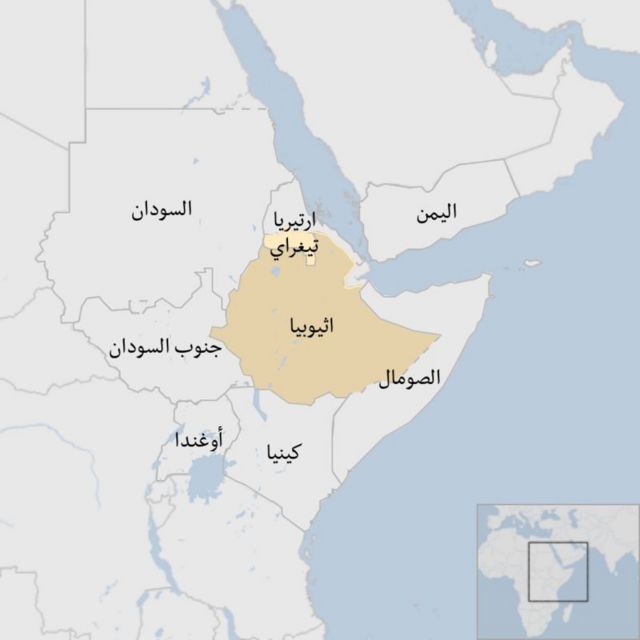

Years of bilateral and multilateral talks, expert committees, a declaration of principles between Egypt, Ethiopia and Sudan, and continuous rounds of negotiations held remotely under the auspices of the United Nations Security Council have not yet yielded tangible results on the issue of the Ethiopian Renaissance Dam, which is being built on the course of the Blue Nile, other than revealing the size of the diplomatic gap that threatens to raise the degree of defense of vital interests and capabilities of the people and the lack of trust between both the Egyptian and Ethiopian peoples. In Egypt, the dam on the main tributary of the Nile is seen as a threat to controlling the flow of water on which almost all aspects of life in Egypt depend. As for Ethiopia, that dam, once fully operational, is seen as Africa’s largest station for generating electricity and providing it to 65 million Ethiopians who are deprived of it. On the eighth day of the meetings held in mid-June 2020, the representatives of the two countries said that an existential threat was facing their countries, as Egyptian Foreign Minister Sameh Shoukry confirmed in his speech at the meeting that “an existential threat is now facing the only lifeline on which more than a hundred million Egyptians live.” On the other hand, the Ethiopian ambassador to the United Nations, Tai Asqi Selassie, used similar language when he said: “Using our water resources in Ethiopia is not a choice, but a necessity.” Existentialism.”
Unilateral Step
Now we have reached a point where Ethiopia announces a unilateral move to fill the dam in the next few weeks coinciding with the rainy season, in a process that is expected to take about seven years, as Ethiopia considers building the dam and starting to fill it one thing. The Ethiopian negotiator confirms that the Declaration of Principles concluded in 2015 between Sisi, Al-Bashir, and Abiy Ahmed, the leaders of the three countries, allows Ethiopia to move forward with the filling process. Thus, the Egyptian-Ethiopian talks are marred by a lot of contradiction between the two countries’ statements. Ethiopia announced that it intends to start filling its giant dam on the Nile River in “the next two weeks,” pledging at the same time to try to reach a final agreement with Egypt and Sudan during this period, under the auspices of the African Union. However, this Ethiopian statement issued by the office of Prime Minister Abiy Ahmed contradicts statements made by Egyptian and Sudanese officials earlier this week, in which they confirmed that an agreement had been reached between the three countries during a virtual summit that they brought together with three other African countries, to stop filling the dam until a final agreement is reached on the issue.
The importance of the dam
The Renaissance Dam, which Addis Ababa began building in 2011, will become, upon completion, the largest hydroelectric dam in Africa, with a production capacity of six thousand megawatts. However, this vital project for Ethiopia, which was built at a height of 145 meters, raises sharp tensions between it and both Sudan and Egypt, which share with Ethiopia the waters of the Nile and fear that the dam will limit the amount of water that reaches them. Ethiopia says that the electricity expected to be generated from the Renaissance Dam is of vital importance in order to advance development projects in the poor country with a population of more than 100 million people, while Egypt says that the dam threatens the flow of Nile water, most of which originates from the Blue Nile, where the dam was built, and its repercussions may be devastating on its economy and its water and food resources. Egypt derives 97% of its water needs from the Nile.
An Egyptian screams without an answer
Egypt considers this project an “existential” threat. It called on the UN Security Council to intervene, and Cairo and Khartoum announced, in two official statements, an agreement during a mini-African summit held via video conference chaired by South African President Cyril Ramaphosa, the current president of the African Union, to postpone the start of filling the reservoir of the Renaissance Hydroelectric Dam until an agreement is concluded between the three countries. The Egyptian presidency statement stated that the agreement stipulates “refraining from taking any unilateral measures, including filling the dam, before reaching this agreement, and sending a letter with this content to the Security Council.” The Sudanese government also said in a statement, “It was agreed that filling the reservoir will be postponed until after signing an agreement,” noting that it was also agreed that “negotiations at the level of technical committees begin immediately with the aim of reaching an agreement within “Two weeks.” However, Addis Ababa did not mention the postponement in its final statement. Rather, it seemed to be sticking to the timetable it had previously announced, which stipulates the start of filling the dam’s reservoir in July. The Ethiopian statement stated: “Ethiopia planned to start filling the dam within two weeks, during which construction work will continue. The three countries agreed that a final agreement would be reached on the few points that are still outstanding during this period.”
Where do we stand now?
Recently, the last negotiating rounds were held through the African mini-summit at the invitation of the President of South Africa, in which Egyptian President Abdel Fattah El-Sisi, Ethiopian Prime Minister Abiy Ahmed, Sudanese Prime Minister Abdalla Hamdok, Kenyan President Uhuru Kenyatta, President of the Democratic Republic of the Congo Felix Tshisekedi, Malian President Ibrahim Boubacar Keita, and the Chairman of the African Union Commission, Moussa Faki, participated. At the end of the meeting, the African Union announced in a statement that “90% of the issues related to the tripartite negotiations have already been resolved,” and stressed that this file was now under its control and that a progress report would be prepared and submitted “within a week” to President Ramaphosa, indicating that the Union’s Executive Council would convene again within two weeks to discuss this file. In its statement, the African Union called on the countries concerned to refrain from any statement or action that would complicate or undermine the process led by the African Union, which aims to find an acceptable solution to the outstanding issues. The three countries expressed their acceptance of maintaining media silence regarding the issue, and this is the reason why official statements on the file stopped until the time of writing these lines, but Ethiopia’s latest statements confirmed the start of filling the dam without stopping, which means that everything has practically stopped, except for the procedures for filling the dam!