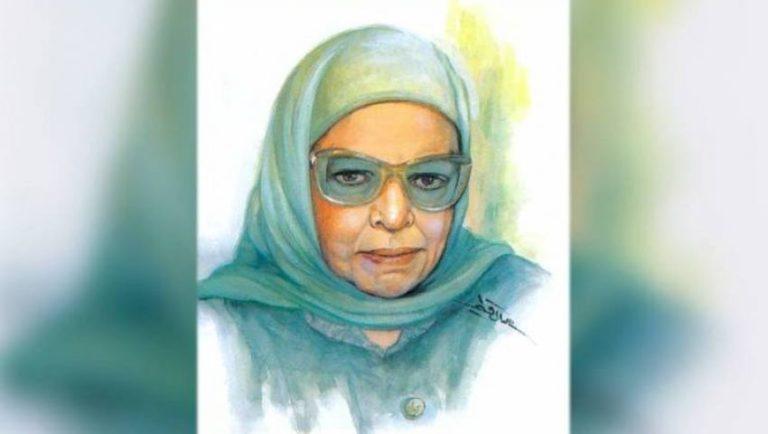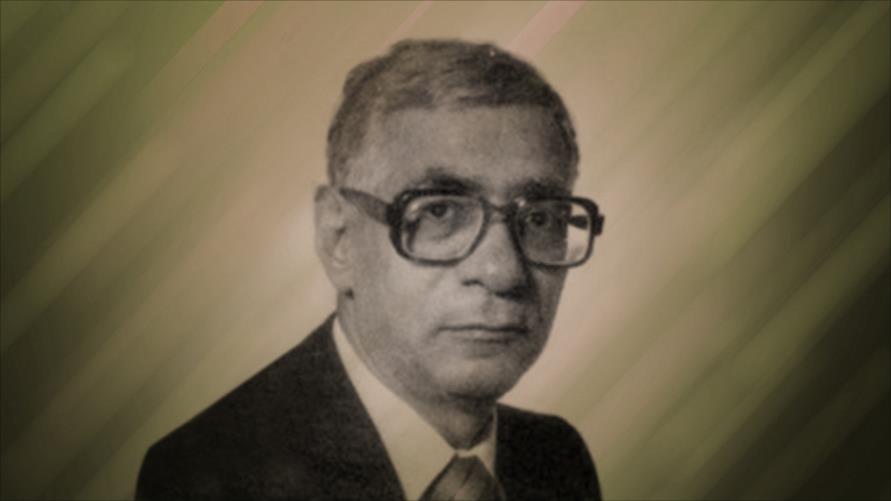
Contemporary history contains how many thinkers who are able to change the course of events when they write lines and possess, with their pens, an authority that exceeds Sultan Al-Hakim And his entourage, or can they, through a letter from their prison, stop the king’s veneration and destroy his quest for immortality, as Sayyid Qutb did from his prison? The truth is that these are very few, and perhaps their list is so short that it could be limited to a long conversation. But what is not disputed is that the closest contemporary thinkers to this model, and the most deserving of the title of Sayyed Qutb’s successor, is the Egyptian writer and thinker. Muhammad Jalal Kishk. The similarity of Jalal Kishk and Sayyid Qutb does not stop at the point of influence, but they are also similar in the details of each of them’s journey, as each of them began his journey as a journalist and writer, on an anti-Islamist path, before witnessing a moment of major transformation, in which he collided with his old thought, and turned into an opponent of the authority and its men, and a source of concern for the regime from its youngest minister to its president, and their writings became a source of documentation, understanding, and a new vision of the course of events, history, and politics.
Definition
Muhammad Jalal Kishk, an Egyptian journalist and thinker, struggled against the rule of King Farouk I and Gamal Abdel Nasser, moved from the forefront of communist work to the forefront of Islamic thought, and enriched Arab libraries with publications that covered various fields. He was born in 1928, in the town of Maragha in Sohag Governorate, Upper Egypt. His father was a judge in the Sharia courts, and he received his primary and secondary education in Cairo. In 1947, he joined the Faculty of Commerce at Fouad I University (currently Cairo University), from which he obtained a bachelor’s degree in 1952. He began working as a journalist in the early 1950s, and worked as a writer and journalist in many Egyptian newspapers, such as Al-Gomhouria, Rose Al-Youssef, and Building the Nation magazine. After immigrating to Lebanon, he worked for years in Al-Ahdath magazine.
His political experience
Muhammad Jalal Kishk became involved in political work, at an early stage of his life, and joined the communist movement in Egypt. He was one of its most prominent and influential youth leaders in the street. He participated in establishing the communist “Al-Raya Organization” in Egypt. He spearheaded several struggle activities against the monarchy, and demanded justice, respect for human rights, and the involvement of the people in the decision. However, the young man’s intellectual path witnessed an important shift in 1950, when he separated from his communist comrades following a dispute with them over the armed struggle against the British, but nothing changed in his militant stances, as he continued his activity against the authority. In 1952, he was imprisoned on charges of incitement to overthrow King Farouk. He took the university exam while in prison, and after the fall of the monarchy following the July 1952 revolution, he opposed the regime of Gamal Abdel Nasser, and was imprisoned between 1954 and 1956, after which Kishk opened a new front against the government, in the pages of newspapers and magazines.
Struggle with writing
After his release from Abdel Nasser’s prisons in 1956, and all doors to peaceful community work were closed, Jalal Kishk took his disagreement with the communists and Nasserists to the public, and wrote strong articles in which he sought to “expose their ideologies.” His articles gained great momentum in the Egyptian and Arab cultural community, to the extent that the government of the Soviet Union considered that these articles harmed relations between Moscow and Cairo. Abdel Nasser’s government later responded to pressure from the Soviet Union and prevented Muhammad Jalal Kishk from practicing journalistic work, in the period from 1964 to 1967.
His conversions to Islam
His contact with Islamic thought began in 1963. He read books by prominent Islamists, and at the same time continued writing his articles rebellious against the government and those hostile to communist thought. After an experience with imprisonment and harassment, the man was forced to leave Egypt in 1968, and settled in Beirut, where he worked in “Al-Hawadith Magazine”, and he remained there until the outbreak of the Lebanese civil war, and the assassination of his colleague in the newspaper, Salim Al-Lawzi, in 1975. After that, he left for the United States, then strengthened his connection with Islamic thought, and entered into battles with communism and secularism, and wrote about his remorse for the books he wrote in glorifying the principles of communism, and he saw that embracing Marxism was due in principle. To ignorance of Islam. He called for confronting what he called the global Jewish conspiracy against Islam, and said that this conspiracy cannot be defeated except by an Islamic resurrection movement that adopts jihad and works to complete the components of Islamic civilization. He praised the Muslim Brotherhood in his writings, and said that “were it not for the Brotherhood’s jihad and battles, many would not have been converted to Islamic thought.” Kishk was known for his confrontation with intellectual invasion, and his hatred of tyranny and dictatorship. He believes that nationalism cannot rid the Arabs of their tribulations, while Islam can do so, because it “connects the Arabs, Berbers, Kurds, and others.”
Published Works
Muhammad Jalal Kishk published dozens of books, intellectual, political, and historical, including: Egyptians, Not Sects, Nationalism and Intellectual Invasion, The Bitter Truth, A Study in Degenerate Thought, The Path to a Modern Society, and the American July Revolution. His books also include: The Setback and the Intellectual Conquest, Jihad is Our Permanent Revolution, The Liberation of Muslim Women, The Saudis and the Islamic Solution, Muslim Thoughts on Jihad, Minorities and the Gospels, and My Word to the Fools.
Death
Muhammad Jalal Kishk died on December 5, 1993, while participating in a television debate with the Egyptian writer Nasr Hamid Abu Zaid, after which controversy arose at the time about his apostasy and his wife’s divorce from him. During the debate, Kishk suffered a heart attack, which led to his immediate death. He was buried in Egypt along with three of his books, which he had requested to be buried with him: The Saudis and the Islamic Solution, and Horses Entered Al-Azhar, and it was said, Praise be to God.
A rare episode by Muhammad Jalal Kishk and a talk about the reality of Islamists