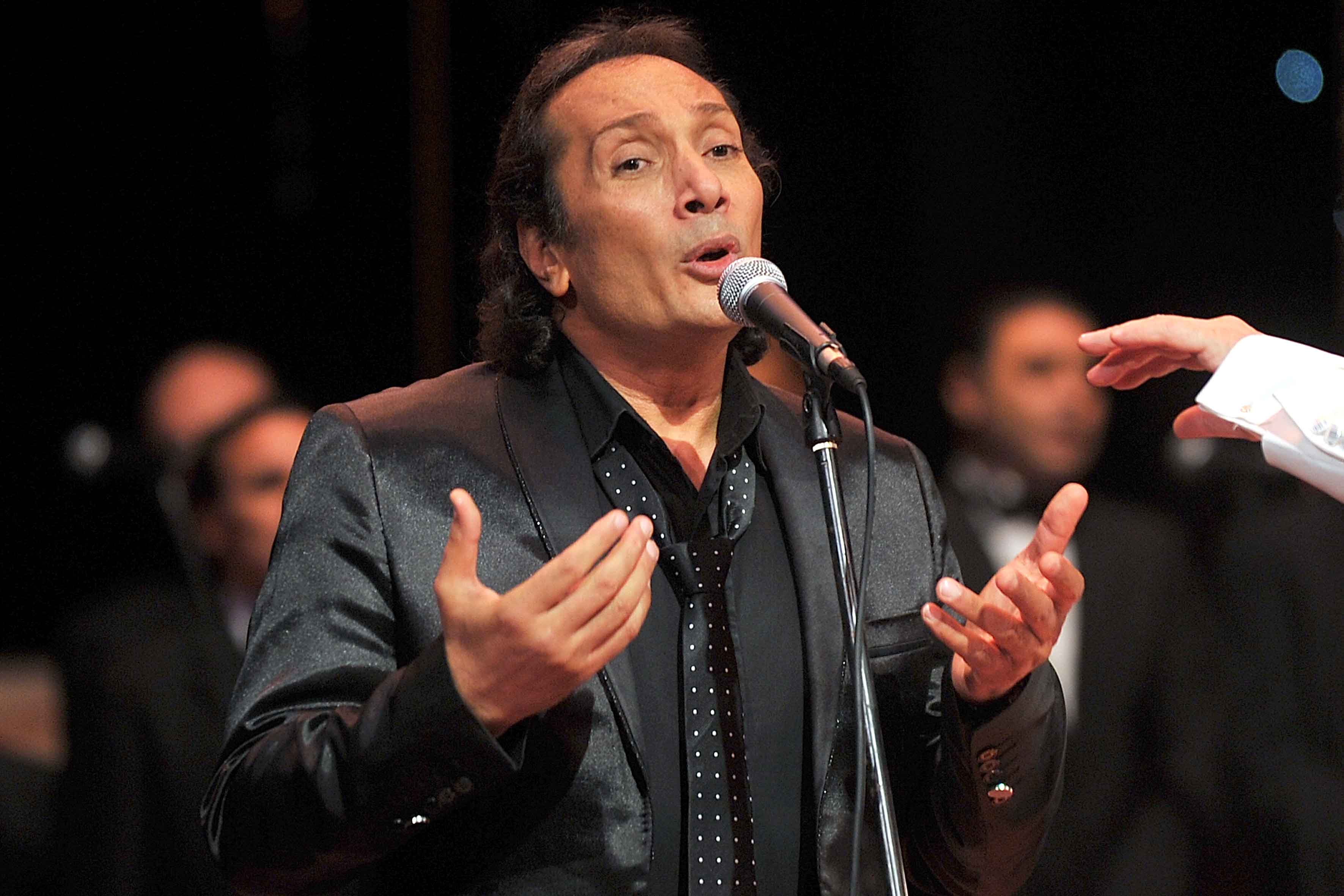
“Blessed are all those imprisoned in falsehood.” A short message that included a long poem in two parts that tells the story of those imprisoned in political prisons in Egypt. It is a masterpiece of artistic documentation of historical events. My song. «The Laugh of the Prisoners 1,2” was written by the poet Abdel Rahman El Abnoudi, sung by Ali El Haggar, composed by Farouk El Sharnouby, and directed by Hatem Sayed. Broadcast First version In December 2011, which witnessed the January 25 Revolution calling for freedom, it was exposed to the phenomenon of political detention in Egypt, and was limited to presenting the emotional and psychological side of those imprisoned in political prisons. And in Second version Which was broadcast only one year after the first version. Al-Hajjar appeared in the guise of four characters (the military man, the thug, the Islamist, and the revolutionary), to represent the main forces in the Egyptian political game. The song begins on top of the Nile Palace Bridge leading to Tahrir Square with footage from January 28, 2011, known as “Friday of Anger,” before the four characters appear from the point of view of the song makers.
Introduction to the singer:
Ali Ibrahim Ali Al-Hajjar, born on April 4, 1954 in the Imbaba region of the Egyptian Giza Governorate, to an artistic family, as his father was a singer on the Egyptian radio, and Al-Hajjar Al-Saghir followed in his footsteps, whose first work was chosen by the great screenwriter Baligh Hamdi, and the words of the great lyricist, Abdel Rahim Mansour, were the song (As Much as We Loved), which he sang at a New Year’s Eve party in 1977, and it was the beginning of a rich journey. It is one of the most prominent epic works in the history of Arabic singing.
Introduction to the author:
Abdul Rahman Mahmoud Al-Abnoudi was born in April 1938 and died in the same month of 2015. His origins go back to the village of Abnoud in the Qena Governorate in Upper Egypt. His father worked as a legal official, and he is considered one of the most famous colloquial poets in Egypt. He is married to the Egyptian broadcaster Nihal Kamal, with whom he has two daughters, Aya and Nour. Among his most famous works are “The Crescent Biography” and “My Sweet Days,” and he has dozens of colloquial poems and epics in which he tells various stories and events from his life in Upper Egypt and Cairo.
With the song
Al-Abnoudi wrote his first poem and dedicated it to the imprisoned political activist Alaa Abdel Fattah, who was tried militarily after the 2011 Maspero events. Al-Hajjar sang it on several revolutionary occasions after January, and said that its words were Addressed to the military council The ruler at the time, which he was later harmed by The Musicians Union abstained About granting him permits to release his subsequent albums, which prompted him to produce them with Gulf companies. But Al-Hajjar and Al-Abnoudi’s steadfastness did not last long, as he returned after the military coup in July 2013, to confirm that the song Her time has passed And he will not sing it again, before he releases his song in support of the army and hostile to his political opponents, “We are a people and you are a people.”
Lyrics of the first version of The Prisoners’ Laugh:
A dungeon for you, a hater whose jailer is the Duke of Xena. The sweetness of the dungeons on their brush that stretches your limbs. Your prisoner who is confused about your descriptions. No matter how hard he works, he will not know who you are. Blessed are all the prisoners. Falsehood in a time that deceives us and is false. O suns that shine in dark rooms. As for the one who betrayed your people and my homelands of prestige, you put him in another cage. He wakes up and sleeps while everyone is standing and Egypt knows, sees, and is patient. But in a snatch of time, it crosses and recovers the name and the titles, oh this scale that rose to the top, they bring you down with good health or good taste. These are not good for honesty in the scales. The revolution is light, and the one who extinguished it is malicious. He dances between martyrs and confines, and blood is still soaked in the fields. Sadness is a stamp on our hearts. Seriously, there are nothing left but thorns in the rose trees. Spring made a mistake and entered into the stupidest ambush and waiting for despair with the days. Someone else in his cage will beat him. Peace be upon you, and you are the decisive one before. The paws are ready, and Egypt knows, sees, and is patient, but it is in the blink of an eye of time. It passes. Egypt knows, sees, and is patient, but in the blink of an eye, it passes and recovers the name and addresses. Uncle, just sit down and drink tea. The world is moving on, and our people have forgotten. Blessing is in the screen and in the gardens. And if he is a people, he will announce the rulings.
Second version
As for Second version For the song, it came weeks after Egyptian President Mohamed Morsi assumed leadership of the country, and in it Al-Hajjar appeared in acting scenes that included four characters: the soldier conspiring against his people, the thug defending the regime, the Islamist preoccupied with his own battles, and the naive revolutionary with a limited vision. During the song, Al-Hajjar expressed his sadness at the state of the Egyptian political spectrum after the revolution, and denounced the state of rivalry that Egyptian society is experiencing, and everyone’s preoccupation with side battles rather than achieving the demands of the revolution and the country’s interests.
Lyrics of the second version of the song:
The scream is quiet, but it shook the universe. The cloud said to the rose, “Hide the color.” What understands the phase in the air of the gardens? They do not repent, nor do those who passed away. Teach them. They only hear their words in this world. They are not marginalized in the conversation. Plants and mud are intoxicating. The dawn is rising, obscured by the military. And you are writing a path for the coming. You are obliterating the features of your revolution, guys. It is like a page being torn off in a book. The world is guided and the absent are returned. Egypt knows, sees, and is patient. But in the blink of an eye, it crosses and recovers the name and titles. There was no revolution, no revolutionaries, no people. Egypt, the angry, the mighty, nor 11 I see.. nor twenty, my son, I am inclined to say to your brothers again that he has betrayed and he has betrayed you, and the prison is not satiated. Good young men dream of going back to what was, and the judges liberated so-and-so and so-and-so, as if there was no revolution or Hassan. The ones who ruled us are still the most important rulers who act on their behalf, but other people and you are prisoners of the sardine can. Egypt knows, sees, and is patient, but in the blink of time it will cross over and reclaim the name and addresses. And you are the moon, staying up late with the company, dreaming of tomorrow and its absent paradise, and lying awake in the dream, mother of the martyr, return the tear. The world sees and all hears, and the one who stole will hide his treasure. Where is your son? The light of dawn is the size of our homeland. You know its magnificence and its people! Generations are leaving, grandparents are coming, and whenever a dull voice is a country, do not despair of injustice and flog. Who is this who extinguishes the flame of the honest?
Feedback
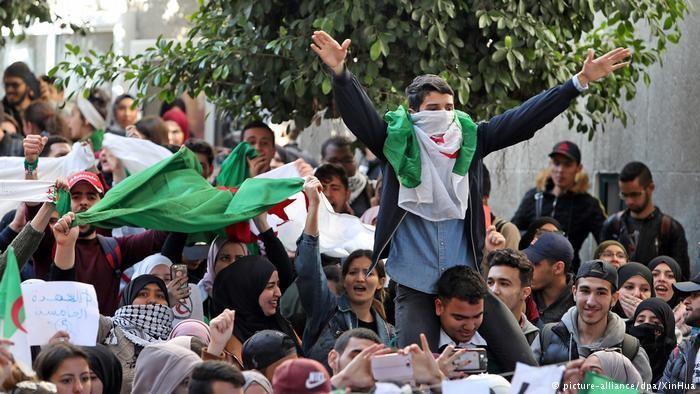
The two songs achieved a large presence in Egyptian revolutionary events, and were well received Approval of the demonstrators And those protesting in Egyptian squares during that period, and it was shown by several satellite channels, the most prominent of which was Al-Jazeera Mubasher Misr, and a number of private Egyptian satellite channels. At the New Year’s Eve party of 2012, at the Academy of Arts in Al-Haram, Al-Haggar sang his two songs in the presence of the Egyptian activist. Ahmed HararaHe also participated in the “Art Square” festival organized by the Independent Culture Coalition in Abdeen Square. The father of the activist Michael Nabil, and the young man Peter Youssef, who chanted in the cathedral for the fall of military rule, and the audience was taking advantage of the interruption of the sound in Cheering Against the military council.
Criticism of the song
Al-Hajjar chose the melody of his song well, and performed it in an operatic style appropriate to the softness of his voice, but the most noticeable criticism, even among the communication activists who commented on the song immediately after its release, is the weakness of Al-Hajjar’s acting performance, which perhaps if he had replaced his scenes with actors more proficient in the acting work, the work would have come out complete in all its aspects. Had it not been for the end that Al-Hajjar chose for himself by falling into the arms of the Egyptian military coupHe retreated from his revolutionary positionsHe became, par excellence, the owner of the title of the voice that called for freedom throughout his career.