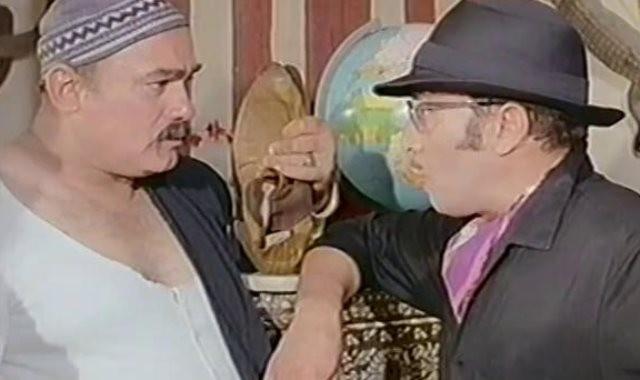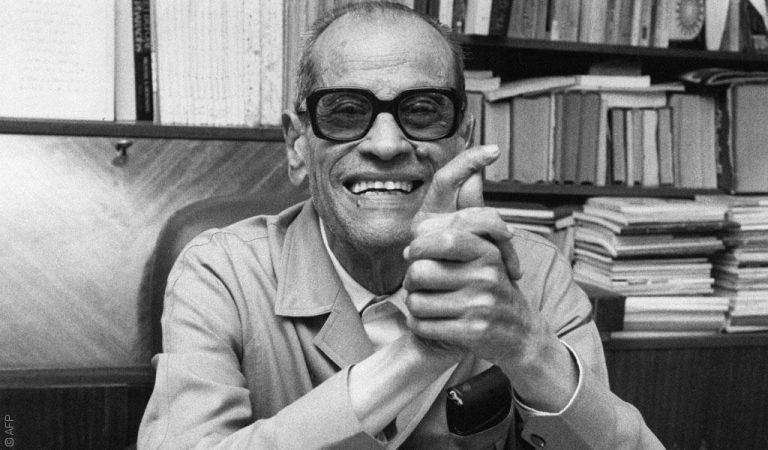
When the word “last literary work” is used in the literary community, it calls to mind the masterpiece of the young Egyptian poet, Hashim Al-Rifai, entitled “A Message on the Night of Execution.” The poem evokes the spirit of a poet writing his last elegiac words before being led to the execution guillotine in the morning. But what then might the term “first literary work” evoke? Perhaps the literary community does not celebrate a writer who began his creative journey from prison as much as it celebrates the Egyptian writer and poet Naguib al-Kilani, as his first prose work was published while he was in prison in 1956 AD, and he titled it the novel “The Long Road,” a title that clearly embodies his arduous journey that he embarked upon with difficulty in the shadow of the high walls. Despite the caution that usually accompanies those who engage in political work opposing the state, literary awards did not pay attention to all of that. His first novel won the Ministry of Education award in 1957 AD and was then decided to be taught to secondary school students in the second year of secondary school in 1959 AD. Thus, from the first moment, Al-Kilani maintained a distinguished position for himself in the artistic community and its official awards. In 1960, he won the award of the Supreme Council for the Welfare of Arts and Letters for the novel The Promised Day, and then he won the same award for the novel “In the Dark” in the following year, 1961 AD.
Naguib Al-Kilani’s beginnings:
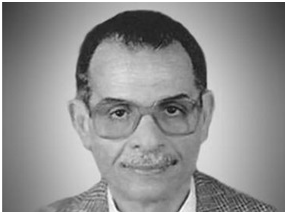
Naguib Abdul Latif Ibrahim Al-Kilani was born on the first of June 1931 AD, corresponding to Muharram 1350 AH, in the village of Sharshaba, affiliated with the Zefta Center in the Gharbia Governorate, Delta of Egypt. He joined the village scribes at the age of four, where he learned reading, writing, arithmetic, and a portion of the noble Prophetic hadiths, the biography of the Messenger, stories of the prophets, and stories of the Qur’an. His family worked in agriculture, and from a young age he practiced working with the family members in the fields. He attended elementary school, then the American Mission Elementary School in the village of Sinbat, then he spent high school in the city of Tanta, and finally he joined the Faculty of Medicine in Cairo in 1951 AD. After graduating, he worked as a “doctor of excellence” at the “Umm al-Masryeen Hospital” in Giza, north of Cairo, in 1961 AD, then as a practicing doctor in his village, then he moved to work in the Ministry of Transport and Communications, and took up his job in the medical department of the Railway Authority, then he traveled to the State of Kuwait to work as a doctor there on the thirty-first day of the month. March 1968 AD, then he moved to the United Arab Emirates and spent nearly sixteen years there. In 1960, Al-Kilani married the Islamic writer Karima Shaheen, the sister of the Egyptian radio writer Nafisa Shaheen. He was blessed with three sons: Dr. Jalal, the engineer Hossam, and Mahmoud the lawyer. He also had one female, Dr. Azza. He was characterized by a cheerful face, a sense of humor, and great humility. He was an articulate orator with an open mind. One of his sons said of him: “You feel that his character was the Qur’an. He saw the Creator in all his dealings. He was self-effacing in order to make his family and loved ones happy. His ambitions in this world were not great because he carried a deep strength of faith and great humility. Al-Kilani endured the pain of his illness without broadcasting his concern and pain to anyone, even the people closest to him. He was patient with the pain of hepatitis C and then the pain of cancer, holding on to the rope of God. How could he despair or submit when he was satisfied with God’s decree and destiny?
His political experience
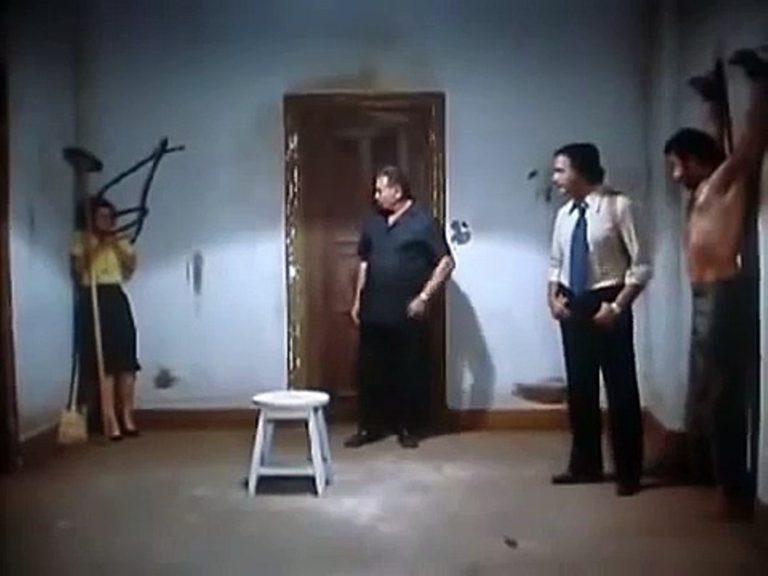
Al-Kilani joined the Muslim Brotherhood early in his life, as it influenced his ideas and beliefs, and had a profound impact on the formation of his political and literary thought. The regime of former Egyptian President Gamal Abdel Nasser arrested him on August 7, 1955, in what was known as the case of “financing detained Brotherhood prisoners.” He was sentenced to ten years in prison, but he was granted a pardon after forty months. He was then re-arrested in September 1965, and spent a year and a few months in prison.
His literary journey
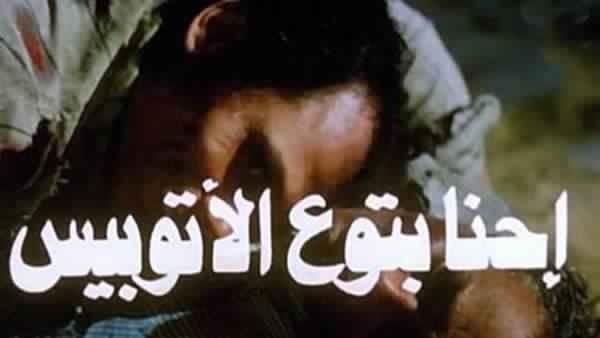
Signs of Al-Kilani’s poetic talent appeared at the end of his primary school years. His first poems were about Palestine in 1948. He published his first collection, “Songs of Strangers,” and his first novel, “The Long Road,” while he was in prison. He wrote dozens of novels and stories, including Islamic issues such as: “Nights of Turkestan,” “Giants of the North,” “The Virgin of Jakarta,” “The Black Shadow,” “Omar Appears in Jerusalem,” “Land of the Prophets,” “The Light of God,” “The Killer of Hamza,” “Napoleon in Al-Azhar,” “The Immortal Call,” “Journey to God,” “Processions of the Free,” “The Promised Day,” “Jewish Quarter,” and “Blood for Unleavened Bread.” Zion,” and “My Beloved Sarajevo.” He also wrote about the Egyptian environment: “The Confessions of Abd al-Mutajli,” “The Case of Abu al-Futuh al-Sharqawi,” “The Queen of Grapes,” “The Kingdom of al-Balouti,” “The People of al-Hamidiyya,” and “The Man Who Believed.” Among his historical novels is “On the Walls of Damascus.” He has several collections of poetry, including “Songs of Strangers,” “The Age of Martyrs,” “How to Meet You,” and “Towards Al-Ala.” In Islamic criticism and literature, he wrote “Islamism and Literary Doctrines,” “Horizons of Islamic Literature,” “Introduction to Islamic Literature,” “The Theory and Perceptions of Islamic Literature,” and “Islamic Theater.” In Islamic culture, he published “The Path to an Islamic Union,” “Islam and Counterforces,” “We and Islam,” “Under the Banner of Islam,” and “On Religion and the State.” In medicine, he edited “In the Field of Prophetic Medicine,” “Medicine is a Double-Edged Sword,” “Fasting and Health,” and “Food and Health.” He has about ten collections of short stories, including “Our Appointment Tomorrow,” “The Narrow World,” “On Departure,” “The Prince’s Tears,” “Fares Hawazen,” and “Tales of a Doctor.” In biographies, he wrote “Iqbal the Rebel Poet,” and he wrote his autobiography in “Glimpses of My Life.”
Celebrating and honoring
Al-Kilani received several awards, including four awards from the Ministry of Education, an award from the Supreme Council of Arts and Letters, an award from the Arabic Language Academy in Cairo, and the Poet Muhammad Iqbal Gold Medal from Pakistan. The great writer Naguib Al-Kilani died on Monday, Shawwal 4, 1415 AH, corresponding to March 6, 1995, and was buried in Cairo.