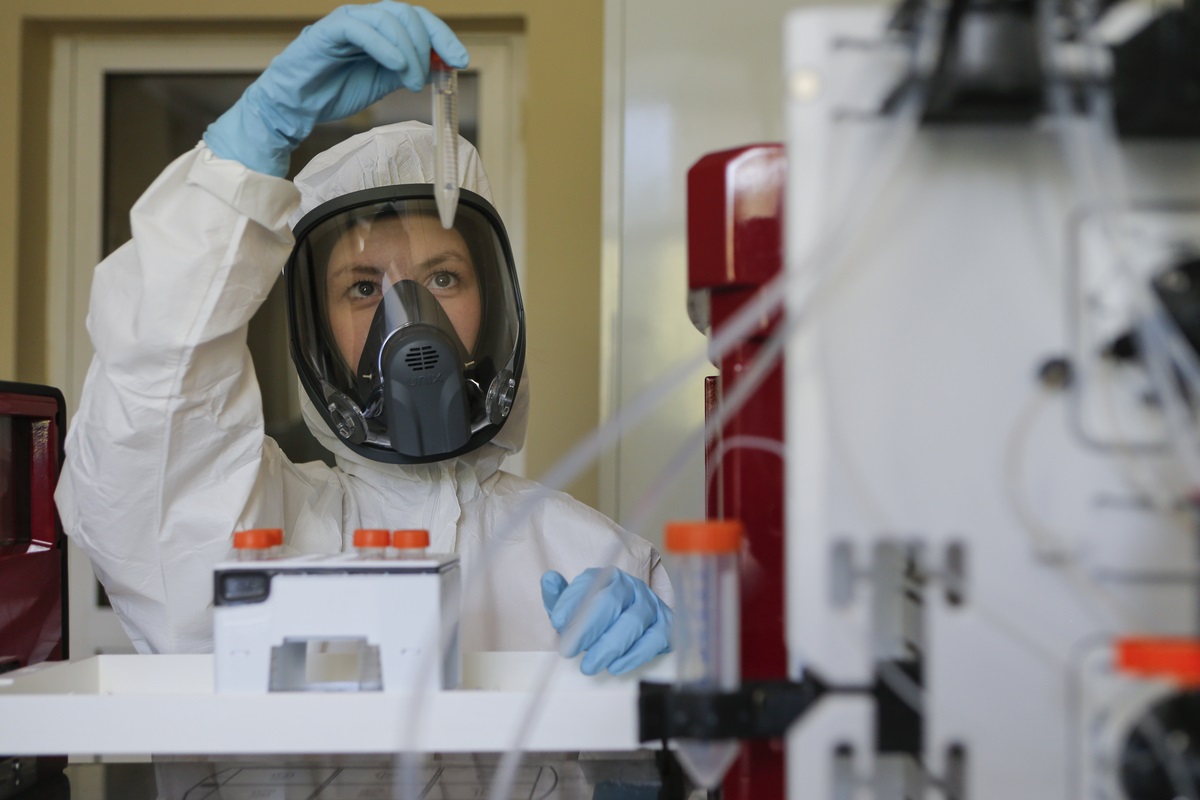

Perhaps it does not seem strange to us these days to hear words such as Moderna, Pfizer, and AstraZeneca, which are the names of famous medical laboratories that have been engaged in a feverish race in recent months to develop the first vaccine against Covid-19. While the results announced in November 2020 are very encouraging, each potential vaccine has its own characteristics: its discovery approach, the dose administered, the storage method, and the mechanism of action of the vaccine. In this report, we highlight the vaccines of these laboratories and their characteristics.
Relief… suddenly!
A few days separated the major announcement by a number of medical laboratories about the effectiveness of their vaccine against Covid-19. The German-American biotechnology alliance BioNTech and Pfizer opened the race in early November by announcing its success in producing a 90 percent effective serum. Two days later, the Russians entered the line, from the Jamalaya Institute, and outbid BioNTech and Pfizer by announcing the effectiveness of their vaccine at a rate of up to 92 percent. Then the American company Moderna came after them to announce its percentage, which reached 94.5 percent. Then, the Bionic and Pfizer alliance recently returned to announce its final result, which reached 95 percent.
Questioning the results
In this frenetic global competition, each laboratory is trying to occupy the media arena with its expected vaccine in order to collect the largest number of pre-orders for it. However, it is worth noting that these results are only partial results of the third phase of the experiments, which is still ongoing and developing rapidly, and which includes a small number of volunteers. Also, these data, which were reported in the news press, were not published in detail in reputable scientific journals. There are also several questions that remain unanswered, for example: How long do these vaccines provide immunity? Has effectiveness also been proven for the most vulnerable people? Are there any serious side effects? Among several vaccines identified in November 2020 by the World Health Organization, only three vaccines appear to have reached the most advanced stage, during which the vaccine’s effectiveness was measured on tens of thousands of volunteers spread across several continents. That is, the vaccines of Moderna, the German-American alliance BioNTech Pfizer, and the Russian research institute Jamalaya (called Sputnik 5). As for the European project led by the University of Oxford with the British company AstraZeneca, as well as the Chinese laboratory project “Sinopharm”, they are also in the third phase, but they have not yet presented their results. Other vaccines are still in the first phase, which aims above all to evaluate the safety of the product, or in the second phase, where the issue of effectiveness is already being explored.
Distribution problem
The world is therefore facing an anticipated problem with the start of the process of distributing vaccines against the Corona virus, which is the problem of “equitable distribution” of the vaccine to all countries of the world, and it is a difficult equation with the different capabilities and capabilities of countries and governments around the world. There are fears that poor countries will fall behind in obtaining the vaccine, because rich countries are “hoarding” more doses of the Corona virus vaccine than they need. Rich countries have collected a large enough stock of vaccine doses to vaccinate their people almost three times by the end of next year, waiting for all vaccines to be officially approved by their governments and health authorities. These statistics come from the People’s Vaccine Alliance, which includes Oxfam and Amnesty International, and the statistics were obtained by analyzing deals that took place between countries and 8 major companies that produce vaccines. Among the statistics are that all doses of the upcoming Moderna vaccine were purchased by rich countries, and 96 percent of doses of the new Pfizer vaccine were purchased from rich countries. As a result, 53 percent of vaccine doses were secured for only 14 percent of the world’s population. For example, Canada obtained enough doses to vaccinate every Canadian citizen 5 times. On the other hand, the coalition said that poor countries will be able to vaccinate only one in 10 people next year. Among the poor countries, which will receive treatment late, 5 countries have recorded 1.5 million Coronavirus cases so far, namely Kenya, Myanmar, Nigeria, Pakistan, and Ukraine. Even the Oxford vaccine’s promise to provide 64 percent of the vaccine to developing countries will not be enough to vaccinate the population of the Third World. Only 18 percent of the world’s population is likely to be vaccinated in 2021.
There is no solution soon
The Vaccine Alliance says governments and drugmakers must take urgent action to make sure there are enough vaccine doses for the world, not just the countries that can pay for them. “Vaccine hoarding is actively undermining global efforts to ensure everyone, everywhere is protected from Covid-19,” said Amnesty International’s Head of Economic and Social Justice, Stephen Cockburn. He added, “Rich countries have clear human rights obligations, not only to refrain from actions that may harm access to vaccines elsewhere, but also to cooperate and provide assistance to countries that need it.”