Bazoum Niger
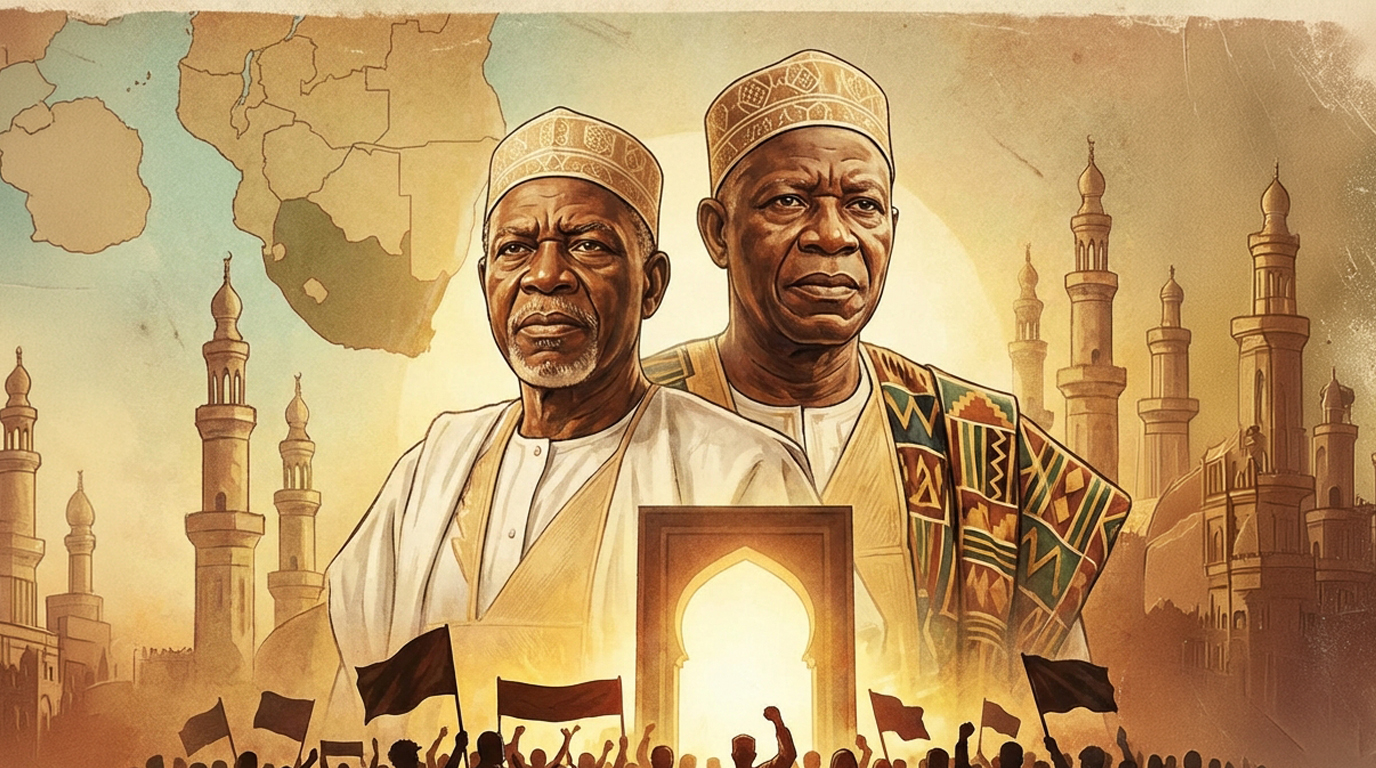
Despite what you are witnessing African continent As for the brown country, due to intense and prolonged ethnic and sectarian conflicts, some of its countries are recording, for the first time, a model of a remarkably smooth transfer of power. But what is most exciting about this, the smooth transfer of power is the rise of Muslim presidents, or those of Arab origin, in countries where Muslims constitute a minority, and in countries with a long history of Ethnic conflicts And ideological fanaticism. In an unprecedented political event, in the history of one of the poorest countries in the world, the elected President of Niger, Mohamed Bazoum, took the constitutional oath on April 2, 2021, during which power was transferred peacefully, from an elected civilian president to a civilian president, in a step taken into account by the outgoing President Mahamadou Issoufou, who did not amend the constitution to run for a third presidential term, as is the custom of several African presidents.
Bazoum wins the presidential elections
Bazoum’s victory in the presidential elections, which took place in Niger, over two rounds, is a historic precedent in the country, which witnessed, for the first time, the defeat of tribal fanaticism in the face of political alliances, making him the first president from the Arab minority in the country’s history. Bazoum comes from the Arab tribe of Ouled Suleiman, a branch of which lives in Niger, while the majority of it is concentrated in southern and central Libya. His rivals tried to exploit this tribal affiliation against him during the presidential elections, and accused him of being of foreign origin.
Salouhi Tanzania
In Tanzania, on March 2, 2021, Samia Hassan Suluhi was sworn in as the first female president of Tanzania in the country’s history, at the Council of State in Dar es Salaam, following the death of President John Magufuli in the Corona pandemic. The government had announced the death of President Magufuli, and the assumption of the reins of power after him by his deputy, Samia Hassan Suluhi (61 years old). Samia was elected for the first time as Magufuli’s deputy in 2015, and then was re-elected alongside him last year, in accordance with the constitution, making Suluhi the first woman to hold such a political position in Africa in general, and in its east in particular, thus joining a short list of women from the continent who run their countries. Salouhi is known among her countrymen as “Mama Samia.” She took the oath of the presidential office, with her hijab and the Qur’an in her right hand, under the supervision of Chief Justice Ibrahim Jomafeng. She pledged to support the state’s constitution. She said in her inauguration speech, “Today is not a good day for me, because I am talking to you and I have a wound in my heart.” She added that everyone in the country must work in the coming period to unite the nation, and that it is time to overcome differences and move forward.
Mauritania is on the list
Going back in time, the experience of an Arab-African country stands out, in which power was transferred at the end of last year smoothly, and which many did not notice. It is Mauritania, in which the former president, Mohamed Ould Abdel Aziz, handed over the presidency of the country to his deputy, Mohamed Ould Ghazouani, amid a large African presence and a noticeable Arab absence. This is the first time in Mauritania that the president has handed over power to an elected president after two presidential terms. In the past, the rotation of power took place through military coups, with the exception of the transfer of power in April 2007, when the late head of the military council, Ould Mohamed Vall, handed over the presidency of Mauritania to the first elected civilian president in the country’s history, Sidi Mohamed Ould Cheikh Abdallah. The military man, Mohamed Ould Abdel Aziz, quickly turned against him, and here it appears that Ould Abdel Aziz handed over power to him, for reasons other than democracy. Between them.
Hand over power peacefully
During 2018, those close to the former president, Mohamed Ould Abdel Aziz, tried to make a constitutional amendment to open presidential terms to him, as the constitution stipulates only two terms, but the leadership of the Mauritanian army did not give the green light for this path, which made the president change it, only 6 months before the end of his term. In a remarkable democratic celebration, the Arab stations neglected to broadcast it, with minor exceptions. Ould Abdel Aziz and Ould El Ghazouani exchanged expressions of pleasantries on the inauguration platform. Ould Abdel Aziz said in his last speech that he was leaving the country’s presidency with peace of mind, describing Ould El Ghazouani as, “a dear friend with high morals, and aware of the local, continental and international situation,” while Ould El Ghazouani addressed the former president, saying; He will enter Mauritanian history from the broadest possible gates, given the great achievements he left behind. He also concluded his term by handing over power peacefully, through the ballot boxes.
Arab Indifference
At the Mauritanian democracy celebration, 11 African presidents attended; The most prominent of them are the presidents of Senegal, Mali, Gambia, Burkina Faso, Niger, and Chad, while no Arab president attended the inauguration ceremony, ignoring Mauritania, which is considered the bridge country linking the Arab world and sub-Saharan Africa. It seemed clear from the Arab ignorance of what happened in Mauritania that the Arab regimes see Mauritania as a marginal state, with no influence in the region, and therefore when they participate in the activities called for by Mauritania, they send deputy ministers or ordinary ministers to it. It also became clear that some Gulf regimes do not greatly celebrate the “high” democratic ceiling anywhere, so their interaction with electoral events and democracy in African countries seems small and weak, perhaps out of fear that their people would be affected by this model, which they sought to destroy in the wake of the outbreak of the Arab revolutions, and the democratic entitlements that resulted from them, in Egypt, Yemen, Libya, and Tunisia.