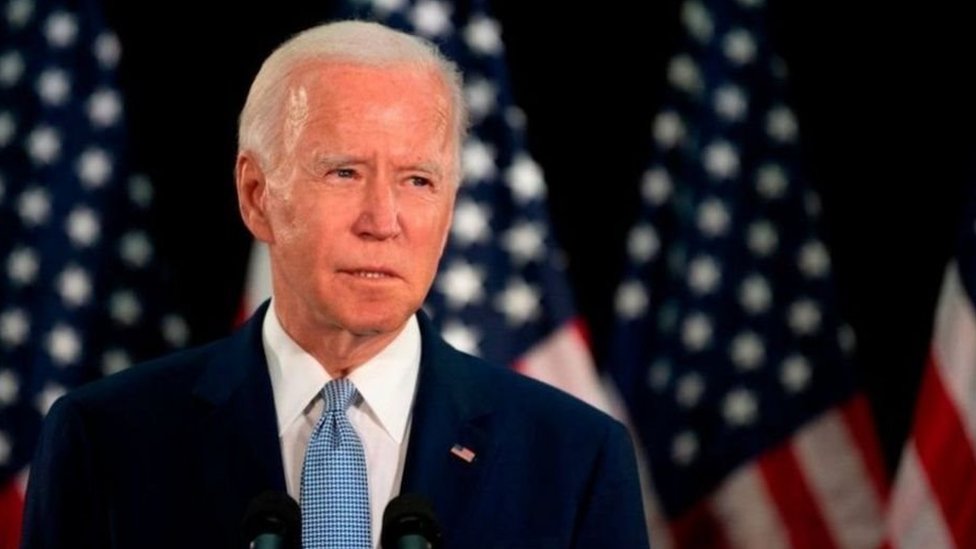

With the US National Council for Election Integrity announcing the victory of Democratic candidate Joe Biden in the US presidential elections, Saturday, November 7, 2020, after defeating the current Republican President Donald Trump, in elections that occupied the entire world and received unprecedented attention, the legacy comes heavy on the shoulders of the 46th President of the United States, after a controversial period for his predecessor, especially with regard to sensitive and thorny files for centuries in the Middle East.
During this report, we review the claims of Joe Biden’s victory over the basic issues in the Middle East, in which the new president completely contradicts the trends of Donald Trump:
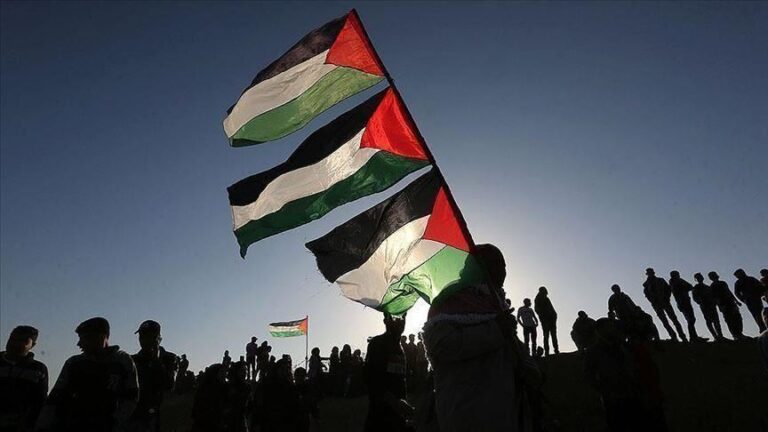
The Palestinian issue
There was a clear Israeli interest in monitoring the results of the American elections. Since voting began, Israeli television channels and newspapers have devoted a large amount of space to monitoring the voting and vote-counting processes. Israeli interest in these elections coincided with an expectation and analysis of the foreign policies of the winning Democratic candidate, Joe Biden, and the extent to which his policies will differ from those of his losing predecessor, Donald Trump.
The Israelis were divided in their positions after Biden’s victory was announced. Opposition leader Yair Lapid was one of the first to congratulate him on the victory, followed by Avigdor Lieberman, along with Netanyahu’s coalition partners, Benny Gantz and Gabi Ashkenazi. However, it was noteworthy that Prime Minister Benjamin Netanyahu was late in congratulating Biden, who contented himself with a tweet in which he indicated that “Biden is a friend of Israel, and hopes that they will work together to strengthen the Israeli-American alliance, without explicitly mentioning his victory in the elections,” which means that Netanyahu received a major shock with Trump’s loss of the elections.
Israel places the agenda of the files and policies expected for Biden on the table, especially after his predecessor, Trump, made great strides in accomplishing many of the issues that served Israel throughout his four years in power, especially with regard to the deal of the century, and the extent of his belief in this plan as a political solution to ending the conflict with the Palestinians, and the issue of illegal Israeli settlement construction in the West Bank.
The file of liquidating the Palestinian issue appears to be present on the Israeli policy agenda, because during the Trump era it was a strong party in the political equation, not only towards the Palestinians, but also at the level of the countries of the region, as Israel sees the Deal of the Century as the only road map for any political path to end the Palestinian-Israeli conflict, and that abandoning it, or making amendments to it from Biden will put the Palestinian Authority in a balanced position with Israel.
The Trump period also witnessed intense pressure on the Palestinian Authority, most notably stopping all forms of funding, forcing other countries to cut off their financial aid, and previously approved political steps such as the American recognition of Jerusalem as the capital of Israel, moving the American embassy there as part of a policy of imposing a fait accompli, and closing the office of the PLO mission in Washington.
Iranian file
On the other hand, to Tehran, it seems clear that Biden is not keen on continuing the approach of his predecessor Trump. Rather, he is very close to the policy of former President Barack Obama, under whom the Iranian nuclear agreement was signed in 2015, to guarantee Iran’s access to nuclear energy for peaceful purposes, in exchange for lifting the financial sanctions imposed on it, as Israel opposed it, and Netanyahu considered it a free gift that Washington gave to Tehran to obtain nuclear energy that it might exploit against it.
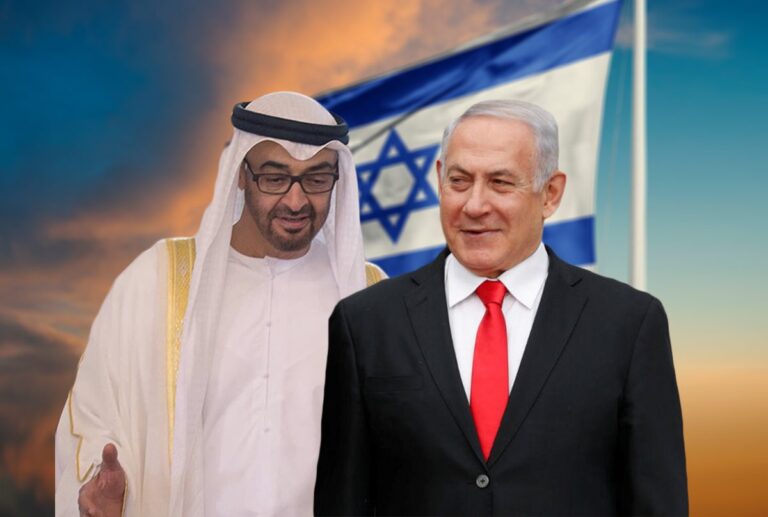
It is clear that the Iranian file is central to Israel, specifically from Netanyahu, because he promoted in his speeches to the Arab Gulf states that he has the idea and principle of continuing pressure on Iran, and any American departure from this agreement will put him in great embarrassment before his friends in the Gulf. Therefore, the Iranian file will be the subject of a radical and major dispute between Netanyahu and Biden for the next four years, unless Israel acquiesces, or is convinced of the American point of view.
Egyptian dictatorship
Although Egyptian President Abdel Fattah El-Sisi is the first Arab leader to congratulate US President-elect Joe Biden on his victory, the loss of Donald Trump is expected to bring a new era of “less tolerant” US policy towards the Sisi regime. Aside from pleasantries, a feeling of anxiety may prevail within decision-making circles in Cairo, even though the possibility of Trump’s defeat was expected. Observers say that Biden’s arrival in the Oval Office may reintroduce problems that Cairo does not want to discuss, including human rights.
However, Biden has a clear record of defending human rights issues in Egypt. But what is most clear about the current military version at the helm of Egyptian power is that Biden criticized Trump’s support for Sisi during his 2020 election campaign, indicating a possible change in the new administration’s rhetoric.
In a tweet last July, Biden issued a stern warning to Sisi, saying that if he were elected president there would be “no more absolute freedom for Trump’s favorite dictator,” referring to Trump’s statements during the G7 summit last year, when President Trump asked: “Where is my favorite dictator?”
Biden also welcomed the release of Mohamed Amasha, an American medical student who was imprisoned in Egypt without trial for 486 days, and launched a scathing attack on Trump’s relationship with Sisi, saying his administration would not ignore Cairo’s repression of human rights.
It seems that Egypt is reading this shift well. Days before the US election results were released, Egypt released hundreds of political prisoners. The latest of them are the relatives of Egyptian-American human rights defender Mohamed Soltan, who announced on Friday, November 6, hours before Biden’s victory was announced, the release of five of his detained relatives in retaliation for his activism.
Biden had highlighted Sultan’s case in his criticism of Sisi 4 months ago. This sparked an analysis that the release was a sign of Sisi’s “backtracking” once a Biden victory became more likely. Some expect Cairo to take further measures in the coming period to improve its human rights record and ease potential tensions with Biden.”
Russian influence
Analysts believe that the two countries (Russia and the United States) will still need to find a way to avoid tensions in the Middle East in the coming period, especially when it comes to the desire of the countries of the Arab region to diversify the sources of weapons for their armies, as these countries are trying to reduce their dependence on American weapons supplies. Most of them concluded arms deals in the past six years with France, Germany, the United Kingdom, China, and most importantly, Russia.
Reports that countries such as Egypt are planning to purchase the Russian Sukhoi Su-35 multi-role fighter jet may lead to American anger at Egypt under the Anti-Russian Influence in Europe and Eurasia Act of 2017, but analysts believe that this will be a thorny issue in relations between Moscow and the new administration in the United States, especially if Washington does not understand the need for Arab countries to modernize their military.
Direction inward
But in general, if Trump’s term has a clear impact on Biden, it will most likely be in the famous “Trump” slogan: America First, which accompanied him in his election campaign, and which is what Biden stressed in his “victory speech”, when he pledged to work to unify a country suffering from severe polarization, despite Republican President Donald Trump’s refusal to acknowledge defeat.
Biden said to his supporters in a speech in a parking garage in his hometown of Wilmington, Delaware, “The people of this nation have spoken. They gave us a clear victory and a convincing victory. I pledge to be a president who seeks unity, not division,” adding, “Now, let us give each other a chance. It is time to put aside harsh rhetoric, calm anger, see each other again, and listen to each other again.” “It is time to heal America,” he added.