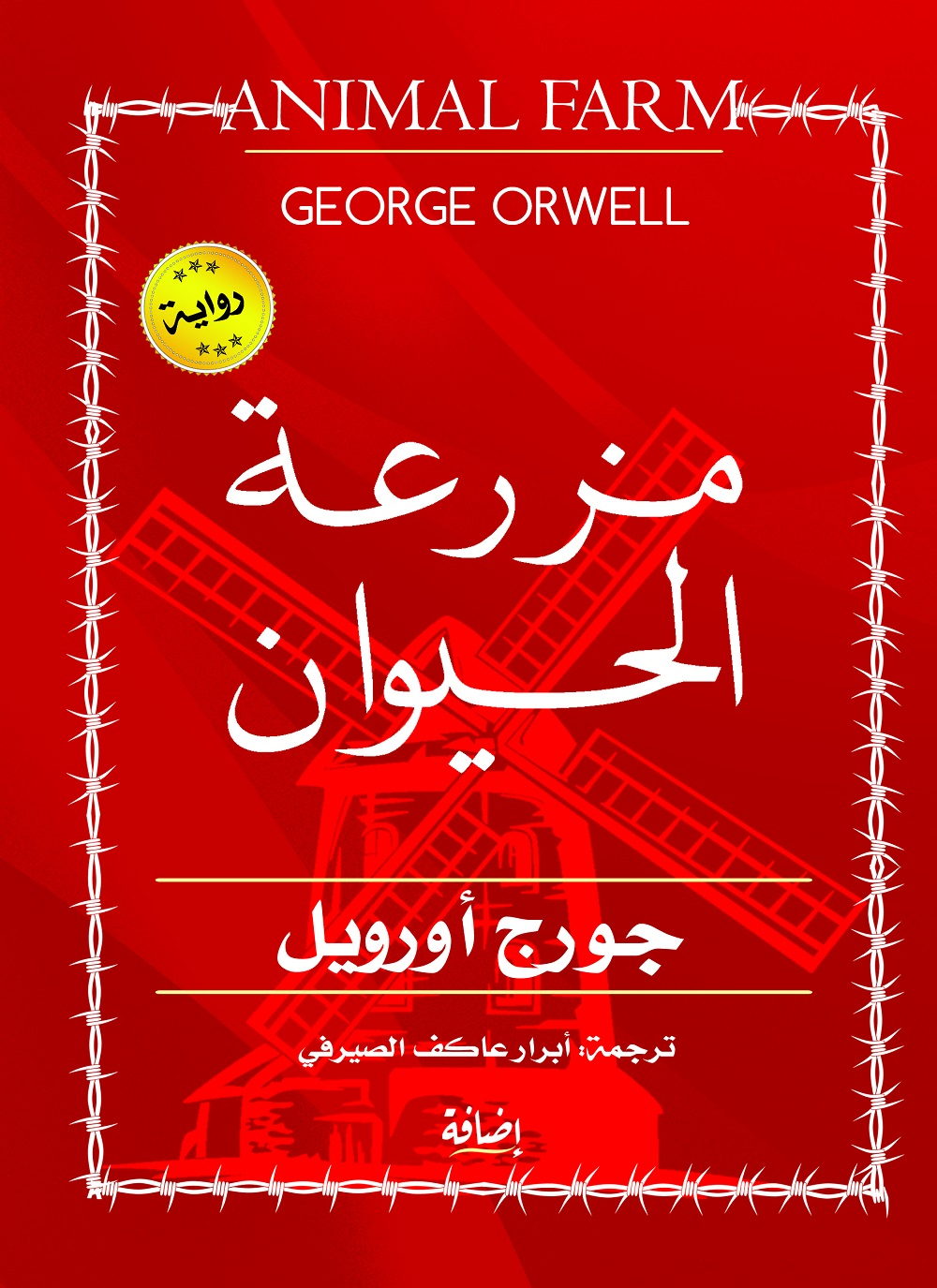

The name of the famous English writer George Orwell is associated with political literature, especially his masterpiece “1984”, but another novel is no less important, creative and symbolic, which is “Animal Farm”, which he published for the first time in 1945 AD, and which Orwell himself said was a criticism of the communist regime in the Soviet Union.
The symbolic nature of the novel distinguished Orwell’s works, but what distinguishes “Animal Farm” is its treatment of an event that the writer experienced, while the second novel (1984) touched on an imaginary world that may occur, according to Orwell, in the future.
The truth is that, according to many critics, Animal Farm lacked the depth that distinguished “1984,” and this is perhaps the reason why the second novel is more successful than the first, has a deeper influence in global political literature, and is also the most mentioned by political writers and professional politicians.
The events of the novel
The novel’s events revolve around a farm in Britain owned by a lazy, alcoholic man who suffers from a financial crisis. An old pig tells the rest of the animals about a dream he has about a revolution by animals against humans and living freely. But after the death of the old pig, two young pigs lead a revolution against the farm owner and succeed in expelling him and seizing control of the farm. The two leader pigs differed between them, as one was selfish and conniving, while the other was concerned with the interests of the animals, reforming the farm and establishing a philosophical theory about their animal society.
But the selfish pig succeeds in a violent plot to get rid of his rival, who flees the farm for fear of his life. The selfish pig establishes a corrupt dictatorial regime, where he installs himself as an absolute and tyrannical ruler, and begins to seize the profits of the farm, and sells the animals in order to buy all means of entertainment for himself and the rest of the pigs who cooperate with him, leaving the rest of the animals to suffer a hard life and lack of food. The ruling pig is killed Everyone objects to his decisions, under the pretext that he is an agent of the escaped pig, who does not appear on the farm again.
In the novel, the animals discover that pigs have begun to wear clothes and walk like humans. The ruling pig invited the owners of neighboring farms to a banquet to reach a trade agreement. After a lot of alcohol, food, and compliments, everyone started gambling, and then a violent and loud quarrel broke out between the pig and the owner of a neighboring farm, as each of them discovered that the other was cheating. Meanwhile, the animals were watching what was happening through the windows, without being able to distinguish who was the pig and who was the human.
A creative novel
The novel is a criticism of the communist regime in the Soviet Union, and the similarity between the novel and the history of the Soviet Union is clearly visible. For example, the revolt of animals against the farm owner represented the Bolshevik revolution in Russia, which overthrew the tsarist regime. The farm owner in the novel represented the tsarist regime that ruled Russia before the communist revolution. As for the old pig at the beginning of the story, he represented Karl Marx and Lenin at the same time. It was Lenin who led the communist revolution in Russia, and he was also one of the philosophers of the communist revolution.
In Russian history, Lenin’s death was the starting point of a bloody struggle for the top of power in communist Russia, that is, the Soviet Union (the farm in the novel) between Stalin (the ruling pig in the novel) and his rivals, the most prominent of whom was Trotsky (the losing pig in the novel), who was no less evil and brutal than Stalin. This conflict ended with Stalin’s victory over his rivals and the flight of Trotsky, the philosopher of the revolution and Lenin’s colleague in intellectual activity, and this is what also happened in the novel.
As also happened in the Soviet Union, the ruling pig (Stalin) led purge campaigns inside the farm to eliminate all forms of opposition. The similarities continued until the end, represented by the meeting of the pigs with the owners of the neighboring farms, where it seems that Orwell was referring, in the meeting of the pigs to the owners of the neighboring farms, to Stalin’s meeting with the leaders of the West at the end of World War II, and that the two parties lacked credibility in intention and dealing.
Orwell vs. Stalin
The reader may think that Orwell was anti-communist, to the point that he published a famous book against it, but this is not true, as the novel was not anti-communism, but merely anti-Stalin. Orwell did not criticize Karl Marx or Lenin and his clear support for Trotsky, who participated in decision-making during the communist era.
Orwell also did not criticize the Bolshevik communist revolution that killed the Russian royal family, carried out massive purges in Russian society, and dealt a painful blow to Russian culture, but Orwell did not care about this and singled out Stalin for his criticism. Orwell himself spoke of the necessity of returning the socialist path to the right path.