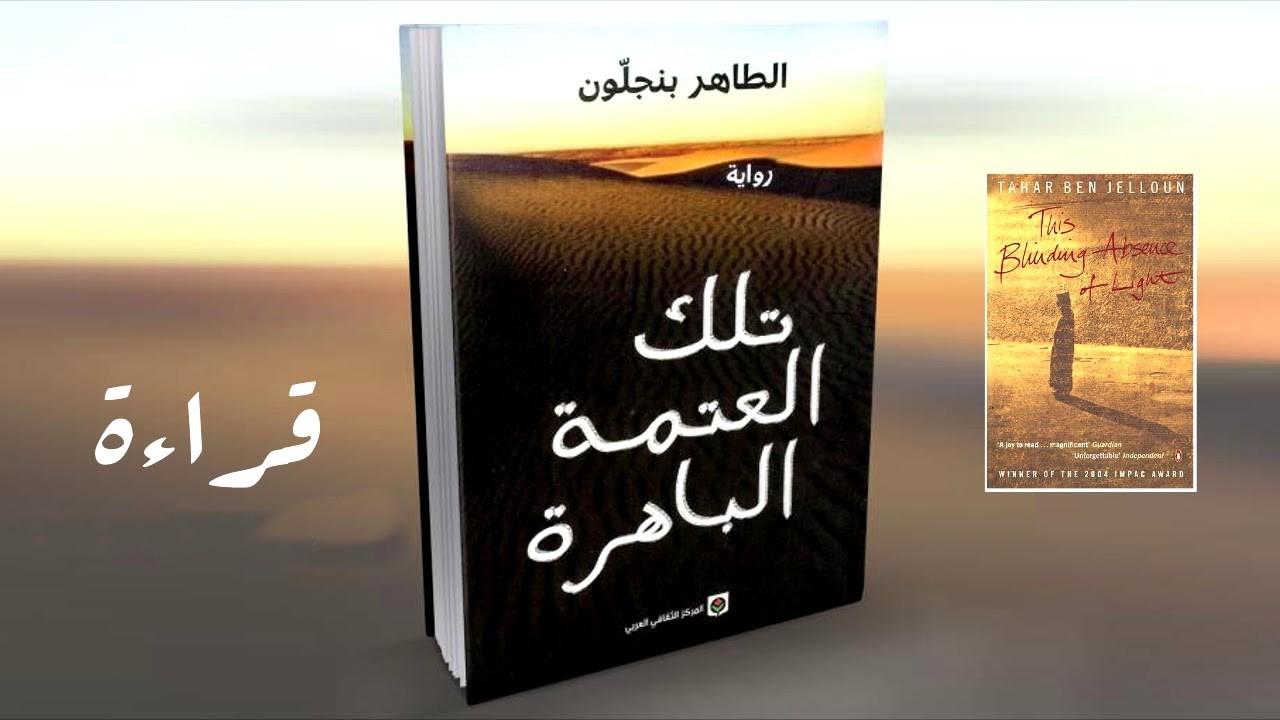
This is one of the most prominent things written in prison literature in the Maghreb region, although its basic version came in French, before it was translated into several languages, including Arabic, the language of the characters and the land of the events… Marrakesh, the capital of the Arab Maghreb. The novel was written by Taher Ben Jelloun, and published in Beirut in French by Dar Al-Saqi, on December 19, 2000, which is the same house that published the Arabic edition in 2002, in 223 pages, and it was translated for the house by Bassam Hajjar. The novel tells of a journey of pain and suffering that Aziz and his companions lived in underground darkness equal to the light of the morning and the darkness of the night. A painful journey in which humanity has no place. Life has lost its simplest meanings, and death has become a dream and a goal. A trip inside a cell that resembles a rectangular box three meters long, two meters wide, and four meters high. A journey in which groans, shouts and prayers rang out over the course of eighteen years, which began with twenty-three prisoners and ended with four creatures walking on all fours from the horror of what they experienced and saw.
Unique offer
Through the words of Aziz – one of the four survivors of the Tazmamart prison in the Moroccan desert – Tahar Ben Jelloun was able to make us feel the suffering of twenty-three prisoners who were sentenced without trial to be deported to the Tazmamart detention center, after which they were transformed into numbers, and for them the simplest things that we did not care about became unattainable dreams. A hot meal, soft bedding, clean water and fresh air are things that do not exist in Tazmamart detention center. Aziz recounted to us his and his comrades’ suffering in Tazmamart prison, after they were arrested following the failed Skhirat coup attempt in Morocco in 1971 on charges of planning to assassinate King Hassan II – the then King of Morocco – on his forty-second birthday.
The story is true
A coup attempt led by some Moroccan military generals, in particular, Colonel Amhamed Ababou, commander of the Ahrammo Military School, and General Mohamed Al-Madbouh. Aziz and his fellow officers who participated in this attempt did not know that Ababu was leading them to a coup, so all he told them was that they were going to carry out a maneuver; They were nothing but chess pieces in the hands of their superiors, and they ended up in Tazmamart prison. Aziz is the son of the reckless father who lived as a jester for the king, and the struggling mother who spent the prime of her youth raising her children, forgetting the absence of the selfish father who sold his family cheaply and bought his desires. As for Aziz, who tried to escape from his reality into fantasies and dreams, he forgets about his pain that took hold of every part of his body, but it did not prevent him from telling novels and stories to his comrades to strengthen their support and relieve them of the darkness of the prison and the injustice of the jailer.
Insistence on resistance
Away from the walls of his cells, Aziz’s soul flew repeatedly, leaving his body behind her in prison, to circumambulate around the Holy Kaaba and charge him with faith, and then return to his body so that he could continue his suffering among his comrades, none of whom resembled each other. Their cells were similar, but their endings were not similar. Death did not leave Tazmamat, as its stench wafted throughout, accompanied by the cries of mad birds. Death in Tazmamart is slow and its forms are more painful and difficult for you to predict or even imagine. Scorpions, cockroach eggs, constipation, gangrene and diarrhea. These and others were causes that carried with them the lives of their owners, so that their bodies would then disappear under the burning lime as if they had never existed and their suffering would end. A pen and paper were enough to convey the voices of the detainees abroad, after which their case became an issue of public opinion that ended with the erasure of Tazmamart (the death camp) from the map after the official authorities continued to deny its existence until it was closed in 1991, and the release of the four survivors after long years of torment, so that the echo of the recitations and cries of Aziz and his companions remained a lasting witness to what happened.