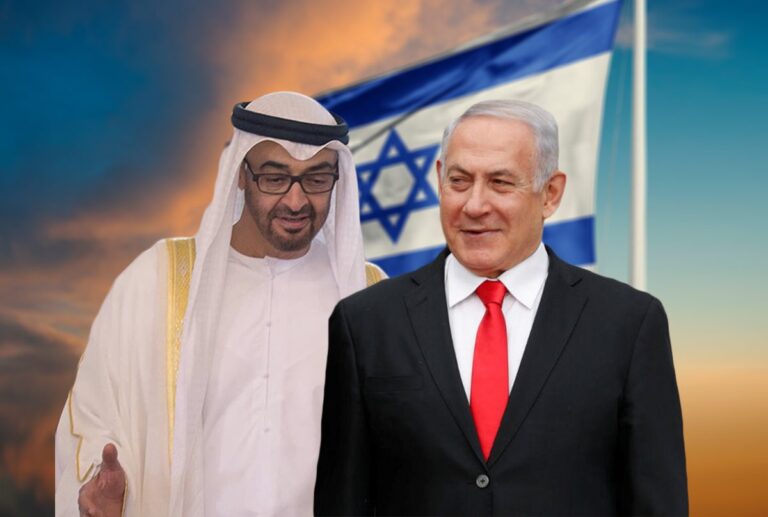

Late in the evening of September 11, 2020, US President Donald Trump tweeted announcing the news that Bahrain and Israel had reached a “historic agreement” to establish full relations between them, days after a similar agreement was announced between the United Arab Emirates and Israel, also with American mediation, in an agreement that Trump decided to name “Abraham,” which is not devoid of political and religious connotations..
Not even a few seconds had passed since Trump’s tweet, and Arab social media sites were filled with blog posts discussing the consequences of the Bahraini decision and posts denouncing the agreement and considering it “a new stab in the back to the Palestinian cause,” but the question that occupied the minds of researchers and politicians: Why now? What is the relationship between Bahrain’s normalization and Saudi Arabia? Is it a step towards declaring great normalization between Tel Aviv and Mecca?
Observers believe that the rapprochement between the two countries went through years of secrecy, and came to light in 2017 when an Israeli delegation was allowed to participate in a FIFA competition in Manama. But despite there being sufficient indications of coordination between the two countries, Manama’s move to establish full diplomatic relations with Tel Aviv was shocking to many Arab commentators..
The Bahraini move opened the door to questions and speculation about the possibility of other Arab countries joining the normalization engine, as politicians rule out Bahrain taking the normalization step without a green light from its close ally, Saudi Arabia. They believe that Riyadh is seeking to feel the pulse of the Arab and Saudi streets through the Bahraini and Israeli agreement..
Why Saudi Arabia?
American analysts confirmed to Reuters that Saudi Arabia gave implicit approval to the UAE’s decision last month after it allowed commercial planes traveling between Israel and the UAE to fly over its territory. Therefore, analysts expect that Trump will push Riyadh and other Arab capitals to normalization before the American elections on November 3..
Trump, and his administration behind him, believe that Saudi Arabia’s recognition of Israel and the normalization of relations with it is the most important thing in the Arab world, and not Bahrain or the Emirates, as Saudi Arabia – the land of the Two Holy Mosques and the qibla of Muslims – represents symbolism and value to the Muslim and Arab peoples, and most hesitant countries may follow it without compensation, to liquidate the Palestinian issue once and for all..
Electoral file
On the other hand, Trump seemed to be dealing with the normalization file in the Gulf as an electoral file, and that the governments that implement his desires are merely electoral keys and nothing more, as there appears to be an American and Israeli need for Riyadh’s approval to give legal cover to the normalization agreements, given the symbolism of Saudi Arabia and its importance as a basic entry point to the Arab and Islamic world..
Aside from the speculation, Jared Kushner, the US President’s senior advisor, announced that the normalization of relations between Tel Aviv and Riyadh is inevitable. But American analyst Simon Henderson believes in a statement to Anadolu Agency that King Salman bin Abdulaziz is very supportive of the Palestinian position and does not want to undermine the Kingdom’s position in the Islamic world..
In turn, Saudi Arabia did not officially comment on the Emirati agreement, but “Foreign Minister Prince Faisal bin Farhan said on August 19 that his country would not follow the UAE’s example in normalizing relations unless the Palestinian-Israeli conflict is resolved.”“.
Liquidation of the case
However, if Saudi Arabia undertakes normalization, this will be the end of the Arab Peace Initiative, which calls on “Israel to withdraw from the Palestinian territories it occupied in 1967 in exchange for peace.” This initiative was launched by King Abdullah bin Abdulaziz, the former king of Saudi Arabia, with the aim of establishing an internationally recognized Palestinian state on the 1967 borders. It was announced at the Arab Summit in Beirut in 2002..
As for the people, Arab social media sites have been filled for days with electronic campaigns condemning the normalization agreements and describing them as agreements of shame. Activists believe that direct protest against this rapprochement must be manifested in movements calling for democracy in the Arab world, saying that Palestinian sovereignty will not be achieved except by liberating the peoples from political oppression. They consider these normalization agreements “a call for surrender that will only benefit rulers who wish to consolidate their rule by gaining Israel’s approval as a means of getting closer to Washington.”“.