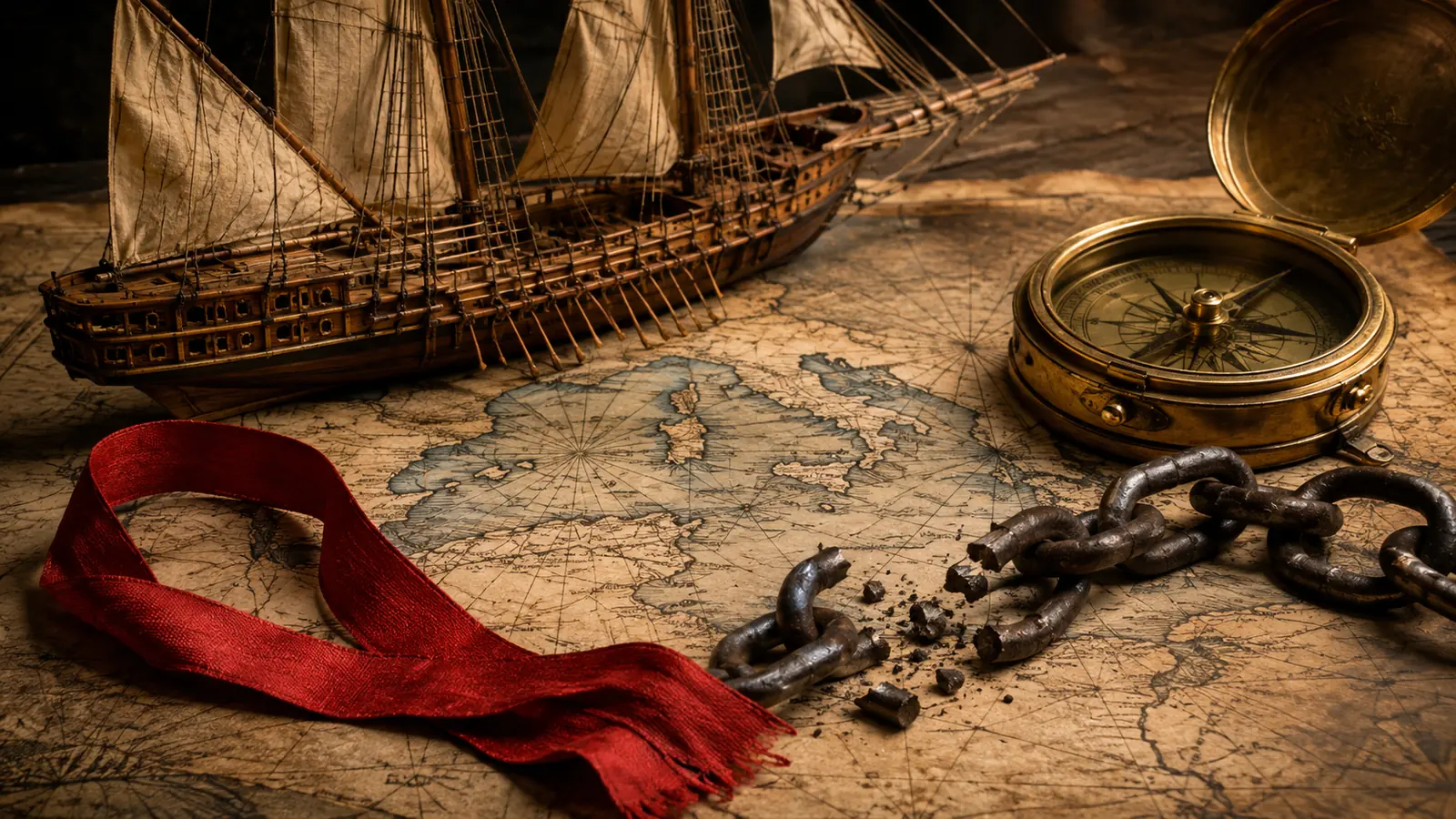

Türkiye named its newest ship to explore for wealth in the Mediterranean, “Oruc Reis.” Who is “President Oruc”? Or “President Oruj” as he is called in Arabic among the people of the Maghreb, who thanks to him controlled the high seas during the Ottoman rule of the region. Rais Aruj bin Abi Yusuf Yaqoub al-Turki, a Muslim captain and prince. He and his brother Khair al-Din Barbaros became famous for their maritime jihad in North Africa and the coasts of the Mediterranean Sea during the tenth century AH, corresponding to the sixteenth century AD. He was born on the Ottoman island of Medilli in the year 879 AH, corresponding to 1474 AD. He is also famous for the title of Baba Aruj and Aruj Rais. In his youth, Rais Oruj worked in trade between Thessaloniki and Agrippos. He was captured by the Knights of Rhodes for a short time until he was able to escape. After escaping from captivity, he contacted the Mamluk Sultan Qansuh al-Ghuri and made him commander of the fleet that he had created to fight the Portuguese. However, he was subjected to a major raid by the Knights of Rhodes, which led to the end of this fleet before it was completed. After that, he contacted the Ottoman Prince Kerkud bin Bayezid II, and the latter helped him after gifting him a ship to start again. After this, he agreed with Sultan Abu Abdullah Muhammad al-Mutawakkil to reside in the port of La Goulette in exchange for paying him the price of the spoils that he and his sailors seized from his naval invasions, where he would seize European ships and take their goods. Arouj worked alongside his brother Khair al-Din while he was in the West to rescue a large number of Andalusian refugees who fled the Spanish Inquisition, and during this period he acquired the name given to him by them: “Baba Arouj.” Some historians believe that the political cunning of the brothers Arouj and Khair al-Din was that they contacted the Ottoman Sultan Selim I and sent him gifts. This step opened relations between them and the Ottoman Empire. Arouj and his brother Khair al-Din had a major role in the Ottomans’ control of the eastern Mediterranean and Algeria and its subordination with Tunisia to the Ottoman Sultanate. Arouj conquered the Bejaia Citadel and the city of Jijel, and then moved to the city of Algeria, which he later ruled and became its emir after killing its ruler, Salem Al-Toumi, who conspired against him, and sought the help of Spanish forces. He also annexed the city of Tennis to his influence, and annexed the city of Tlemcen after a delegation of its people arrived to him. After a six-month siege by the Spanish forces and their Arab supporters, the city of Tlemcen fell and Oruj was fortified in its inner citadel, until he and his men rose to martyrdom in the year 924 AH, corresponding to 1518 AD. After his death, Oruj left a great legacy represented by the establishment of a strong state that lasted for nearly three centuries. After his death, Algeria became an Ottoman state, and his younger brother and successor, Khair al-Din, became its governor by the Ottoman Empire, and the Sultan granted him the title “Baklarbek.”
Reason for naming
Oruj is of Turkish origin. His father is “Yaqub Agha,” one of the Ottoman Sibahi knights who settled on the island of Medilli after it was conquered by the Ottoman Sultan Mehmed the Conqueror. He is the older brother of Khair al-Din Barbarossa, who succeeded him in ruling Algeria and who later became commander-in-chief of the Ottoman fleets. Oruj has two other brothers, Ishaq and Elias, who were both killed during their ongoing invasions. This is why many people link the naming with the desire of Turkish President Recep Tayyip Erdogan to restore the glories of the conquering Ottomans, as the Turkish President said, on Saturday, August 26, 2020, that it is not a coincidence that those seeking to exclude our country from the Eastern Mediterranean are the same ones who tried to seize its lands a century ago. The Turkish President’s statement came in a message published by President Erdogan, on the occasion of Victory Day, which Turkey celebrates on August 30 every year, and which coincides with the escalation of tension in the eastern Mediterranean between Ankara on the one hand, and Greece and its allies on the other hand. Erdogan stressed that this victory was a new notification to the world that “these lands are our eternal and immortal homeland,” and an announcement of the rise, progress, and return of a nation to the stage of history after they wanted to bury it. He also pointed out that Ankara’s struggle continues to this day, and that the Turkish nation will not hesitate at all to thwart efforts to impose a new “Sèvres” Treaty today in the “Blue Homeland” (territorial waters), just as it achieved independence despite poverty and lack of capabilities. On Friday, August 28, 2020, Erdogan called on NATO to “assume its responsibilities regarding unilateral steps that ignore international law and harm regional peace in the eastern Mediterranean,” referring to the movements of Greece and its allies and the escalation of tension in the region. Erdogan always affirms his pride in his glorious Ottoman history, that Türkiye will continue to protect its rights and interests at all times and in all places, and that it supports a just solution that benefits all countries of the Eastern Mediterranean.