
The giant Chinese telecommunications company Huawei is facing an unprecedented storm after the United States targeted it in early May 2019 by adding it and 70 of its affiliated companies to the black “entity list,” in a move that prevents the Chinese company from obtaining components and technology from American companies without government approval. In this regard, the Egyptian Center for Strategic Thought and Studies issued a report on the dimensions of the huge trade war currently taking place between America and China, which partially succeeded in convincing the American government to postpone implementation of the decision for a period of 90 days, to be implemented until mid-August. According to the study, the Chinese Huawei is considered among the largest technology companies in the world, and is one of the fastest growing, especially during the beginning of this year. Founded in 1987 in Shenzhen, China, it is one of the most prominent technology companies in China, and one of the most recognized technology brands in the world. The company employs more than 180,000 people in 170 countries, and sells its devices everywhere from Europe and Asia to the Middle East, Africa and Latin America. Huawei also provides infrastructure equipment that forms the backbone of the Internet around the world, according to information on its official website. Data indicate that this company put on the market in the first quarter of 2019, about 52.1 million phones. This number raised it to second place in the world among smart phone brands, after it preceded the American company Apple, which introduced 42 million phones in the first quarter, a 20% decrease from 2018. The South Korean Samsung remained in first place by offering 72 million phones in the first quarter of this year, a decrease of 8% from the first quarter of 2018. This significant growth for Huawei occurred in only 4 years, as the company had only 5 in 2018. percent of the global smartphone market in 2015, compared to 18 percent for Apple and 24 percent for Samsung.
Signs of conflict: a noticeable rise
The conflict began to appear in the media between Apple and Samsung on one side and Chinese companies on the other, led by Huawei, when Apple CEO Tim Cook announced in early 2019 that “demand for the iPhone is declining, mostly due to China.” The Chinese market is considered one of the largest internationally, relative to its population and its pace with rapid technological developments. Huawei controls the highest share of this market, reaching 29% in the first quarter of 2018, compared to 21% in the same period last year. However, the American company Apple, as well as the South Korean Samsung, do not appear in the top four brands in this market, as Huawei is followed by the following companies: The first quarter of 2019 and 2018.
European market: Samsung speaks
As for the European market, Samsung holds the lion’s share of the market with a rate of 31% in the first quarter of 2019, up from 30% in the same period in 2018. Huawei comes in second place with a rate of 26%, a major jump from the percentage achieved in the first quarter of 2018, which was 15%, after it displaced Apple, whose share decreased from 23% to 21% between the first quarter of 2018. 2018 and 2019. Research expected Huawei’s share in global markets to rise further, after it launched the $2,600 Mate
Chinese market: complete reluctance
Of course, in China, Huawei must be at the forefront, and analysts say to the Forbes technical website that some Huawei phones can still gain more shares in the Chinese country of origin at the expense of Apple, because wealthy Chinese, such as local businessmen, are losing interest in the American brand, with their interest in Apple phones worth more than a thousand dollars weakening, which are now considered to lack innovation.
Conflict Whistle: Cho’s arrest
In December 2019, Canada arrested Huawei’s CFO, Meng Wanzhou, and the daughter of its founder, in response to a request from Washington, which accused her of bank and electronic fraud in violation of US sanctions on Iran. Meng denied these charges, pointing out that she was arrested for political reasons. Against this background, major institutions began to cut their ties with the company. In August 2018, the US Department of Justice charged Xiaoqing Zeng (a former engineer at General Electric) and a Chinese businessman with espionage for economic purposes and conspiring to steal trade secrets from General Electric for the benefit of China. The accusation included the theft of several electronic files, containing details about engineering drawings and models related to the company’s gas and steam turbines. Both were formally charged on April 18, 2019. US intelligence also accused Huawei of receiving funding from Chinese security services, specifically from: the Chinese National Security Commission, the Chinese People’s Liberation Army, and a branch of the Chinese government intelligence network. In light of these accusations, the United States urges its allies to adopt joint security and political measures, to make it more difficult for Huawei to control fifth generation communications networks. US intelligence conveyed its allegations to members of the “Five Eyes” intelligence-sharing alliance, which includes, in addition to the United States, Britain, Australia, Canada, and New Zealand. In this context, New Zealand and Australia banned Huawei and ZTE in August 2018. Following this, China filed a complaint against Australia’s discriminatory policies with the World Trade Organization.
Huawei responds: an official complaint
Huawei filed a complaint with the Plano District Court in the US state of Texas (where Huawei’s headquarters are located in the United States) in March 2019, against the restrictions imposed by the US Congress on the purchase of its products, asserting that there is no American evidence to support this decision, which undermines fair competition and ultimately harms American consumers. Accordingly, Trump tried to pressure allies to stop using Huawei equipment after preventing local government agencies and contractors from using Chinese companies’ products. The United States warned of unprecedented Chinese risks and threats resulting from contracts with Chinese companies to establish the infrastructure for fifth generation networks, because Washington believes that it will allow the Chinese to control data and information on those networks.
The final blow: banning the company
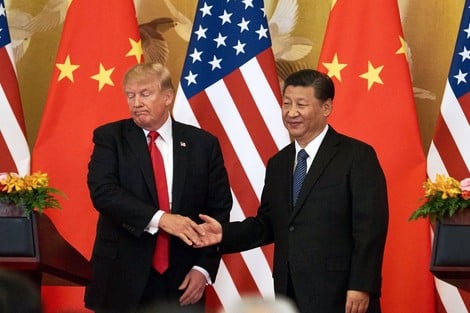
In mid-May 2019, the United States decided to blacklist Huawei Telecommunications Group and a number of its subsidiaries, as part of the state of “technological emergency” declared by Donald Trump to protect the American telecommunications sector from espionage. Accordingly, American companies are prohibited from using the products of foreign telecommunications companies. As a result, Google decided to ban Huawei from using its services and from obtaining Android updates.
A complex crisis: Who loses in China?
Although the majority of European countries sided with the United States in that conflict, at the same time they did not want to strain their trade and diplomatic relations with China. Therefore, the British position, which is to use the company in specific non-core parts of the fifth generation networks under close supervision with the aim of managing and reducing threats, may represent a role model for overcoming the dispute between Beijing and Washington on the one hand, and a framework for limited commercial participation that does not negatively affect the national security of countries on the other hand. In addition, there are calls for a unified European procedure in dealing with Huawei, especially in light of the actual use of it by European countries. This indicates the exclusion of the option of a total ban demanded by the United States, but this requires a set of controls and conditions set by European governments when dealing with it, and in return raises question marks about the future security repercussions of that, amid speculation about the possibilities of Chinese espionage.