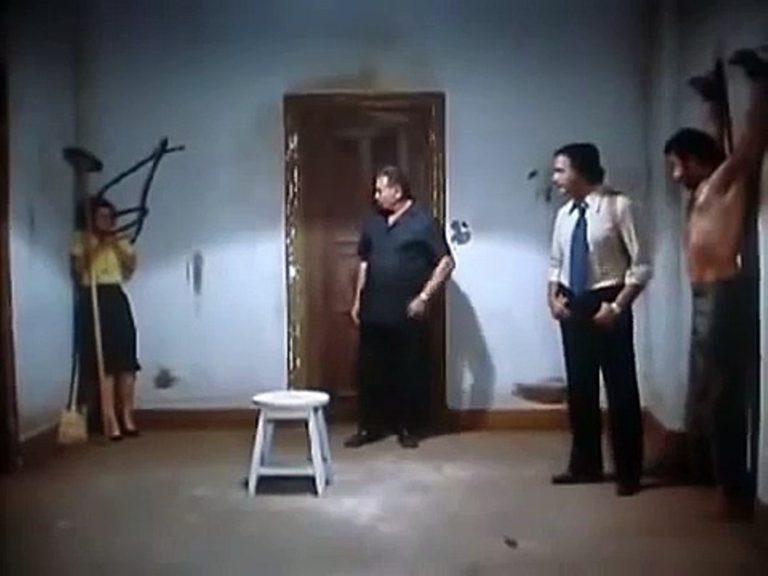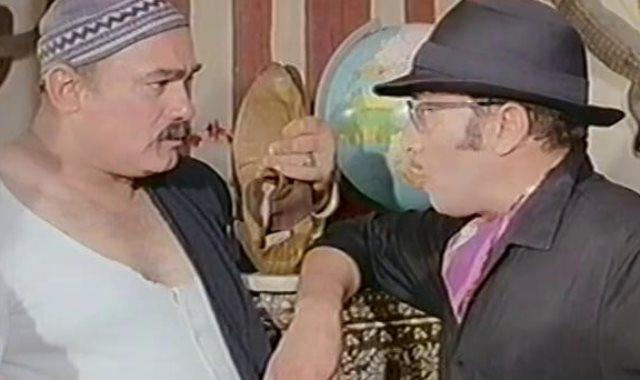
The movie “Amasha in the Jungle” is one of the weak commercial films of the seventies. It brought together most of the situation comedy stars of that time, with two big stars: Fouad Al-Muhandis and Mohamed Reda, with the two dancers: Najwa Fouad and Soheir Zaki, with the young woman Safaa Abu Al-Saud. The film was filmed in Uganda, among the African jungles, and despite all this interest in excellence with the work group, the film seemed as if the actors were repeating a scenario that had just come to their mind, so it became an artistically weak film in which the same sentence was repeated many times, carrying no meaning, but perhaps carrying a role known to the Egyptian intelligence.
National mission
Similar to the American movie “Argo,” Egyptian intelligence used the movie “Amasha in the Jungle” to carry out a “national mission.” The movie was a cover for a group of guerrillas, intelligence men, and frogs to blow up the Israeli excavator in Africa. The story of the operation was told in the novel “The Digger” by the late writer Saleh Morsi, which was turned into a series with the same name starring Youssef Shaaban and Hala Sidqi. The events of the novel revolve around the work carried out by Egyptian intelligence when it destroyed an oil exploration rig that Israel had purchased to drill in Sinai. Information spread in the political and journalistic circles at the time that the film about which the story said that intelligence officers disguised themselves as technicians and artists in filming it in Africa to cover up the secret operation was the film “Amasha in the Jungle,” as the date of its filming coincided with the date of the operation to destroy the excavator, and the film was also strangely improvised.
Treasure hunt
The late Mohamed Reda played the role of Amasha Okasha Amasha, who is the ignorant teacher, who neither reads nor writes. He has a fat body and a light mind. He is surrounded by his boys and comedic situations occur between them based on their stupidity. The weight of Muhammad Reda and his stupidity as well, until he discovers that he is the fourteenth “Ammasha” in his family, and that his grandfather, the traveler “Amasha the First,” left a treasure in Africa, guarded by brave black men, so that Muhammad Reda gets to know Fouad Al-Muhandis. Mahrous Bey, an archaeologist, decides to travel to Uganda in search of treasure with the rest of the cast. The comical situations continued in the middle of the bush and the predatory animals, then the teacher Amasha falls in love with Safaa Abu Al-Saud, who helps Fouad the Engineer in his mission, until Amasha and Mahrous reach the treasure, but they gift it to the people of Uganda, and everyone dances inside the plane returning to Cairo, all of this amidst a “hart” from Muhammad Reda from the sample (How is this, O Lord, I have overcome in it), (Why is this so, oh wonder), which is the language that some have described as the godfather of the language. “The Limby.”
A little politics
After Egypt’s loss in the 1967 war, and Israel’s occupation of Sinai, Israel decided to explore for oil in Sinai using a rig that was the newest and largest in the world. At that time, Egypt had no choice but to use diplomacy in the beginning to avoid war, especially since Egyptian intelligence did not yet know the name or location of the rig. The Egyptian government mediated Indian Prime Minister, Indira Gandhi, and Yugoslav President, Josip Tito, to consult with the United States to stop Israel. The Egyptian government sent letters of protest to Canada and Britain through unofficial means, and leaked this information to major newspapers, but Egypt’s diplomatic efforts were not successful. This prompted former Egyptian President Gamal Abdel Nasser to abandon peaceful options, and he decided to attack the excavator. The head of General Intelligence at the time, Amin Howeidi, was assigned to find out the location of the excavator in order to strike it by plane before it arrived. Then the search for the excavator began.
Planning the operation
Egyptian intelligence officer Mohamed Naseem – who trained the famous Egyptian General Intelligence spy Rifaat El-Gammal – was assigned the task of tracking the movement of the excavator from the Canadian Lake Erie to the Atlantic Ocean, until the excavator entered the Portuguese port of Ponta Dalgada on the island of San Miguel, which is about 1,100 kilometers away from Lisbon in the heart of the Atlantic Ocean on the African border. There, Nassim decided to hit the driller. He decided to select the frogmen who would carry out the mission he had planned. He traveled to the Naval Forces Center in Alexandria only three months after the Eilat Operation was carried out, and he chose eight of the best Egyptian Navy men, including those who participated in the Eilat Operation. When the rig arrived at the port of Dakar, the operation was ready for implementation, and Nassim considered that Senegal was the most suitable country to carry out the operation, especially due to the large number of immigrants there, but after he arrived in Senegal and began preparing for implementation, and knowing where the rig was docked, which was next to a French naval base; Which makes it difficult for Nassim and the naval men to develop a plan to attack and withdraw, which was not implemented in Dakar, where the excavator suddenly left the dock nine hours before the frogmen arrived, without knowing the reason for leaving so quickly before completing the necessary maintenance procedures.
Ivory Coast
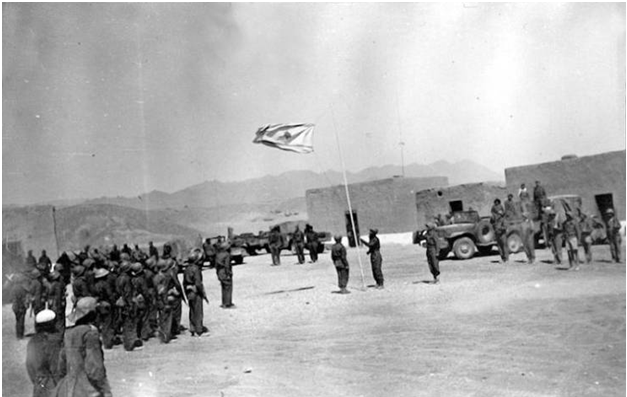
In March 1968, the excavator arrived in Abidjan, Ivory Coast. Mohamed Nassim traveled to France, and from there to Ivory Coast. While studying the place from his plane, he discovered that there was a dense forest area overlooking the port that was suitable for hiding, especially since it was one kilometer away from the excavator. Immediately upon his arrival, Nassim discovered a state of preparation for a huge festival to receive American astronauts visiting Africa for the first time, so he immediately sent for a group of human frogs that he had chosen months ago to take advantage of this state of preoccupation, and began implementing the camouflage operation. Nassim summoned the navy, frogmen, and intelligence personnel whom he trained for months in Cairo, gave them new names, which were chosen for them to carry out the mission, and handed them their fake travel identities as a crew for an Egyptian film called “Amasha in the Jungle,” so that they could hide four mines and six explosives with them, along with some equipment and diving suits from Cairo, in the photography equipment, decorations, and the clothes of the actors who were not possible to suspect. Comedians and dancers. The Egyptian frogmen group, consisting of eight officers, arrived with the film crew, and half of them moved to the site of the operation in Abidjan, with the rest following them without arousing suspicion. However, the group did not wait for the rest of the individuals to arrive for fear that the excavator would move again before carrying out the operation, especially since Nassim obtained information from his private source that the excavator would leave the city the next morning, so he proposed carrying out the mission at dawn that same night, while all the security services were busy with the ceremony to celebrate and secure the American astronaut Alan Shepherd. The frogmen infiltrated the excavator site at dawn, and the numerical shortage required that each member of the operation carry two mines, instead of one mine. They placed all the explosives in their places within one hour, and at seven in the morning they were detonated. Nassim then supervised their deportation after completing the mission outside the country. After completing the mission, Nassim sent a telegram to President Gamal Abdel Nasser in which he wrote: “Congratulations.” Abdel Nasser responded: “I salute you for your courage… that sane courage.”