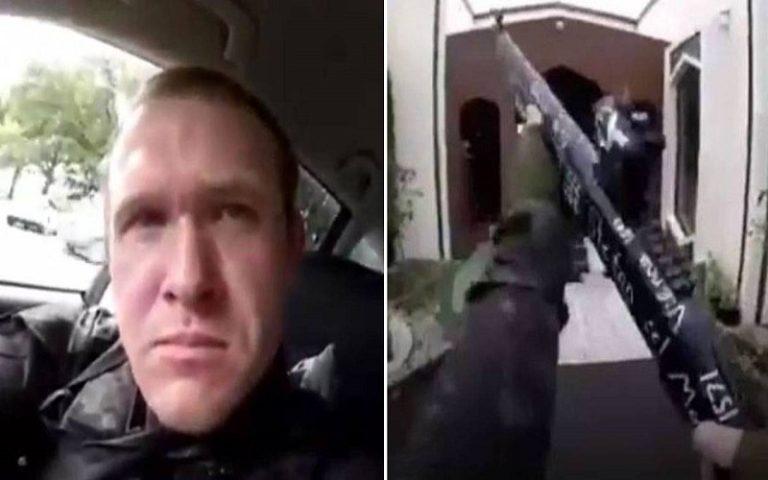
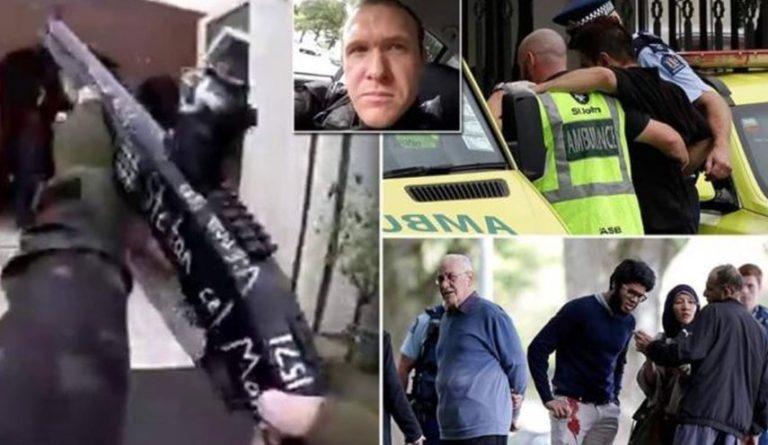
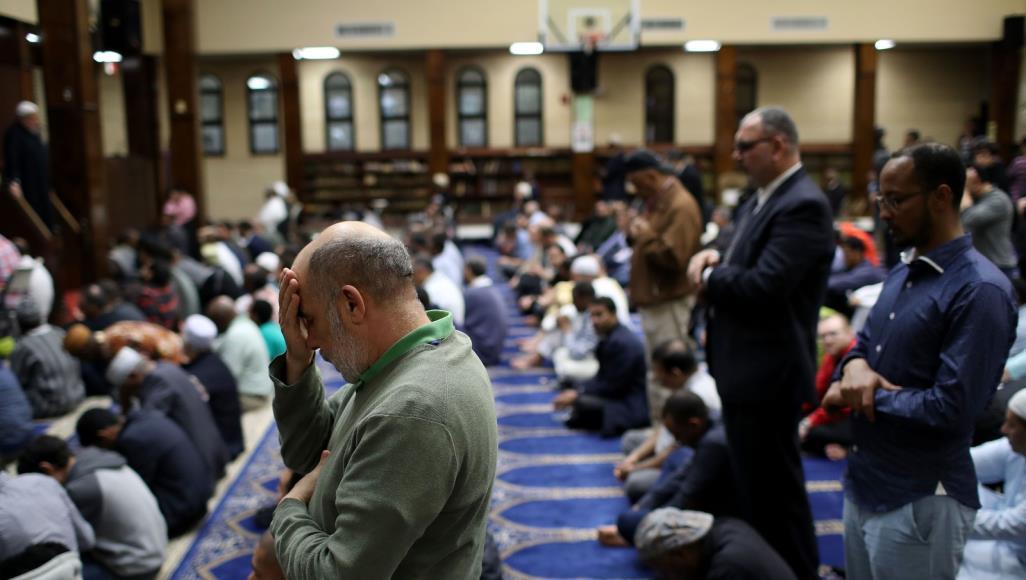
 The Egyptian Institute for Studies issued a special issue that addressed the rise of Islamophobia in the Western world, especially with the growth of the extreme right and populist parties in Europe, entitled “Islamophobia and Islamophobia: After the New Zealand Massacre,” prepared by researcher Dr. Othman Ali, and published by the Institute on March 19, 2019. It attempts to answer the questions: “What are the backgrounds and causes that caused the incident and what are its future consequences?” According to the study, the incident of the attack on the two mosques in New Zealand is considered an indicator of the escalation of the phenomenon of Islamophobia in the Western world. This massacre is only a link in a bloody series of horrific crimes committed against Muslims, especially with the growth of the far-right movement and populist parties in Europe. The study establishes what it calls “the necessity of reading the incident within the context of events that preceded it.” On January 28, 2017, a fire destroyed most of a mosque in the town of Victoria, near the city of Houston, in the US state of Texas, following decisions issued by US President Donald Trump targeting Muslims and refugees. A day later, at least six people were killed in a shooting at a mosque in the Canadian province of Quebec. On June 19, 2017, London witnessed a run-over accident that targeted worshipers near a mosque, killing one person and wounding ten people. On September 28, 2016, an explosive device exploded in a mosque in the German city of Dresden, and two months later, extremist racists wrote anti-Muslim slogans on the walls of a mosque in the French city of Bordeaux. This month, New Zealand is experiencing a horrific shock, after a right-wing extremist broadcast live on Facebook the massacre he carried out in two mosques in Christchurch during the Friday sermon, killing 49 people and wounding about fifty others, including children.
Genocide is a Western industry
The report says that “Islamophobia” – a phenomenon that is hostile to Islam and Muslims – if it is not curbed and treated in a scientific manner that recognizes all its political and intellectual dimensions, will bring about a new war of extermination against Muslims in Europe, as analysts say that every event in which the extermination of social, ethnic, and religious groups occurred was preceded by cognitive campaigns, organized propaganda, and a planned policy drawn up based on moral, religious, and historical foundations to serve the project of extermination. The term “genocide” appeared for the first time in the 1940s by the philosopher Raphael Lemkin, when he spoke about the Holocaust – Hitler’s massacre of the Jews – which for him meant the return of humanity to barbarism. But this is not the opinion of all philosophers, as there are right-wing philosophers in Europe who argue that “extermination of people” works to establish an ideal society, and these are the theorists of extreme right-wing thought in Europe. For example, Armenians, Jews and Tutsis in Rwanda were seen as worthless groups standing between the population and the realization of this ideal society. Therefore, in the mind of the “rational and enlightened” thinker, they were legitimate targets for the state’s extermination through genocide. The “cleansing” of the state through genocide is reflected in the language of genocide. Muslims today are subject to a prelude to extermination, just as the Armenians were once called “tuberculosis microbes,” and a local politician asked rhetorically, “Isn’t it the doctor’s duty to destroy these microbes?” Hitler also spoke of the “Jewish virus” and that “by eliminating the scourge he will do a service to humanity.” In In Rwanda, the chopping down of Tutsi men was called “removing trees,” and the slaughter of women and children was described as “removing the roots of weeds.” These three examples support a right-wing theory that justifies genocide with the idea of “cleansing” the continent and preserving identity.
The growth of Islamophobia and the future of Muslims
Despite the existence of a media conspiracy against Muslims in Europe, Islamophobia has other factors that fuel it, some of which are carried out by Muslims themselves… including extremism and the adoption of violence embodied by Salafist jihadism as represented by Al-Qaeda, ISIS, the Nigerian Boko Haram organization, the Taliban government, the Shiite state of the Guardianship of the Jurist in Iran, and the Shiite militias that committed crimes against humanity in Syria and Iraq. In the Western media, these movements were portrayed as being rooted in Islam, rather they are Islam itself… knowing that these extremist movements are movements far from Islamic moderation, which is the basic feature of political movements with Islamic roots… In addition, 28 of ISIS leaders, for example, out of 29 people in the leadership, were former members of the Baathist security apparatus in Iraq, according to Der Spiegel newspaper, May 12, 2017. The Western media sympathetic to Israel employed all its energies to highlight the crimes. The heinous crimes of ISIS are as if they are crimes sanctioned by Islam, and that they are part of the global jihad to control Europe and the West. The ruling extremist Christian religious movement, which is allied with Israel, has harnessed all its energies to serve the efforts aimed at representing Islam as a force of evil, and has contributed not insignificantly to the creation of Islamophobia.
What should Muslims do?
The study concludes that Muslims have an important role in confronting Islamophobia, especially by confronting the theory that is widely heard among the extreme right, which says that as a result of immigration to Europe, the indigenous population will be replaced by non-European strangers who will destroy the country’s identity. This theory also had an echo in the German “Pegida” movement, whose full name means “patriotic Europeans against the Islamization of the West.” Exposing these myths can be hard work, as feelings of hatred trump the rational approach and sweep away any documented facts, and it seems even more difficult when it is ignored or forgotten that humans came to this earth to get to know each other and share their experiences, or as the French historian Benjamin Stora says, the real challenge of human life is “knowing the other.” To view Link to the full study