
The poem “The Pirate Ghannam” or “Hawz Malta” is one of the greatest works written about the “popular maritime jihad” in the Mediterranean. It commemorates the victory of the Ottoman Algerian fleet over the Christian fleet of Malta in a decisive battle. It is one of the words of Imad al-Din Fakhr al-Islam bin Abdullah bin Hussein al-Toukali, the Algerian popular poet born in 1520 AD, in the city of Algiers. The Moroccans have the right to be proud of that battle, as it brought a unique victory in dark circumstances after the defeat of the Ottoman fleets in the naval battle of Lepanto. History of the battle, which was considered a pivotal battle in the history of Europe and its relationship with the Ottoman Empire. And Muslims in generalThe Ottomans lost about 200 of their ships, along with 15,000 soldiers and sailors, and the defeat of the Ottomans in that battle was the first major victory for the Christians over the Ottoman Navy controlling the Mediterranean, and the beginning of the decline of Ottoman influence in the Mediterranean. While Europe was proud of its victory in the Mediterranean over the Ottoman fleet, the Venetian ambassador sent a gloating message to the Ottoman Grand Vizier, Mehmed Pasha Sokolli. News came of the victory of the Algerians, with the help of pirates, over the strongest armies in the Mediterranean at that time, the Sicilian fleet. The Ottoman Grand Vizier responded to the Venetian ambassador’s message: “Cyprus was an arm of yours and we broke it, but our fleet in Lepanto was nothing but a beard for us, which you shaved off. “Grows faster after shaving.”
The atmosphere before the poem
The Battle of Lepanto was one of the largest and most massive naval clashes in pre-modern history, and perhaps one of the largest naval battles in history, pitting Ottoman naval forces in open confrontation with the ships of the Christian Holy League in the Gulf of Patras off western Greece. The clash, which involved an estimated 500 ships and 100,000 combatants on both sides, was the largest battle of its kind since ancient times, and the last major naval conflict dominated by armed rowing ships. The clash began when the Greek port of Nafpaktos, known as “Lepanto,” fell into the hands of the Ottomans in 1499 AD. From that point they effectively controlled the eastern Mediterranean, part of a larger geopolitical strategy that took them to control most of the region as well as North Africa, including: Egypt in 1517, Algeria in 1529, and Tripoli in Libya in 1551. Lepanto from then on became part of the multilingual, multiethnic, and multi-sectarian Ottoman Empire. Local Greek sailors, navigators and soldiers were recruited from the Ottoman cavalry in exchange for tax exemptions. In early 1571, Ottoman spies in Bosnia informed Sultan Selim II that a large Christian fleet was being assembled to break the Ottoman siege of Famagusta in Cyprus. By royal decree, Selim II ordered his fleet to sail from Istanbul, and then the Ottoman fleet went out to attack. When the first Ottoman ships met the Christian ships, firepower prevailed Super European. Ottoman accounts described how “the men faced a hail of bullets” and how “the noble fleet was surrounded by thick smoke that covered the sky.” The Ottoman ships were, of course, tied to the bay and unable to move and maneuver.
Hard victory
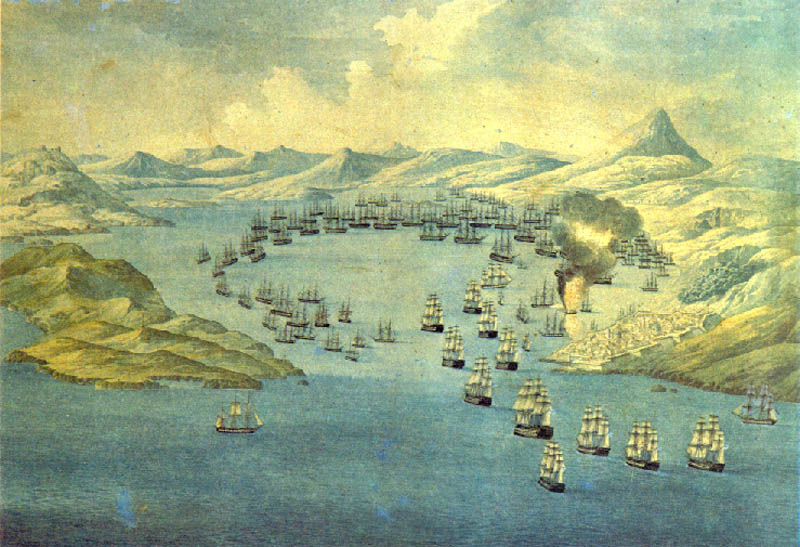
This defeat was a terrible defeat for the Ottomans, but the Maghreb countries offered to the Ottomans And Muslims The kiss of life through its sudden and unexpected victory, as all estimates placed the Maltese fleet at the forefront of the most powerful fleets in the Mediterranean, while the Moroccan fleet was primitive and popular, and consisted mostly of pirates and bandits, as well as volunteers with no experience in sea wars. Here was the shocking surprise for everyone, even for the victors themselves. The Moroccan fleet, which consisted of only 16 sea fortresses and about 2,000 pirates, was superior. Ulugh Ali Pasha, commander of the fleet and governor of Algeria, was able to completely destroy the Maltese fleet on May 18, 1565 AD, after a bloody siege. Even On September 13, 1565 AD, which gave the Ottomans an opportunity to rearrange their fleet again, after controlling Malta, and benefiting from the remnants of its fleet and its spoils, and this helped the Ottomans to confront all subsequent attempts of the European fleet.
The poem
The poet laureate, Imad al-Din al-Toukali, wrote a poem to narrate the epic of Malta and describe the siege, in which he sang of victory and spoils, and how they carried the spoils of war with them towards Algeria. In the poem, the poet describes the ship on which the pirate boarded, with 3 masts. The fleet consists of 16 sea fortresses and about 2,000 pirates, which set off from the “Darifa” area in Algiers, led by the pirate “Alaj Ali Pasha.” The words of the poem are difficult, because they are entirely composed of Algerian-Saharan words.
Lyrics of the poem
A pirate, a sheep, brought private property from Malta’s possessions, all of them were taken captive, and they took captives. A pirate, a flag on the financial side, a teacher, a flag made of leaves and pomegranates, taqat, a saddle-steel with three masts in the air, a straitjacket made of castles with its straps, tents and a tight court, and twenty corners on it, a quarter-hour’s watch for pleasure and the completion of passages, and the head is the star of Hafez al-Ramliyya, a compass and a map at the bottom of the boat. He knows the times, otherwise Alvin sings freely, he has the right of the great crowd, the right of Hasan Al-Qurayyat, and the country has spoken, he has shaken its cities and the mountains of Al-Wata, and he has subjugated the office of Malta with oppression, the connivances and tyranny of the Persians, the gift has been brought from the girls, humble, and they have accepted the victory. They have delivered, and our spoils, the girls, are saddened by the storms, every unit that walks with a stumbling gait, my beloved ones, rejoiced with the arrival of the helmets in the waves, they swear, they helped, the wind of an assistant, not What slowed down from the mountains of the rain, the watch of his duty, the defender has thunder like thunder, he shouts in his state, for the anchorage, extending the bond of conquest. This is how he was depicted in the silences in the wing of peace. The people of Marsa struck in joyful pride and went down. The defenders of peace. The spoils came. They preceded Maryam, the pure, and Halima with a sweeping comb. And I returned, distributing the merchandise on all the crimson linings. And the camels are full, the helmets are worn out, they are worn out, and the girls are dressed in halal and khanat.
As was the custom of popular Maghreb poetry at that time, the poets used to put riddles between its lines. In the last stanza of the poem, the poet Toukali challenges the readers in his verses by saying, “If you understand the riddle and are clear without error about which pirate I am talking about, then you are a genius.” His name is also mentioned in a riddle in another stanza.