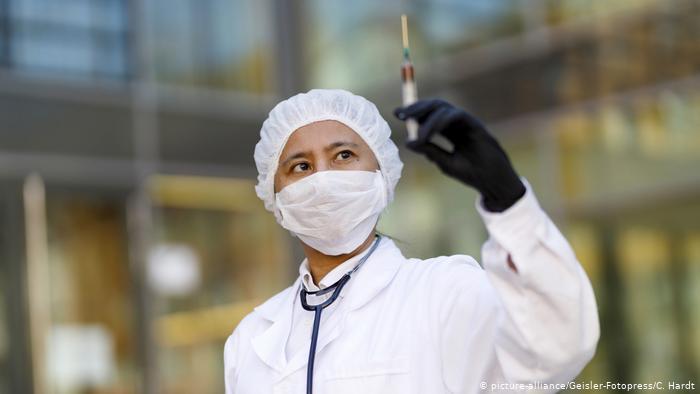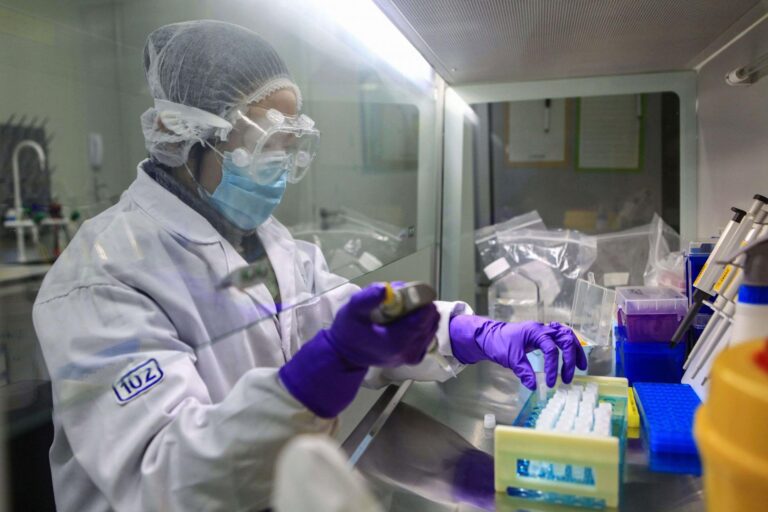
The Corona virus, which is barely visible with a very fine microscope, has plunged the world into a state of terror and confusion, pushing many countries of the world to isolate themselves and close their borders, and has also made humanity, with all its ethnic and ideological spectrums, confined to its homes. Only a few months after the virus appeared in the city of Wuhan in central China, December 12, 2019, it became clear that humanity was losing, and that there was no one to benefit from this pandemic, which caused a global economic recession, halted the operations of global stock exchanges, and pushed citizens in the affected countries to flood the markets with the aim of stockpiling as if they were heading towards a severe famine. However, in the midst of these events, there are those who looked at the matter from another angle, and saw that there was a beneficiary from this global epidemic… namely the planet Earth. There is no doubt that air pollution is one of the problems facing the major cities of the world, to which many human activities contribute, including industrial activity and heavy traffic. According to a report published by the American CNN network, the closure of factories and empty streets in some countries due to Corona made planet Earth the “primary beneficiary,” stressing that the state of general closure witnessed by many cities and countries around the world following the outbreak of Corona made us see clear skies.
The world is changing
China, which is the epicenter of the spread of Corona, and some of whose cities are known to be among the most polluted cities in the world, announced that the average number of days in which the air was clean increased by 21.5% in February compared to the same period last year. Satellite images issued by NASA and the European Space Agency also showed a sharp decline in nitrogen dioxide emissions released by cars, power plants and industrial facilities in major Chinese cities between January and February, after the spread of Corona. According to these images, the visible clouds of toxic gases that usually hover over industrial facilities have almost disappeared, due to many factories stopping production as well as restricting transportation movements to prevent the spread of the virus. Also, many European and Arab countries have announced measures restricting citizens’ freedom of movement, preventing gatherings and canceling many events, including those that closed entertainment venues such as internet cafes and public parks, in order to limit the spread of the virus. These steps taken to limit Corona are an essential factor that contributes to mechanical air regulation. Therefore, it can be said that there is a positive impact of Corona. Results extracted by researchers from the Center for Energy and Clean Air Research, which specializes in studying the health consequences of air pollution, indicate that carbon dioxide emissions, which in turn result from the use of fossil fuels, also decreased by 25 percent due to the measures taken to contain the epidemic outbreak of the new Corona virus. In India, the curfew imposed across the country on March 22 brought the level of pollution due to nitrogen dioxide to its lowest levels ever during the spring, according to the Center for Energy and Clean Air Research. As for North America, which is one of the most polluted areas in the world, it will likely witness similar developments, coinciding with the start of a widespread economic contraction throughout it.
The effects are clear
It seems that the planet Earth is slowly beginning to breathe a sigh of relief from the impact of human activities on it, after the “Covid-19” virus forced billions of people to remain in their homes, so that the world can see the state of healing that has occurred to the Earth after the steady decline in air pollution and the gradual return of nature to its beauty. Improvement has been seen on planet Earth over the past period in a large number of countries. Pollution rates decreased in India due to the closure of the country and forcing citizens to remain in their homes for fear of the spread of the Corona virus, which made citizens see blue skies and enjoy pure air free of the impurities of pollution that they had become accustomed to for many years, and they were able to see the Himalayas for the first time in decades. In Venice, residents were able to see the lake and the fish inside it after it was free of sediment. Satellite images also showed a noticeable decrease in the percentage of nitrogen dioxide in the atmosphere of large industrial cities in Europe, such as Brussels, Paris, Madrid, Milan, and Frankfurt, during the period between March 5 and 25, compared to the same period last year. In China, which is the largest source of air pollutant emissions in the world, a noticeable decrease in nitrogen dioxide emission was recorded in urban areas, after the Chinese government imposed a general health ban to limit the spread of the Corona virus.
Corona’s biggest lesson
These positive developments do not mean that fighting the gas emissions that cause global warming requires the world to face a severe health crisis like the one it is experiencing now. But what is happening currently should give us a reason to think carefully about the impact of human activities – including mobility, travel and travel – on the nature of the situation on the surface of our planet. Imposing restrictions on travel and non-essential movements led airlines to keep their planes on the ground, which led to these companies sharply reducing the number of flights, or stopping them completely. Although the data revealing the effects of reducing air traffic on the environment have not yet been published, we already know that this likely had a significant impact. It is worth noting the results of a study conducted in 2017 in partnership between the Center for Sustainability Studies at Lund University in Sweden and the University of British Columbia in Canada, which stated that each of us can make three decisions of a personal nature that will bring about a rapid reduction in greenhouse gas emissions, which are reducing air and car travel, as well as meat consumption.
The world celebrates the return of Earth
The search site “Google” celebrated at the end of last April the 50th anniversary of the celebration of World Earth Day, which falls on April 22 of each year, and published on its opening page a video clip showing the bee, which is one of the most important insects, stressing that this small one depends on pollinating a third of the world’s crops, and more than 85% of the world’s flowering plants. In any case, there is no doubt that we need to make major changes to the way we move around the world if we are to achieve the goal set out in the Paris climate agreement to contain global warming by 2030 to no more than 1.5°C above the pre-industrial era.