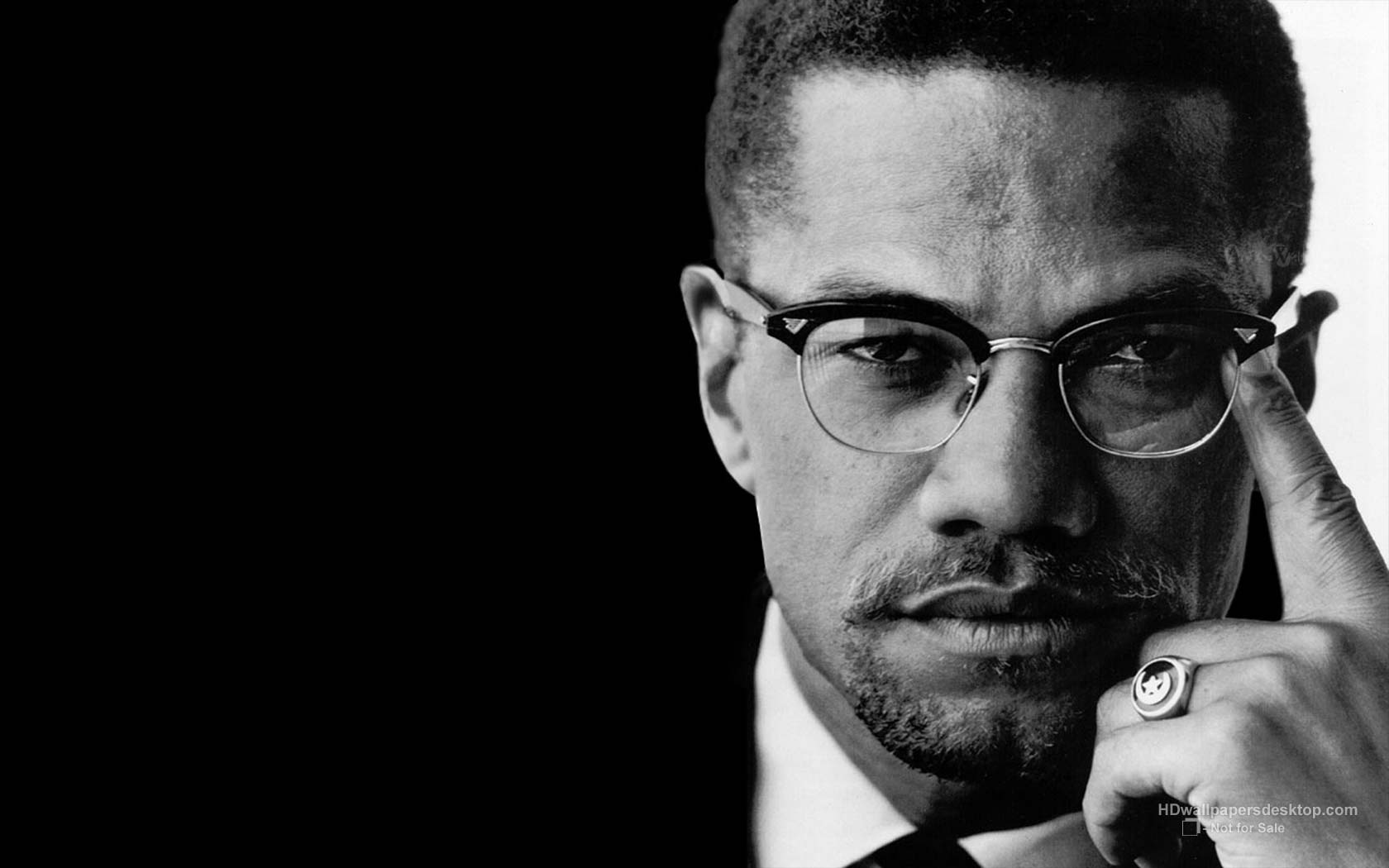

Malcolm
A Muslim fighter against American racism
In 1931, the body of a black American man was found murdered on the train tracks in Lansing, Michigan, USA. His family accused an extremist racist group. Then his wife entered a mental hospital due to her suffering from the loss of her husband, and the children were dispersed in social care centers.
One of these sons, in those barren circumstances charged with racism and societal injustice legalized in the United States of America, is Malcolm Little, who, years after that incident, would become the most prominent African American fighting for justice and equality.
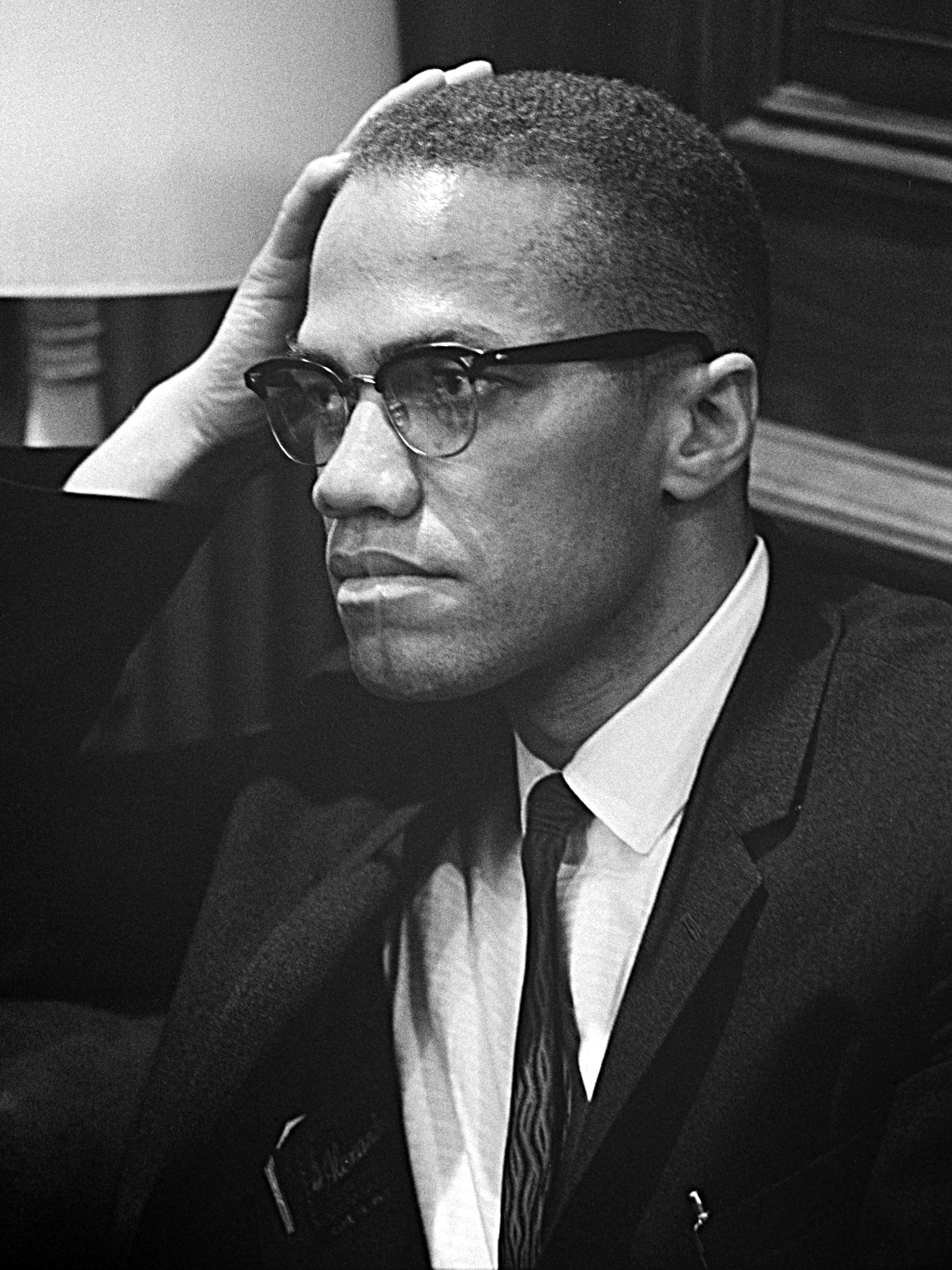
» Birth and upbringing
Malcolm
His family was forced to change their place of residence more than once to avoid the pressures and threats of white supremacists against his father, Reverend Earl Little, who was enthusiastic about the literature of the “Black Nationalist” organization that called for the superiority of the black race, but that did not spare the family from persecution by whites.
In 1931, the body of a black American man was found murdered on the train tracks in Lansing, Michigan, USA. His family accused an extremist racist group. Then his wife entered a mental hospital due to her suffering from the loss of her husband, and the children were dispersed in social care centers.
One of these sons, in those barren circumstances charged with racism and societal injustice legalized in the United States of America, is Malcolm Little, who, years after that incident, would become the most prominent African American fighting for justice and equality.
» Study and training
Malcolm
He left school angry with the whites, rejecting a social reality that he considered racist and unjust. He moved to Boston, Massachusetts, and indulged in entertainment, promiscuity, gambling, and drug dealing. He entered prison in 1946 on charges of theft and armed robbery.
One of these sons, in those barren circumstances charged with racism and societal injustice legalized in the United States of America, is Malcolm Little, who, years after that incident, would become the most prominent African American fighting for justice and equality.
» Entering Islam
Prison was a prominent station in his life and in his legal advocacy path. During his seven years there, he began a journey of self-education, benefiting from the prison library, and devoted himself to reading literary, legal, and historical books.
He became acquainted with the literature of the Nation of Islam following correspondence with his brothers (an organization that emerged from the womb of racism against blacks to represent the other side of the scene, as it was based on the belief of the superiority of the black race over the white). He was attracted by the teachings of Elijay Muhammad and his theses in criticizing the white society’s marginalization of the black group and their lack of political, social, and economic empowerment.
He was released from prison in 1952, declared his conversion to Islam, became a “dedicated member” of the organization, and adopted the nickname “X” as a flag for his family instead of “Little,” which he considered a slave name.

“A milestone
In 1953, he was appointed an official spokesman for the organization and served as commissioner in the synagogues of Boston, Philadelphia, and New York. He established new headquarters for the organization in Detroit and New York, and in 1957 he launched a newspaper called “Elijai Muhammad Speaks” to be the voice of the organization.
He was able – with his charisma, enthusiasm, and ability to influence – to attract thousands of black Americans to the “Nation of Islam”, and its members multiplied dozens of times in record time, and their number reached thirty thousand in 1963 after they were about five hundred members in 1952.
» Leader Malcolm X
Due to his success in attracting supporters and the level of excitement in his presentation and ideas, he appeared on the most famous media programs and participated in seminars and debates at the most prestigious American universities. The New York Times ranked him as the second most followed orator by Americans in the United States.
In June 1963, X led the “Freedom Rally” march in Harlem, New York, and the march was considered one of the largest events of the civil rights movement in America.
» Islamic preacher
In February 1964, he convinced world boxing champion Cassius Clay to join the Nation of Islam, so he declared his conversion to Islam and changed his name to Muhammad Ali.

Then, Malcolm’s fame surpassed that of his teacher and spiritual guide, Elijay Muhammad, and disagreements began between them, and they deepened when he stopped him from speaking on behalf of the “Nation of Islam” for ninety days when he commented on the assassination of President John Kennedy by saying, “He (Fennedy) never realized that the chickens would come home to be roasted.”

» Leaving the “Nation of Islam”
Malcolm
His vision of Muslims side by side, praying in close rows, eating from the same plates, and speaking in unified gatherings, with no distinction between colors and races, affected him.
His call began to extend beyond the circle of black Americans to the various races and components of American society, and he founded the “Islamic Mosque” organization to continue his human rights activities.
He continued his advocacy and struggle and founded the “Afro-American Unity Organizations” in an attempt to link the struggle of black Americans with the struggle of African nations that were struggling for national liberation.
» The assassination of Malcolm
Malcolm
During the last two years of his life, he devoted himself to writing his autobiography with the writer Alex Haley, which was published shortly after his murder under the title “Malcolm’s Autobiography.”