
“The war is over. The guns have fallen silent.” With these words, the German writer Hildegart Teinert summarized the heavy moments of May 8, 1945, before the radio announced that the unconditional surrender of the German army had entered into force. Hildegart wrote these lines in her husband’s notebook. Shortly after writing these lines, her husband, the Latin language teacher Johannes Teinert, shot his wife first, then committed suicide in the courtyard of their house in the town of Glaz in the Lower Schlesia region, which is the same thing that the war leader, Hitler, did, and then many Germans did in turn, for fear of revenge from the victorious allies.
World War II ends
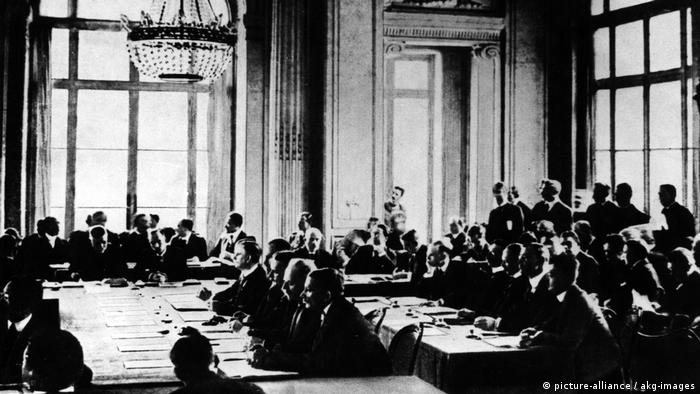
The German surrender came through a legal document declaring an armistice and ending World War II in Europe. It was signed by representatives of the Supreme Command of the Wehrmacht on the one hand, and representatives of the Supreme Command of the Allied Reconnaissance Forces and the Soviet Supreme Command, in addition to a representative of the French forces, who attended the signing ceremony as a witness on May 7, 1945. The same instrument was signed again by representatives of the three branches of the Nazi forces on the one hand, and representatives of the Supreme Command of the Red Army, the army formed by the regime. The Soviet Union, after the Bolshevik Revolution that broke out in 1917 against the Russian Tsar, was composed of twenty million workers and peasants, and was nicknamed “Red” because it signified the revolutionary blood, on May 8, 1945, in the presence of representatives of the French and American forces as martyrs of the signing. The date of May 7, 1945 is known as Victory Day in Europe, while Victory Day is celebrated in Russia and the former Soviet countries on May 8 of each year, due to the signing of the German instrument of surrender after midnight Moscow time, and the same day is known in Germany as Surrender Day.
Statement of military surrender
We the undersigned, represented by the authority of the German High Command, hereby acknowledge and unconditionally surrender to the Supreme Command of the Allied Powers and at the same time to the High Command of the Red Army, all German forces on land, at sea and in the air who are at this date under German control. The German High Command simultaneously announces the issuance of orders to all German military, naval and air authorities and to all forces under German control to cease operations at 23.01 European Central Time on 8 May 1945, to remain in all positions occupied at that time and to disarm completely, and to hand over weapons and equipment to local Allied commanders or officials appointed by representatives of the Allied High Commands. Maintaining all ships, aircraft, machinery and equipment, as well as devices of all kinds, armament, devices and all technical means used in war in general. The German High Command uniformly announces to all commanders the need to ensure the implementation of any further orders issued by the Supreme Commander of the Allied Powers and by the Supreme Command of the Red Army. This military surrender is without prejudice to any general instrument of surrender that may be imposed by the United Nations or on its behalf and will be superseded, which applies to Germany and the German armed forces as a whole. In accordance with this statement, in the event that the German High Command or any of the forces under its control fail to act in accordance with the provisions of this surrender, the Supreme Commander of the Allied Powers and the Supreme High Command of the Red Army may take such punitive or other measures as they deem appropriate. This resolution is directed in the English, Russian and German languages. But only the original texts are in English and Russian.
Germany after receipt
The signing of the surrender document came in agreement with the German Kaiser at the time, Karl Doenitz, who had become the official successor to Hitler since his suicide on April 30 of the same year of signing, and whose government took the city of Flensburg as its headquarters after fleeing Berlin. As a result of the agreement, all extermination and concentration camps (extermination camps are the camps and detention centers for torture and extermination established by the Nazi regime in Germany and the countries under its control such as Poland, the most famous of which is the Auschwitz camp in Poland for Jews, political opponents and others) were liberated by May 8 of the same year of signing. But what is the fate of those who are freed from it? Many of them wandered into Germany in search of their relatives, while others remained for several weeks in the camps where they were detained due to extreme exhaustion. As for the Bergen-Belsen extermination camp, the British set up a camp for displaced persons.
The victors take revenge
Florian Huber, in his book “Promise Me, Child, You’ll Shoot Yourself,” describes the largest mass murder in German history. In the capital, Berlin, the suicide rate increased five times in the first year after the end of the war compared to the years that preceded it. He says: “Many killed themselves. They were afraid of what was coming.” Huber cites evidence that in the small town of Dimen in the Western Pomeranian region alone, between 700 and 1,000 people there committed suicide, given that the town’s population did not exceed 15,000 people. Also in the town of Glatz in Lower Schlesia, the teacher Teinert and his wife were not the only ones who committed suicide. Hildegart Teinert wrote in her diary, just one day after the war was declared over and before she was shot by her husband: “Only a few moments remain, and then everything will end… forever.”