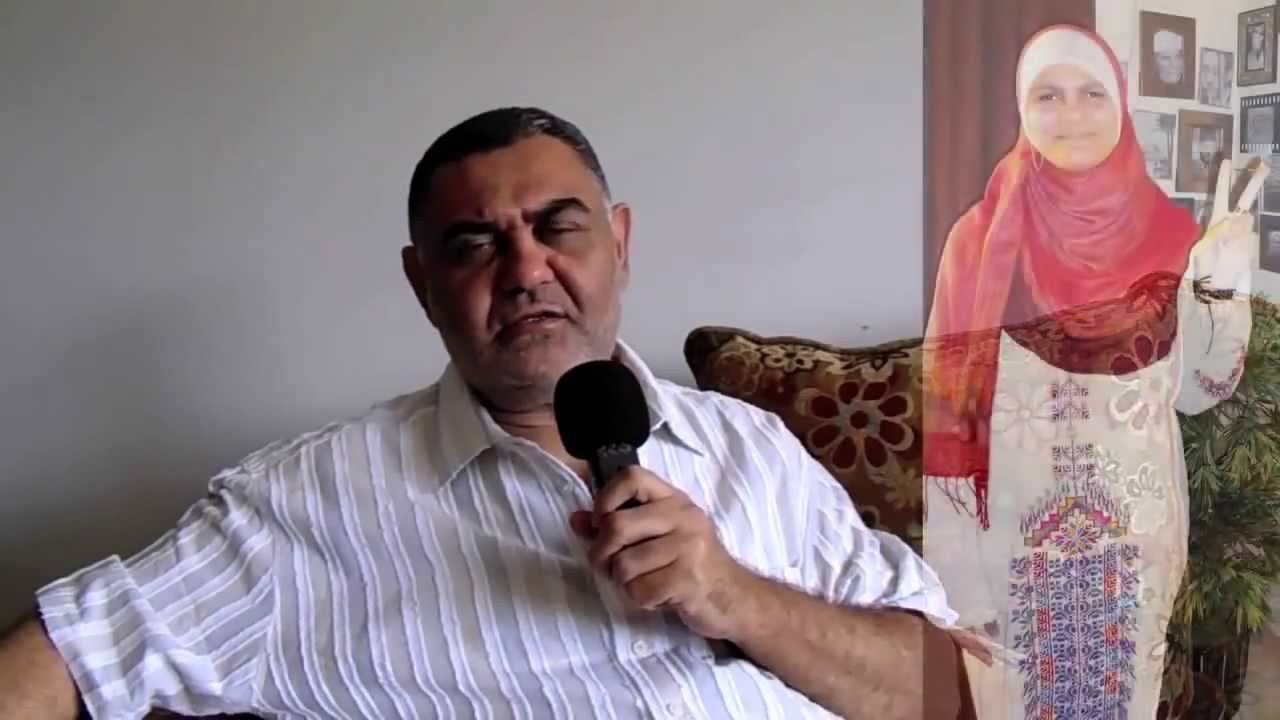

The bullets of the coup forces did not give Egyptian journalist Habiba Ahmed Abdel Aziz more than 26 years of time before she died while participating in and covering the dispersal of the Rabaa al-Adawiya sit-in on the morning of Wednesday, August 14, 2013, for the English-language Emirati newspaper “Gulf News,” where she was working as a reporter in its newsroom to report the sit-in’s activities.
News about her death from the journalist
Habiba joined Gulf News in September 2011 as an intern specializing in community news coverage, and then in April 2012 she was appointed to its English version “XPRESS” after obtaining a degree in media at the American University of Sharjah.
Moment of shock
Habiba was born in Cairo on 11/22/1986. She has three younger sisters and one brother. The UAE arrested him because of posts he wrote on social media platforms, then deported him to Cairo at the beginning of 2017. Her father is Dr. Ahmed Abdel Aziz, the media adviser to the late Egyptian president Mohamed Morsi, and her mother is Mrs. Sabreen Manjoud. Arwa, Habiba’s younger sister, who was residing in Sharjah with her mother at the time of the massacre, said about her family’s reception of the news of her martyrdom: “My mother spoke to her around dawn. At noon, I called her again, but she did not answer. I called again, and someone answered and told her that Habiba had died. My father, who is in Egypt, confirmed the news to us later.”
Busy life
Her mother, Sabreen Manjoud, tells the story of the life in which Habiba grew up in a long conversation on her Facebook account. She says: “About a year and a half after her birth, we traveled to Pakistan so that my husband could help the Afghan Mujahideen in their jihad against the Russians through the media. He worked as the director of the Mujahideen magazine, and one of his jobs was to publish pictures of Arab and Afghan martyrs in the war. At that time, the work was done by cutting and pasting before entering the computer. Habiba used to stay with her father while he was working and watch the pictures.” Al-Shuhada asked and we answered her as much as her mind could comprehend. Habiba grew up and did not forget what the word “martyrdom” meant. She entered school and began studying history. I taught her what was in the book and told her, “You write this on the answer sheet only,” but the truth is such and such. Her grades in history were always low because she was writing the truth, not what they taught her. For example, they asked her who was the first president of Egypt (according to the curriculum, he was Abdel Nasser), but she answered Muhammad Naguib because he was actually the first president of Egypt.
Precocious intelligence
Her mother says: She was always asking questions when watching the news broadcasts, and I would give her the answer that was appropriate for her age, and when her understanding opened, she was fascinated by the Palestinian jihad and its symbols, such as Sheikh Ahmed Yassin and Dr. Al-Rantisi, and she began to follow everything related to the Palestinian issue until she joined the American University of Sharjah. Habiba joined the Palestinian Club in all its activities and all its seminars and introduced the Palestinian issue in all the periodicals in which she wrote, until the attack on Gaza in 2008, while she was still a university student. Habiba tried everything she could to work to collect donations and create groups to go to the Gaza Strip and help in relief work, but the Egyptian authorities at the time hindered this.
Daughter of the Arab Spring
Her mother continues: When the first Arab revolution took place in brotherly Tunisia, we rejoiced in it, and it was only after the flame of the revolution was ignited in Egypt that Habiba joined the Gulf News newspaper in Dubai as a journalist and was unable to come and participate in the events of the January Revolution, but she was able to come during the events of Muhammad Mahmoud and participated in it. Then the Syrian revolution broke out and we saw the massacres committed by the regime there, and she began to support them there in every way: through the media and in the field of relief. She arranged a relief convoy to travel with her to Syria, but work prevented her from joining it until the coup took place and she sided with the legitimacy completely. The Rab’a sit-in began and she wanted to join it from the first day, but she was able to do so on 7/30. With the start of her annual leave, Mutasima went, determined not to give up the people’s right to freedom, and she worked in The media center was there, but she aspired for more, so she joined Al Jazeera Mubasher Misr as a volunteer.
Moments of martyrdom
With the preparations for the dispersal by the security forces, Habiba was preparing to film the crime without fear, and her distribution came at Taiba Mall outside Rab’a right at the beginning of the confrontations. She was in the first row, according to eyewitnesses, and she was seeing the army snipers, as she wrote in a post on her page, and as she told me in the last phone call between me and her, and they were pointing at her with the sign of slaughter. The crime began… and Habiba advanced with steady steps to the nearest point near the soldiers to broadcast everything she could and show the extent of the crime, and everyone around her shouted at her: Go back, go back, as she moved forward so that everything was shown live on the screen. In fact, everything that Habiba reported with the broadcast camera was used as material in the documentary film The Rabaa Fire on Al Jazeera. In order for the soldiers to stop reporting the truth, they treacherously targeted her with a bullet directly in her heart and exiting from her lower back.
A report produced by Habiba about the victims of the military rule
Reactions
On the afternoon of the dispersal, the Egyptian Journalists Syndicate issued a statement in which it mourned the journalist who died at the age of twenty-six and called on the competent authorities to open an immediate investigation to uncover the true circumstances behind her death. XPRESS Deputy Editor Mazhar Farooqi mourned her by saying that the team was in shock. He added: “It is difficult to believe that she is dead. She was very interested in her work and had a promising future ahead of her.”
Long list
It is noteworthy that a number of journalists were injured during the dispersal events and the subsequent attacks on the demonstrators, including our colleague Ahmed Al-Najjar, Al-Masry Al-Youm photographer, Tariq Abbas, Al-Watan’s editor, and Mustafa Al-Shimi from “Veto.” The British Sky News network also announced that its cameraman (Mick Dean), 61 years old, was killed in a shooting during the dispersal events. Mick has two sons and has worked for the channel for 15 years.