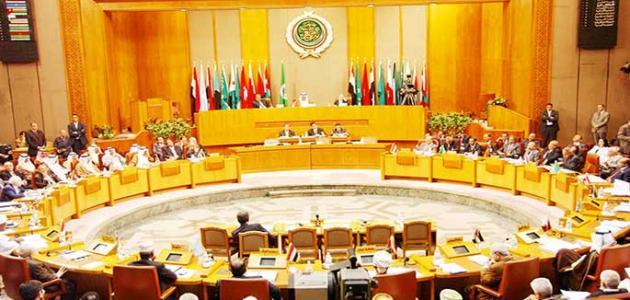
The dream of union continued to haunt the Arabs before World War II, with the launch of the ideas of the late Egyptian philosopher and jurist Abd al-Razzaq al-Sanhouri, in his book “The Jurisprudence of the Caliphate and its Development to Become a League of Eastern Nations,” until it became a tangible reality after the end of the war more than half a century ago, albeit in two parts with the launch of the League of Arab States, in 1945, and taking Cairo as its headquarters. The membership of Arab countries has expanded. After starting with only seven countries, the number has now reached 22 countries, the Comoros being the last to join in 1993.
Growing up circumstances
The two poles of Western colonialism in the Arab region (Britain and France) were forced to grant some of their colonies in the Arab region partial independence in response to Nazi and fascist pressure on them during World War II, with the aim of focusing on their battle against Germany and Italy, and not causing further unrest within their colonies in the Arab countries. Britain and France promised the leaders of the revolutions in the Arab colonies independence after the end of the war, and expressed their encouragement of any trend towards Arab unity. This was stated by their Foreign Minister Anthony Eden in 1941, which some Arab leaders took advantage of to establish the League of Arab States. Mustafa Al-Nahhas Pasha, the Egyptian Prime Minister, invited Jamil Mardam, the Prime Minister of Syria, and Sheikh Bechara Al-Khoury, the head of the National Bloc in Lebanon, who later became President of the Republic, to visit Egypt and exchange views regarding the idea of a league of Arab countries that will gain their independence. Mustafa Al-Nahhas delivered a speech in the Egyptian Senate in 1942 in which he announced that Egypt was seeking to hold a conference of Arab leaders to discuss this matter. In Jordan, Prince Abdullah’s statements were in line with what Al-Nahhas Pasha called for, so that consultations began in September of 1943 between Egypt, Jordan, Iraq, and Syria regarding the establishment of the League. Many statements and viewpoints were issued by Nouri al-Saeed from Iraq, Tawfiq Abu al-Huda from Jordan, Saad Allah al-Jabri from Syria, Youssef Yassin from Saudi Arabia, Riad al-Solh from Lebanon, and the delegation from Yemen. The conclusion of the consultations with those delegations was the emergence of three tendencies among Arab leaders with regard to the Arab League project: 1- Greater Syrian unity led by Prince Abdullah bin al-Hussein and with the support of Nouri al-Saeed, who saw in this matter a plan toward the Fertile Crescent. 2- The second trend saw the establishment of a unified state forming the regions of the Fertile Crescent, led by Iraq. 3- The third trend calls for a more comprehensive and larger unity or federation that includes Egypt, Syria, and Yemen in addition to the countries of the crescent. The followers of this trend are divided into two parts: one calls for a federal or confederal union, or a type of union with a supreme authority that imposes its will on the member states, and another section sees a union that works on cooperation and coordination between the Arab countries with each other while each country maintains its independence.
Actual launch
After the end of World War II and the victory of the Allies over the Axis powers, Britain and France tried to abandon their promises to grant independence to the Arab countries despite the latter’s standing with them and depleting their wealth in the war effort. Arab public opinion had prepared for the establishment of Arab unity and began to put pressure through parties and newspapers in this direction. On July 12, 1944, Mustafa Al-Nahhas Pasha sent an invitation to the Arab governments that had participated in the preliminary consultations to send their delegates to participate in the preparatory committee for the General Arab Conference, which would formulate the proposals submitted to achieve Arab unity. That committee met in Alexandria on September 25, 1944, in the presence of representatives from Egypt, Syria, Lebanon, Iraq, Transjordan, Saudi Arabia, Yemen, and the Arabs of Palestine. After eight successive sessions, the meeting members ruled out the idea of a central government and the Greater Syria and Fertile Crescent projects. The discussion was limited to the proposal of Nuri al-Saeed, head of the Iraqi delegation, to form a federation council whose decisions would only be implemented by states that approve of it, for fear of affecting the sovereignty of member states.
Disagreement over naming
Syria proposed that the name of the new entity be the “Arab Alliance,” while Iraq suggested that its name be the “Arab Union.” However, the Egyptian delegation saw that the name “Arab League” that it proposed was more appropriate linguistically and politically and compatible with the goals of the Arab countries. In the end, everyone agreed to this name after they revised it from the Arab League to the League of Arab States. The Arab delegates who attended the meetings of the Preparatory Committee for the General Arab Conference in Alexandria issued a protocol known as the Alexandria Protocol stipulating their approval to establish a League of Arab States, which has the right to conclude international treaties and exchange diplomatic representation with countries and international organizations, because the League has an independent international legal personality separate from its will, and its buildings and employees abroad have the right to enjoy diplomatic immunity in accordance with Article 14 of the Charter.
General principles
The Arab delegations gathered in Alexandria drafted general provisions that were the first nucleus of the Charter of the League of Arab States, in which they emphasized respect for the independence and sovereignty of each state, recognition of its existing borders, and recognition of each state’s right to conclude treaties and agreements on the condition that they do not conflict with the provisions of the League and its charter. The preparatory committee at the Saffron Palace in Cairo on March 17, 1945 approved the final version of the Charter of the League of Arab States after taking into account the proposals and formulations prepared by Dr. Abdel Hamid Badawi, professor of international law. The charter came into existence on March 19, 1945, consisting of a preamble, 20 articles, and three annexes, and the representatives of the Arab countries signed it in a ceremony held for this purpose at the Saffron Palace in Cairo on March 22. 1945.
University goals
The League of Arab States seeks to strengthen ties between Arab countries, preserve their independence, and maintain the security and safety of the Arab region in various political, economic, cultural, social, and health fields. To achieve these goals, many institutions were established and several agreements were concluded, including: – Trade Facilitation Agreement. – Unified customs tariff. – Establishment of the Arab Financial Corporation for Economic Development. – Economic Unity Agreement.
Conflict resolution
Articles Five and Six required member states not to resort to force to resolve disputes arising between them to achieve the principle of Arab security and peace, and required resorting to the League Council to present the dispute and resolve the dispute existing between them, either through arbitration or mediation. One of the duties of the League Council, in the event of a dispute arising between two Arab countries, is to intervene to resolve the dispute, but with certain controls, including the recourse of the conflicting parties to the League. Even in this case, the League’s decisions are also not binding. In other words, if a dispute occurs between two Arab countries, the League has no right to intervene to resolve it unless it is requested to do so, and its decisions are not binding on the conflicting parties. An amendment to this system occurred in the Joint Arab Defense Agreement in 1950, which approved the adoption of measures and means – including armed force – to respond to any attack on a member state. The majority rule (two-thirds majority) was also adopted in that treaty, but it left the final jurisdiction in peacekeeping to the Security Council, as stipulated in Article Eleven of it.
University membership
Article 1 of the League’s Charter stipulates that every independent Arab state has the right to join the League of Arab States after submitting an application to do so, which shall be deposited with the Permanent General Secretariat and presented to the Council at the first meeting held after submitting the application. The membership of the Arab League is divided into original membership and membership by accession, and original membership is what confirms the seven independent Arab countries that signed the Charter. Membership is achieved by submitting an application after several conditions are met, including that the country must be Arab and independent. The accession of Somalia and Djibouti to the League sparked controversy among Arab countries on the grounds that their official language is not Arabic, but the League Council saw that the origin of the two peoples was Arab and accepted their membership. In 1961, Iraq also objected to Kuwait’s request to join, justifying this by saying that it was part of its territory. The Iraqi delegate withdrew from the Council in protest against this request. The Council had no choice but to accept its membership based on Article Seven of the Charter, which stipulates that what the Council decides unanimously is binding on whoever accepts it.
Palestine membership
As for Palestine, the League Council issued a resolution in 1952 that considered the Palestinian delegate a delegate for Palestine and not a delegate for the Arabs of Palestine, as was the case before. This matter continued until 1964, when the first Arab Summit Conference held in Cairo recognized the Palestine Liberation Organization, which was established in 1963, as the legitimate representative of the Palestinian people, and the Council considered the head of the organization to be the representative of Palestine to the League. At the Casablanca Conference, which was held after the 1973 war between the Arabs and Israel, the Arab kings and presidents meeting in Morocco recognized the Palestine Liberation Organization as the sole legitimate representative of the Palestinian people, not only in the Arab League but also in the United Nations and at the international level. In 1976, based on an Egyptian proposal, the Palestinian organization was accepted as a full member and has a representative in the League Council who has the right to vote on all issues discussed by the Council.
Cases of loss of membership
Every member state of the League of Arab States has the right to withdraw from its membership, provided that it informs the League Council of this one year before its implementation, provided that the withdrawing state bears all the obligations resulting from the withdrawal, and the Council does not require it to explain the reasons for withdrawal. The Council stipulated a period of one year to try to find out the reasons for withdrawal and to try to convince the withdrawing state to reverse its decision. The member state may also withdraw if the Charter is changed and that state does not agree to this amendment. The Arab League Charter also approved the permissibility of expelling any member who did not implement the membership obligations specified by the Charter and stipulated that this should be unanimously agreed upon by the majority of members. However, it did not completely close the door on the expelled state, so it has the right to submit a new membership application again. Membership is also lost with the demise of international legal personality for any reason such as integration into another country. This happened during the unification between Egypt and Syria in February 1958 after they became the “United Arab Republic,” as well as after the union between North and South Yemen in 1990 and the establishment of the United Yemen Arab Republic.
Vote at the university
Article Seven of the Charter stipulates that what the League Council decides unanimously shall be binding on all countries participating in the League, and what the Council decides by majority shall be binding on whoever accepts it. However, the Charter does not require unanimity in all the cases presented because unanimity is not required except when taking the necessary measures to prevent aggression against one of the League’s countries or when making a decision about expelling a member from the League. With regard to appointing the Secretary-General and amending the Charter, a two-thirds majority of members is sufficient to vote, and in approving the budget, adjourning sessions, approving the internal regulations of the Council and committees, mediation and arbitration decisions, and decisions related to personnel affairs, a normal majority (50% + 1) of all member states of the League is sufficient, not just those present.
Permanent technical committees
The League Council is assisted by several permanent technical committees whose mission is to prepare specialized technical studies on the topics referred to them. Article Four of the Charter approved this when it decided to form special committees for the affairs set forth in Article Two, in which the countries participating in the League are represented. These committees are responsible for setting the rules and extent of cooperation and formulating them in the form of draft agreements that are presented to the Council for consideration in preparation for presenting them to the aforementioned countries.
General Secretariat
The Arab League has a permanent secretariat whose primary function is to manage the administrative, financial, and political affairs of the League. The General Secretariat is considered the administrative body of the League, and includes the Secretary-General with the rank of ambassador who is appointed by the League Council by a two-thirds majority of the members for a period of five years, subject to renewal. He does not represent any country and does not receive his instructions from any country, assistant secretaries with the rank of ministers plenipotentiary, and a group of employees and advisors in accordance with what is stated in Article 12 of the Charter.
Powers of the Secretary-General
There is no text in the charter specifying the powers of the Secretary-General, but as the highest employee of the university and the one responsible for its affairs, he can be assigned administrative and political powers.
Political specialties
Such as speaking on behalf of the League before member states or in international organizations and conferences and before foreign countries, attending meetings of the League Council and participating in discussing topics on its agenda. He has the right to direct the attention of the Council or member states to any issue that he sees as harming the existing relations between member states, and he makes efforts to consolidate Arab relations and resolve disputes by peaceful means.
General Secretariat organs
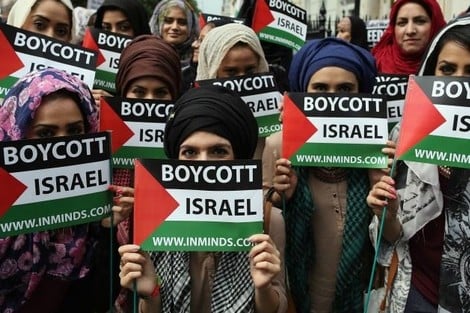
The Office of the Secretary-General is responsible for the affairs of the University Council and the follow-up and coordination with the competent organizations and agencies attached to the University. Office of Assistant Trustees: Each of the assistant secretaries is responsible for supervising at least one of the university’s departments. The General Administration of Political Affairs is responsible for studying, preparing reports on political issues and following them up. The Department of Economic Affairs undertakes the preparation of projects and reports on economic issues related to oil, energy, transportation, technical cooperation, development planning, statistics and documentation. The Department of Social and Cultural Affairs includes preparing studies related to social, health, environmental, cultural and educational affairs, development and training affairs, and unifying legislation. The General Administration of Palestine Affairs is concerned with addressing all issues related to the Palestinian issue. The General Administration of Information is responsible for introducing the issues of the Arab world, its cultural values, aspects of its progress and development, and introducing Arab and international public opinion to the issues of the Arab world and the activities of the university and its organizations. It also undertakes public relations tasks. The General Administration of Treaties and Legal Affairs is responsible for expressing legal opinions on topics referred to it, preparing legal studies on university issues, and assisting other councils and committees in legal matters related to their work. The General Administration of Organization, Administrative and Financial Affairs, and its administrative tasks are responsible for personnel affairs, organization, budget, conference affairs, and others. The Secretariat of Military Affairs follows up on issues related to military cooperation between the League countries in accordance with the provisions of the Mutual Defense Treaty and economic cooperation between Arab countries. The main office for the boycott of Israel. This office is concerned with affairs related to the boycott and imposing the economic blockade on Israel, preparing lists of foreign companies and countries that deal with it, and alerting Arab countries not to deal with it, in accordance with the provisions of the unified boycott law and the decisions of the League Council in this regard. Administrative units affiliated with the General Secretariat: – Department of Science and Technology – Institute of Arabic Manuscripts – Institute of Higher Arab Studies – Regional Agency for Literacy Eradication – Statistical Center – Industrial Development Center for Arab Countries.
Devices related to Arab collective security
The Joint Arab Defense Treaty resulted in the establishment of new bodies within the scope of the Arab League, but they are not included within its main branches. 1- The Joint Defense Council, which consists of the Ministers of Foreign Affairs and Defense or their representatives. 2- The Military Advisory Board includes the chiefs of staff of the armies of the contracting countries. 3- The Permanent Military Committee, whose tasks include preparing military plans to confront all expected dangers or any armed attack, and submitting proposals to organize the forces of the contracting states and to set the minimum forces for each of them, and other tasks related to joint training and information related to the military capabilities of each state and its ability in the war effort. 4- Unified Arab Command The treaty stipulates the establishment of a general command for the joint forces in the field, headed by the countries whose forces participating in the operations are more numerous and numerous. Bodies related to economic cooperation: The Economic Council, whose mission is to facilitate trade exchange and economic cooperation between member states. Within the framework of this council, many agreements were signed regarding transit trade, economic unity, and the common Arab market. Other bodies established by decisions of the Arab League Council: 1- The Jordan River Water Exploitation Authority and its tributaries 2- The Industrial Development Center for Arab States 3- The Arab Forestry Institute 4- The Administrative Court of the League of Arab States Specialized Ministerial Councils Among the mechanisms taken by the League of Arab States to achieve its goals are specialized ministerial councils, such as: 1- Council of Arab Ministers of Health 2- Council of Arab Ministers of Youth and Sports 3- Council of Social Affairs Ministers 4- Council of Arab Ministers of Justice 5- Council of Arab Ministers of Interior 6- Council of Housing Ministers and Arab Reconstruction 7- Council of Arab Ministers of Transport 8- Council of Arab Ministers Responsible for the Environment 9- Council of Arab Ministers of Higher Education 10- Council of Arab Ministers of Agriculture 11- Council of Arab Ministers of Information The Arab League has many specialized organizations, which were established due to the need of some committees for specific specializations. Among these organizations are: 1- The Arab Postal Union 2- The Arab Union of Telecommunications 3- The Arab Broadcasting Union 4- The Arab International Organization for Social Defense against Crime 5- The Arab Organization For Administrative Sciences 6- The Arab Organization for Education, Science and Culture 7- The Arab Labor Organization 8- The Civil Aviation Council for Arab States 9- The Arab Organization for Standardization and Metrology 10- The Arab Organization for Agricultural Development 11- The Arab Organization for Health