Perhaps no female character in Islamic history has received as much presence and exposure in the mythology of Arab cinema as the Queen of Egypt during the Crusades in 1250 AD, Ismat al-Din Umm Khalil, nicknamed “Shajarat al-Durr”… especially in comedic works that contributed to building a distorted perception of that woman who addressed Egyptian public affairs in one of its most dangerous stages ever. Shajar al-Durr was the subject of dozens of Arab cinematic works, most notably the Egyptian film “Shajar al-Durr” (1935 – actress Assia Dagher), the Egyptian film “Wa Islamah” (1962 – actress Tahia Carioca in the Arabic version and actress Silvana Pampanini in the Italian version), the Emirati series “Shajar Al-Durr” (1979 – actress Nidal Al-Ashqar), and the Egyptian series “Al-Fursan” (1994 – actress Nawal Abu Al-Futouh). And the Egyptian series “At the Gate of Egypt” (2006 – actress Nihal Anbar), and the Syrian series “Al-Zahir Baybars” (2005 – actress Suzan Najm Al-Din). Who is Shajarat Al-Durr? What is her importance that imposed her name on all these various artistic works? And why did she inspire the imagination of writers and authors for decades, even though she was in power for only 80 days? This is what “Waa’ for Research and Development” answers in the following lines:
Definition:
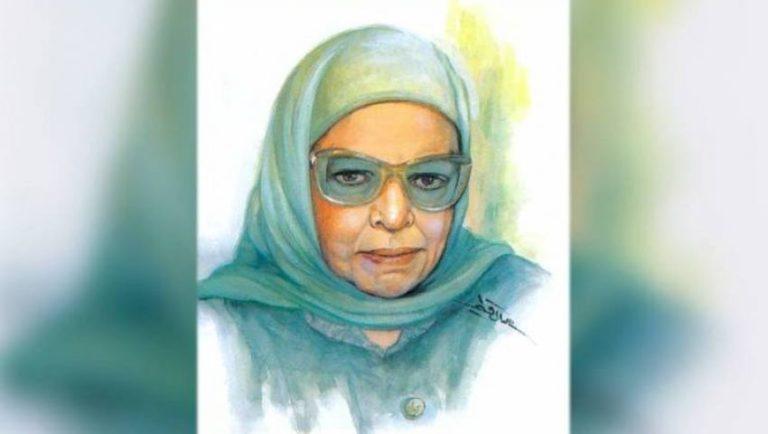
Shajar al-Durr, or Shajar al-Durr, is Ismat al-Din Umm Khalil. She is of Khwarezmian origin, and it is said that she is Armenian or Turkish. She was bought by al-Salih Ayyub before he became Sultan, and she accompanied him during his arrest in Karak in the year 1239 with a mamluk named Rukn al-Din Baybars, and she gave birth to him a son named Khalil. He was called King Al-Mansour, but he died on the 2nd of Safar 648 AH (May 1250 AD). After Al-Saleh was released from prison, she went with him to Egypt and they got married there. After Al-Saleh became Sultan of Egypt in the year 1240 AD, she was his representative in power when he was outside the country, until she assumed the throne of Egypt after his death for eighty days with the pledge of allegiance from the Mamluks and state notables. Then she abdicated the throne to her next husband, Al-Muizz Aybak Al-Turkmani in the year 648 AH (1250 AD), after she played an important historical role during the Seventh Crusade against Egypt and during the Battle of Mansoura.
Seventh Crusade
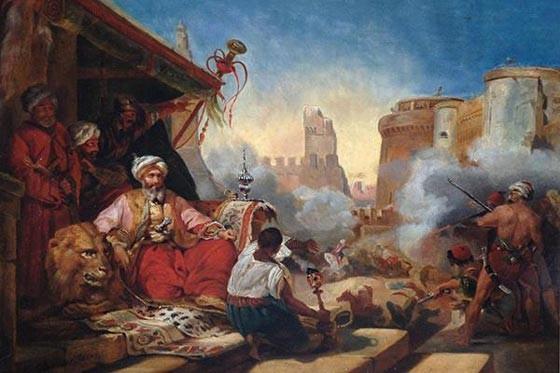
In April 1249 AD, her husband, Al-Salih Ayyub, was in the Levant fighting the Ayyubid kings who were competing with him for power, but he received news that the King of France, Louis IX, had arrived in Cyprus, on his way to Egypt at the head of a major crusade in order to invade it from the Damietta region on the eastern mainland of the main branch of the Nile. Indeed, in June 1249 AD, the soldiers of the Seventh Crusade disembarked from the boats on the mainland of Damietta and set up a red tent for King Louis. The vehicles that King Al-Saleh had placed in Damietta to defend it withdrew, so the Crusaders easily occupied it while it was empty of its inhabitants, who left it when they saw the vehicles fleeing. The good king was sad and executed a number of the chariot riders because of their cowardice and their disobedience to his orders. After that, Al-Saleh moved to a safe place in Mansoura, and on November 23, 1249 AD, King Al-Saleh died after ruling Egypt for 10 years, and at a very critical moment in its history… And here came the decisive role of Shajarat Al-Durr.
Difficult circumstances and great wisdom
In those difficult circumstances, Shajarat al-Durr summoned the commander of the Egyptian army, Prince Fakhr al-Din Youssef, and the head of the Royal Palace, al-Tawashi Gamal al-Din Mohsen, and revealed to them the death of King al-Salih, and that Egypt was now in a difficult situation without a ruler, and there was an external invasion gathering in Damietta. The three agreed to hide the news so that the morale of the soldiers and people would not weaken and the Crusaders would be more encouraged. Shajarat al-Durr transported the body of King al-Salih in a boat to Cairo secretly and placed it in the castle of Rawda Island. Before Al-Salih Ayoub died, he gave Shajarat Al-Durr white papers stamped with his name so that they could use them if he died, so Shajarat Al-Durr and Prince Fakhr Al-Din continued to issue royal orders on these papers. They said that the Sultan was sick and could not meet anyone. The food was brought into the room where he was supposed to be sleeping so that no one would suspect. Shajarat al-Durr did not seem to aspire to rule, and this is confirmed by her sending the leader of the Bahri Mamluks, Faris al-Din Aktai al-Jamdar, to Hisn Keyfa so that he could summon Turan Shah, the son of al-Salih Ayyub, to rule Egypt in place of his deceased father. Indeed, they issued a royal order renewing the reign of Sultan al-Salih Ayyub and installing his son Turan Shah as crown prince of the Egyptian Sultanate, and they made an alliance between the princes and the soldiers, but Turan Shah was not able to succeed. Returning to Egypt, although his name remains nominally ruler of the country.
Its intelligent military management
News of the death of Al-Salih Ayoub somehow leaked to the Crusaders in Damietta, so the Crusaders were encouraged and decided to leave Damietta and head to Cairo. Indeed, they arrived at an area called “Wajdaila,” about 3 kilometers from Mansoura, where Egyptian soldiers who had survived previous battles had gathered. Prince Rukn al-Din Baybars presented to Shajar al-Durr, the de facto ruler of Egypt at this time, a plan that required the Crusader knights rushing towards Mansoura to enter a trap, and Shajar al-Durr agreed to the plan. Baybars and Faris al-Din Aktay, who became the commander-in-chief of the Egyptian armies, met and organized the ranks of the soldiers withdrawing from Gedayla inside Mansoura and asked them and the residents to remain completely silent, so that the attacking Crusaders would think that the city was empty, as happened in Damietta. Indeed, the Crusader knights fell into the trap and rushed into Mansoura and headed towards the Royal Palace in order to occupy it. The Bahri Mamluks and the Jamdarite Mamluks suddenly came out and attacked them from every direction with swords and arrows. The residents of Mansoura and the volunteers came out wearing white copper helmets instead of the soldiers’ helmets and beat them with all their might. The Mamluks besieged the attacking Crusader forces and closed the streets and alleys, and the Crusaders remained unable to escape. All that remained for them was death on the ground or throwing themselves into the Nile River and drowning in it. The battle ended with the Crusaders being defeated in a miserable defeat in the alleys of Mansoura, and a large number of them were killed to the point that only one or two of the Knights Templar survived.
Establishing the pillars of the state
After the victory, the nominal sultan of the country was still Turan Shah, who disavowed Shajarat al-Durr, and instead of preserving her favor, he sent threats to her and demanded his father’s money, and she answered him that she spent it on war affairs and managing the affairs of the state. When he became angry with her, and she was afraid of him, she traveled to Jerusalem for fear of the sultan’s treachery and revenge. But Turan Shah was not satisfied with that, but his anger extended to include the Mamluk princes, who had the primary credit for achieving the great victory and defeat of the Seventh Crusade, and he began to think about getting rid of them, but they were earlier than him in movement and faster than him in preparation, so they got rid of him by killing him at the hands of Aqtai.
Pledging allegiance to the leadership of Egypt
The Mamluks found themselves in a new situation; Today, they have the first say in the country and the reins of affairs are in their hands. They are no longer a tool in the hands of those who use them to achieve an interest or achieve a goal, and they must choose a ruler for the country. Instead of choosing one of them to take over the affairs of the country, they chose Shajarat al-Durr to take over this high position. She pledged allegiance to the new Sultana and her name was engraved on the mint with the following phrase: “Al-Mustasimiya Al-Salihiyya, Queen of the Muslims, mother of Khalil, Commander of the Faithful.”
Its administration of the state
As soon as Shajarat al-Durr sat on the throne, she took control of the affairs of the country and took control of the country’s affairs. The first task she took care of was eliminating the Crusader presence in the country and conducting negotiations with him that ended with an agreement with King Louis IX, who was a prisoner in Mansoura, to hand over Damietta and release him and those of the major prisoners with him in exchange for a large ransom of eight hundred thousand dinars, half of which he would pay before his departure and the rest after his arrival in Acre, with a pledge from him not to return to the coasts of the Islamic country again.
Masculinity rules!
History books document the skill and determination that Shajarat al-Durr showed in managing the affairs of the state, in addition to her closeness to the public and her bestowal of money and fiefs on senior princes, but she was met with strong opposition inside and outside the country, and Egyptians went out in angry demonstrations denouncing the seating of a “woman” on the throne of the country who was unable to give birth to a man who would rule the country. Scholars opposed women’s mandate to rule, and the opposition was led by Sheikh Al-Ezz bin Abdul Salam, under the pretext of contradicting her sitting on the throne. For the law. At the same time, the Ayyubids in the Levant revolted due to the killing of Turan Shah and the usurpation of power by the Mamluks, with Shajarat al-Durr sitting on the helm of power. The Abbasid Caliphate in Baghdad refused to approve of the Mamluks’ actions, so the Caliph Al-Mustasim wrote to them: “If you have no more men, inform us so that we may send a man to you.”
Her abdication of the throne
Shajarat al-Durr, in the face of this intense opposition, found no alternative but to abdicate the throne to Prince Izz al-Din Aybak, the Atabek of the military whom she married, and who was nicknamed King al-Muizz. The period she spent on the throne of the country was eighty days. If Shajarat al-Durr officially abdicated power and authority and retired to her husband’s house, she exercised it by sharing the responsibility of rule with her husband, so he submitted to her control. She forced him to leave his first wife and forbade him from visiting her. Her control over the affairs of the Sultan was such that the great historian Ibn Taghri Bardi said: “She was in control of Aybak in all his affairs, and he had no words with her.” However, Aybak turned against her after he tightened his grip on power in the country, got rid of his rivals at home and his Ayyubid opponents abroad, and practiced managing the country’s affairs. He began taking steps to marry the daughter of Badr al-Din Lulu’, the owner of Mosul. Shajar al-Durr became angry at this, and quickly devised her plot to get rid of Aybak. She sent to him to appease him, be kind to him, and ask for his pardon. He was deceived by her trick, responded to her invitation, and went to the castle, where he died on 23 Rabi’ al-Awwal 655 AH (1257 AD).
The tragic ending
Shajar al-Durr rumored that Al-Muizz Lidin Allah Aybak had died suddenly at night, but the Mamluks of Aybak did not believe her, so they arrested her and took her to the woman of Izz al-Din Aybak, who ordered her maids to kill her after a few days. They beat her on the head with clogs and threw her over the castle wall. She died on May 3, 1257, corresponding to Rabi’ al-Awwal 23, 655 AH, and was not buried until several days later.
Was she the first queen of Islam?
These are the most famous descriptions used by Arab cinema to describe Shajarat al-Durr, but the reality is that she was not the first woman to rule in the Islamic world. Razia al-Din had previously assumed the Sultanate of Delhi, and her rule lasted four years (634 – 638 AH) corresponding to (1236 – 1240 AD). Arwa bint Ahmed Al-Sulayhi, from the Banu Sulayhi dynasty, ruled Yemen from (492 – 532 AH), corresponding to (1098 – 1138 AD). In any case, Shajarat al-Durr’s life ended in this tragic manner, after she had been full of ears and eyes, and contemporary historians of the Mamluk state praised her. Ibn Taghri Bardi says about her: “She was the best religious woman, a great ruler of souls, and she had deeds and endowments in the face of righteousness, for which she was known.”