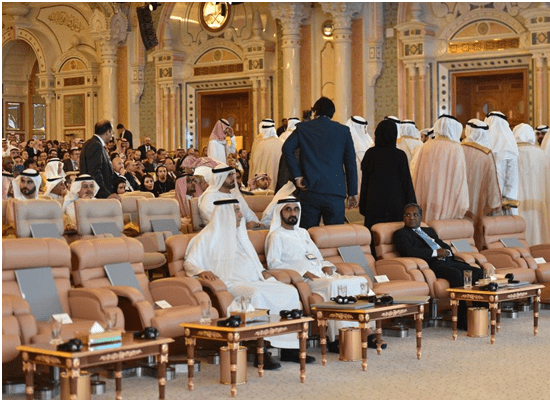
- The conference’s VIP hall appears empty of international attendees – Image source: Saudi Press Agency (SPA).
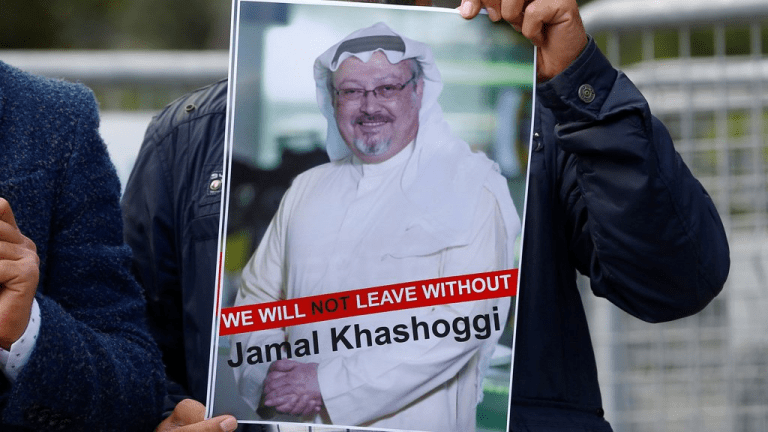
The Saudi Investment Conference, “Davos in the Desert”, was launched on Tuesday, October 23, 2018 in the capital, Riyadh, and continues until Thursday, October 25, 2018. It is organized by the Saudi Public Investment Fund, in defiance of the announcement by many ministers of states and senior heads of international companies that they will boycott its activities, against the backdrop of the killing of Saudi journalist Jamal Khashoggi inside the Saudi consulate in Istanbul, Turkey. Official photos published by the Saudi Press Agency (SPA) revealed that the conference hall was empty of international attendees, after the photos showed the seats of VIP seats at the conference, in which only the Vice President of the UAE, the Ruler of Dubai, the Prime Minister of Pakistan, and Patrick Pouyanne, Chairman of the Board of Directors of the French oil group “Total”, which is the only prominent brand name that decided to go ahead with attending the conference, were sitting.
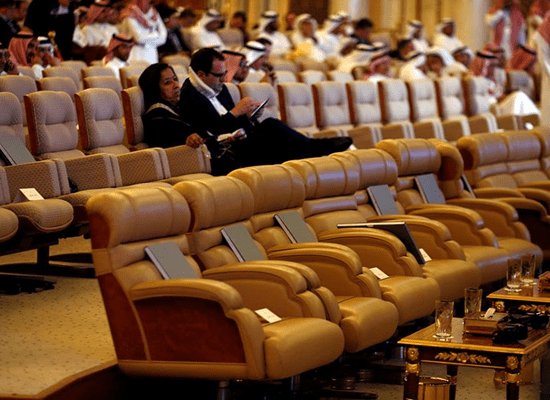
- The audience hall for the first session of the conference – Image source: Saudi Press Agency, SPA
Bulk withdrawals
The Khashoggi case led to the withdrawal of international officials and company heads from the conference. The most prominent absentee from the conference was US Treasury Secretary Steven Mnuchin, who canceled his participation in the conference minutes after a meeting with Saudi Crown Prince Mohammed bin Salman, one day before the start of the conference. The head of the International Monetary Fund, Christine Lagarde, also canceled her participation in the conference, as well as the Chairman of the Board of Directors of the Electricité de France (ODF), Jean-Bernard Levy, the Chairman of the Board of Directors of Siemens, Joe Kaeser, and prominent media institutions, including Bloomberg, CNN, and the Financial Times.
Confusion about organization
The official website of the conference witnessed a hacking operation on the evening of Monday, October 22, 2018. The hackers placed pictures of journalist Khashoggi in it. This operation resulted in the site being completely closed for several hours, before it was reopened again, but with the removal of the list of speakers and some topics that were talking about the large numbers of attendees. Journalists also received a mail from the conference administration confirming that the Crown Prince’s speech on the first day had been canceled and postponed to the second day, before Bin Salman returned and appeared accompanied by a number of Saudi youth attending the conference to take some souvenir photos. Tweeters also pointed out that organizing the conference at the Ritz-Carlton Hotel in the Saudi capital is a negative choice, in light of the hotel’s connection to the arrest of dozens of princes from the kingdom’s ruling family, the Al Saud, in September last year. With the start of the conference, it was confirmed that Bin Salman was absent from its actual opening, and it was opened by Saudi businesswoman Lubna Olayan, who could not ignore the Khashoggi case. She confirmed that “the Kingdom will implement the law regarding the killing of citizen Jamal Khashoggi,” before expressing her gratitude “to those who attended the conference activities,” in light of the widespread boycott of its work by foreign figures and companies.
Major crisis
Khashoggi’s killing inside his country’s consulate in Istanbul, just two weeks before the conference, overshadowed the news of the conference, which media outlets affiliated with the Saudi regime called “Davos in the Desert” after the World Economic Forum in the Swiss city of Davos, which was held last year. The conference ostensibly aims to attract investments to the Kingdom, while analysts confirm that the real goal of the conference is that the Saudi authorities seek, through this event, to present the conservative Kingdom as an open and profitable commercial destination, paving the way for new initiatives and contracts worth billions of dollars.
Miserable failure
However, the conference appears to have suffered a complete failure due to the escalating global discontent resulting from the assassination of the opposition journalist inside the Kingdom’s consulate, especially after the Kingdom’s admission of the incident, but with the marketing of a story that was not accepted by the international community, that Khashoggi died in a quarrel with 18 people inside the consulate, one of whom was an autopsy doctor carrying a medical saw. For his part, US President Donald Trump said that he was not satisfied with what he heard from Saudi Arabia regarding Khashoggi’s killing, and he confirmed in a statement to USA Today that he believed that Khashoggi’s death in his country’s consulate in Istanbul was “a conspiracy that failed.”
Saudi arrogance
Apparently, the failure of the conference was expected, according to economists, especially with the Saudi side insisting on its exhausting narrative in the Khashoggi case, despite the attempts of Saudi Foreign Minister Adel al-Jubeir to appease the international community. Al-Jubeir said in a press statement that the case file has not yet been closed, and that the Kingdom is working to conduct an in-depth and comprehensive investigation into the incident, promising to “establish a mechanism and measures to ensure that something like this will not be repeated after today.” But what spoiled Al-Jubeir’s plan to evade was the exposure of its goal through his repeated assertion that Crown Prince Mohammed bin Salman was not aware of what happened, in what human rights authorities consider a deception from trying the most prominent accused in the case, and searching for an alternative scapegoat for him. Whatever the case, the failure of the conference, and the widespread absence of its guests, demonstrated the weakness of the Saudi narrative in the Khashoghi case, and the lack of persuasiveness of the Saudi argument, which places the world before a great responsibility to establish the reins of justice, and that boycotting the conference should not be the ultimate economic reaction to human rights crimes.