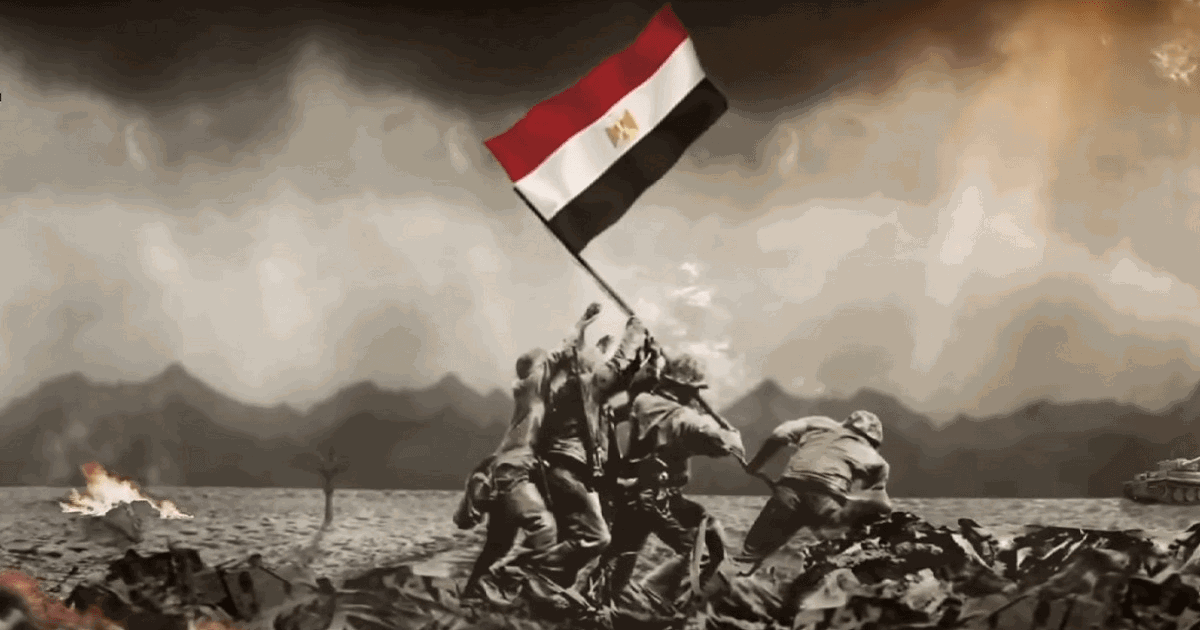
The October War of 1973, one of the decisive wars in the history of the Arab-Zionist conflict, took place between Egypt and Syria on the one hand and the Zionist occupation gangs on the other, in the period from October 6 to 25, 1973. It began on Yom Kippur (Jewish Yom Kippur) when the Egyptian forces penetrated the main military line (Bar-Lev Line) in the Sinai Peninsula, while the Syrian forces attacked the fortifications and bases of the Zionist forces in the Golan Heights, With the aim of recovering the land occupied by Zionist gangs by force, with a sudden unified attack. The importance of that war lies in the results that resulted from it, the most prominent of which were Egypt’s recovery of sovereignty over the Suez Canal, recovery of part of the territory of the Sinai Peninsula, shattering the myth that the Israeli army was invincible, which was claimed by the military leaders in Israel, and paving the way for the Camp David Agreement between Egypt and the Zionist enemy, which was held after the war in September 1978 following an initiative by Egyptian President Anwar Sadat in November 1977, before his visit to Jerusalem. The war also led to the return of navigation in the Suez Canal in June 1975. On the Syrian side, the Syrian forces destroyed the large fortifications built by the occupation gangs in the Golan Heights, and the Syrian army made significant progress in the first days of the fighting, which confused the occupation army and paved the way for the recovery of part of the areas of the Golan Heights and the Syrian city of Quneitra. It also witnessed the contribution of forces from Arab countries, most notably Moroccan, Kuwaiti, Saudi and Iraqi forces. And Jordanian, emphasizing the nationalism of the fateful battle with the Zionist enemy. This war had many names due to the multiplicity of parties participating in it. From a military standpoint, it was the fourth war declared in the series of Arab-Zionist wars (1948-1956-1967-1973). The Syrian media called it the October Liberation War, in reference to the month of October 1973 during which its battles took place. In the Arab world, it was called the Ramadan War, because its events began on the tenth of Ramadan in the year 1393 AH.. The Zionists called it the “War of Atonement” because it began on the Jewish Day of Atonement.
Causes of war
The results of the 1967 setback were disastrous for the Arab countries. The Egyptian armed forces, the Jordanian forces, and an important section of the Syrian armed forces suffered heavy losses, compared to small losses in the Zionist armed forces. This led to an imbalance in the Arab-Zionist strategic military balance. The Israeli forces reached natural areas that were easy to defend, occupied large areas of Arab land, and further improved their defenses (the Suez Canal, the Sinai Desert, the Jordan Valley, and the Golan Heights). Syrian). These wide areas gave the occupation gangs the freedom to maneuver on their internal lines with greater efficiency, and the Zionist aviation was now able to operate with greater freedom, and this enabled it to detect and attack its targets in the Arab interior in all directions. The occupation gangs also gained a lot of military equipment that they developed and included in arming their forces, and the Egyptian oil fields in Sinai provided them with the oil they needed. This new situation allowed the occupation to establish a deep strategic defense by establishing the fortified Bar Lev Line along the Suez Canal, and the fortified Alon Line on the Golan Front, and guaranteed freedom of navigation in the Straits of Tiran and the Red Sea. Despite the issuance of Security Council Resolution No. 242 on November 22, 1967, ordering the withdrawal of Zionist forces from the lands they occupied and freezing the status quo, the occupation gangs deliberately evaded the implementation of that resolution by procrastinating and procrastinating for as long as possible, with the aim of Judaizing the largest area of Arab land, and establishing the largest number of settlements there to absorb it and invest its wealth, continuing to evade and evade their international obligations. As a result of this Zionist intransigence, Egypt and Syria began preparing to regain their occupied territories by force. They compensated for their losses and focused their efforts on restoring the fighting capacity of their forces and increasing their armament. They entered into an open and limited armed conflict to exhaust the Zionist forces and force them to abandon the occupied areas in local battles and aerial and artillery bombardment along the northern and southern fronts in what was called the “War of Attrition,” which quickly developed into an open war, which was the October War.
Transit plan
The Egyptian-Syrian plan to regain Sinai and the Golan relied on strategic deception. Before the war, the political leadership in Egypt and Syria entered into a unity project with Libya and Sudan in which the enemy saw a state of relaxation for the political leaders in the two countries, while the reality is that Libya and Sudan, with this unity, had become the military and logistical depth of Egypt. Egyptian pilots were trained in Libyan bases on Mirage aircraft, and the Egyptian Military College was transferred to Sudan, far from the range of Zionist aviation. The unity project allowed the military leaders of Egypt and Syria to sit at the negotiating table in front of the Mossad to coordinate between them on the date of war. The Civil Defense Service was also developed before the war with powerful and modern firefighting equipment, including water pumps that were used to bulldoze the earthen berm along the front, away from the eyes of the Mossad.
Battle events
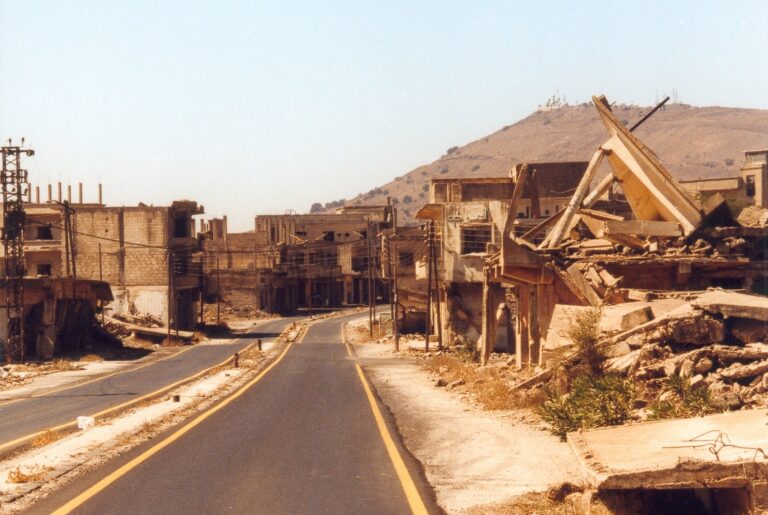
Egypt opened the 1973 war with an air strike consisting of about 222 fighter planes that crossed the Suez Canal and the Zionist army’s radar detection line together at one time at exactly two o’clock in the afternoon at a very low altitude. It targeted Al-Shoushra and Al-Aqa stations in Umm Khashayb, Umm Marjim, Al-Maliz Airport, and other airports, radar stations, air defense batteries, concentrations of personnel, armored vehicles, tanks, artillery, fortified points on the Bar Lev line, oil refineries, and ammunition depots. Due to the tremendous success of the first strike, which witnessed a terrible display of heroism from the Egyptian pilots, who sometimes chose to blow up their planes at important and intractable targets to ensure their destruction, including, for example, Muhammad Sobhi Al-Sheikh, Talal Saadallah, Atef Sadat, brother of the late President Anwar Sadat, and others. The Zionist forces lost control of the areas they controlled, and gave the Arab forces an important point of superiority, which contributed to resolving control and quickly liberating the occupied Arab lands. Egypt and Syria succeeded in achieving a clear victory for themselves, as the Bar Lev Line was breached within only six hours of the beginning of the battle. The Egyptian forces inflicted heavy losses on the Zionist air force, and prevented the Zionist forces from using napalm tubes with an amazing plan. It also destroyed the myth of the invincibility of the Israeli army in the Golan Heights and Sinai, and forced the occupation gangs to abandon many of their goals with Syria and Egypt. The Suez Canal and part of Sinai were also recovered. In Egypt, and the city of Quneitra in Syria.
Zionist counterattack
The United States gave the kiss of life to the occupation gangs, after American reconnaissance planes helped them discover a gap in the ranks of the Egyptian army in Sinai, which led to the exposure of the back of the Egyptian forces to the enemy, and the landing of the air bridge on the Egyptian front, in what was known as the events of the breach, in which the battalion of the Egyptian general, Lieutenant General Saad al-Din al-Shazly, tried to enter the depth and reach the places, with the aim of drawing attention from the Syrian front, which had violated the agreed-upon plan and did not strike the occupation’s strong points on its front properly. Influential, which alerted the occupation on this front to the war early, and helped the Zionists carry out a successful counterattack in the Golan on October 11. The Zionist counterattack continued thanks to the American airlift, which compensated the Zionist gangs for their heavy losses and provided them with new, advanced weapons. The Zionist forces succeeded in reaching the previous ceasefire line and continuing their progress, taking advantage of the period of relative calm in which the Syrian leadership was restoring the balance of its units, compensating them for losses, and mobilizing new units, and taking advantage of the calm on the Sinai front (October 10-14). After fierce battles, the Zionist forces were able to penetrate the Syrian front towards Damascus and control the Sa`sa enclave. However, the Syrian forces succeeded in stopping the Zionist forces at the Tel al-Shams-Beit Jinn line. The Syrian leadership during this period had compensated for a large part of its losses and regrouped its main forces in preparation for the resumption of the attack. Lieutenant General Saad al-Din al-Shazly succeeded in penetrating the desert secretly with his battalion and returning again to Egyptian territory in an ideal military withdrawal process. The Arab forces prepared to attack again, but the attack was not carried out due to the issuance of an international ceasefire resolution effective 10/23/1973, after which the negotiation process began.
After the battle
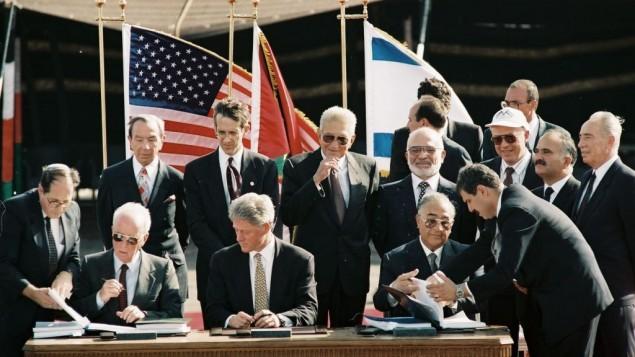
At the moment the ceasefire implementation began, the Zionist gangs had lost control of the lands on the eastern bank of the Suez Canal, but they took control of new lands on the western bank of the canal and the Golan Heights, as well as the siege of the Egyptian Third Field Army… a situation that forced everyone to sit at the negotiating table, which later generated the Camp David Accords.
Results of the war
The October War brought about a real change in the concept of international and local armed conflict, and experts, military and political theorists from the East and West came together to study it and draw lessons learned from it, and the changes it brought about in the concepts of strategy, tactics and armament. It demonstrated the courage, experience and skill of the Arab soldier in using complex weapons and willingness to sacrifice for the sake of a just cause. It also demolished the myth spread by the enemy about his invincible army. The battles that took place on the Syrian and Egyptian fronts were characterized by their ferocity, the rapid change of positions, and their continuation day and night without stopping. All types of traditional and advanced weapons were used in them. One of the most important features of that war was the storming of the water barrier in the Suez Canal and the breach of the fortified area in the Golan, as well as the transfer of the initiative to the Syrian-Egyptian side for the first time after the 1948 war. The human and material losses inflicted on the occupation gangs shook their entity violently and gave them a shock whose effects continue to this day, despite unlimited American support, and demonstrated that defeating the occupation gangs and forcing them to fully adhere to United Nations resolutions and abandon the lands that Occupation can only be achieved through a long-term war of attrition that drains its human, material and moral energy, and the occupation only knows one language: the language of bullets.