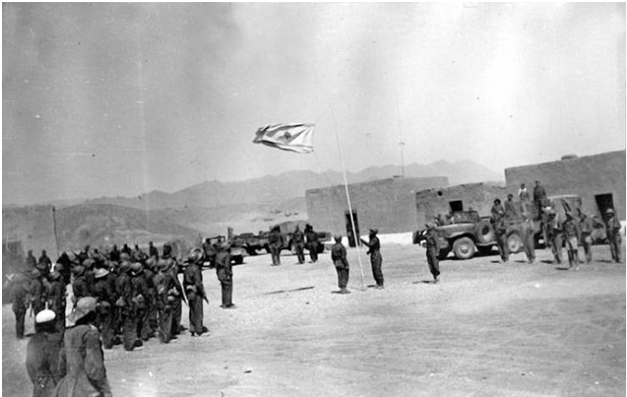
- The moment the Zionist occupation flag was raised over Umm Al-Rashrash
If you are one of those who do not understand how the media can change the facts of history and distort the present, have you ever heard of the “Eilat” region? Most likely yes, as one of the most famous Egyptian films that was broadcast annually on the anniversary of the wars with the Zionist occupation was called “The Road to Eilat.” But what many Egyptians do not know is that there is no place called Eilat, but rather it is an Egyptian village that is still occupied to this day, the village of Umm Al-Rashrash… This is a fact that will never change, no matter how many times the words “Eilat… Eilat” are repeated by the film’s heroes.
Definition of area
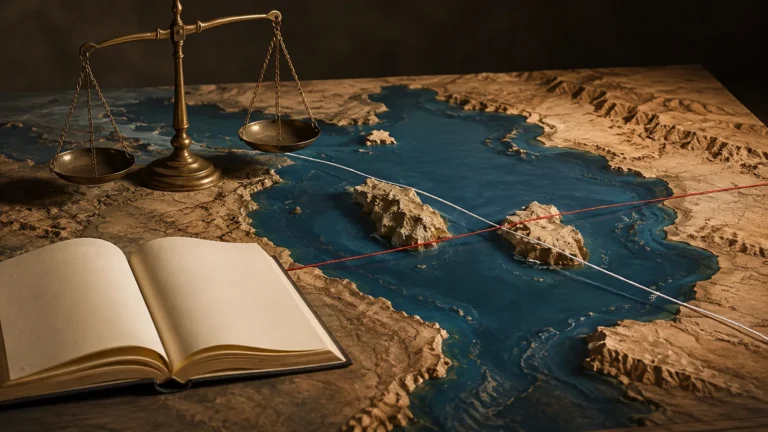
Umm Al-Rashrash is an Egyptian town with an area of 84.79 square kilometers. It is a border area of Egypt with Palestine. It is located at the eastern end of the Sinai Peninsula and overlooks the Gulf of Aqaba. In 1949, the Zionist army occupied it in Operation “Awq Da” and its name was changed to “Eilat.” Later, Eilat became one of the largest ports on the Gulf of Aqaba, one of the arms of the Red Sea, with a population of 46,600 people (2008). This port is considered the maritime outlet of the occupied Palestinian territories to Asia and East Africa. Its natural beauty and location on the sea have helped it to be a tourist resort all year round.
History and Archaeology
The name Umm al-Rashrash goes back to an Arab tribe that settled there in ancient times and bears the same name. It was a land route for pilgrims from North Africa to the Holy Lands, a meeting point for Egyptian and Levantine pilgrims, and a commercial market bearing a religious symbol at that time. It was under Egyptian sovereignty during the Tulunid state, then it fell into the hands of the Crusaders twice due to its strategic importance. The first time it was liberated by Saladin, and the second time al-Zahir Baybars expelled them in 1267 AD, and Sultan al-Ghuri established a castle there to protect it.
Zionist occupation
At a time when the Arab countries were preparing to sit at the negotiating table with the Zionist side under the auspices of the United Nations after the 1948 war, the Jews decided to implement Operation “Obdah” (which in Hebrew means “imposing a fait accompli”), with the aim of reaching the Red Sea, and raising the Zionist flag there as evidence of the sovereignty of the occupation. The Jews succeeded in surprising the Egyptian officers and soldiers, who were present in the village of Umm al-Rashrash, and who were adhering to a ceasefire in preparation for the negotiations, so they killed them all in a deliberate and terrifying manner, after they lowered the Egyptian flag, and then raised the Israeli flag above the flagpole, on March 10, 1949.
The Egyptian-Zionist conflict
The occupation gangs are trying to establish an airport called Al-Salam Airport in the area adjacent to Umm Al-Rashrash and Aqaba, which will allow Israel in the future to claim the existence of an eastern and a western “Eilat”, and then it will demand the unification of the two cities under the pretext that they constitute its only and eternal port on the Red Sea… just as it previously claimed the existence of an eastern and a western Jerusalem and then demanded their annexation to be the eternal capital of the occupying entity. The occupation gangs continued to circumvent the issue of the Egyptian Umm al-Rashrash Triangle with the aim of making it the last point of Zionist-Egyptian disagreement during the Taba negotiations. They were keen to emphasize that the dispute over Taba is a border dispute and not a dispute over marks, which was rejected by the Egyptian side, whose insistence in the Taba negotiations left the door open to demanding the Umm al-Rashrash Triangle at a later time. Egypt resorted to international arbitration, which was issued in favor of Egypt in the Umm al-Rashrash and Taba triangles, but the occupation gangs wasted those texts by claiming that “Great Britain” had explicitly recognized in 1926 that the line specified in the 1906 agreement was the border line, in its capacity as the mandated state for Palestine and Egypt.
The importance of the city
The city represents an important strategic location, as more than 40% of the occupation gangs’ exports and imports come through the port of Eilat. Its importance increased after 1950 AD, when the Egyptians prevented Zionist ships from passing through the Suez Canal. Without the Suez Canal, the Gulf of Aqaba becomes the only way out for the Zionists to the Red Sea. But Egypt also closed the entrance to the Gulf, making Eilat lose its importance. The Gulf was opened again as a result of the Zionist-Arab War in 1956, and at that time Eilat grew very quickly and increased in size and importance. Egypt’s closure of the Gulf in 1967 was one of the declared reasons for the June War.
Jordan certificate
According to the testimony of Jordanian Prime Minister Tawfiq Pasha Abu al-Huda, which he acknowledged at the Conference of Arab Heads of Government held in January 1955, the primary goal of the occupation of Umm al-Rashrash was to separate Egypt from the Arab Levant. He says, “When the Zionist forces began to advance south toward the Gulf of Aqaba in March 1949 to occupy Umm al-Rashrash, the British Minister Plenipotentiary in Amman came to him to tell him that his government saw the necessity of continuing land transportation between Egypt and the rest of the Arab countries, and proposed that.” Sending a British battalion to the city of Aqaba to prevent the Jews from reaching the Gulf, as the British government wanted to maintain its lines of communication between its forces in the Suez Canal and its bases in Jordan, Iraq, and the Gulf. Abu Al-Huda continued by saying that the battalion actually arrived at the Jordanian port of Aqaba with the intention of moving at the appropriate time to stop the Zionist advance. However, it remained in the port of Aqaba without moving to carry out the mission assigned to it while the Jewish forces continued their advance to occupy Umm Al-Rashrash. We later discovered that America pressured the British government to change its policy in the Zionist war and allow the Jewish gangs to occupy the city, which confirms American complicity in Israel’s aggression and its seizure of a piece of Egyptian land with the aim of reaching the Gulf. Aqaba.
Attempts at settlement
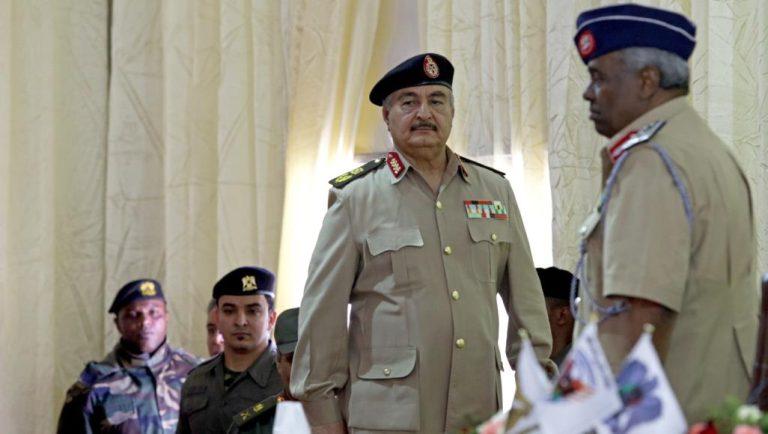
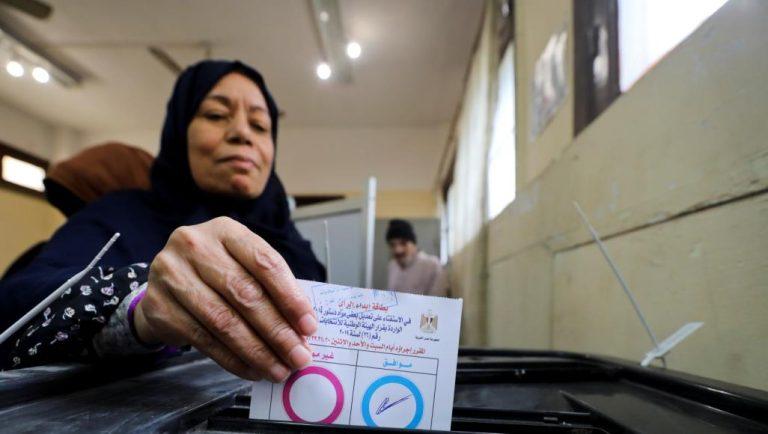
In the 1960s, the United States proposed constructing a bridge that would pass over Umm al-Rashrash and connect the Levant and the Maghreb in exchange for Egypt’s claim to this strategic triangle being dropped and for it to remain usurped by Israel. President Gamal Abdel Nasser rejected the offer, considering that this region was the only link linking the Levant to the Maghreb by land. During the Sadat era, Egypt refused to give up Umm al-Rashrash, but recovering Taba had priority as it was the most important and largest. However, Umm al-Rashrash was included in the international arbitration file that Egypt filed regarding Taba. As for Mubarak, he did not address the issue of Umm al-Rashrash much during his reign, given the nature of relations and interests with America, which was trying to thwart any attempts to open this thorny file. However, he mentioned Umm al-Rashrash on several occasions, most notably when he announced in an interview with Al-Arabi newspaper in 1996 that Umm al-Rashrash is Egyptian, and he also said in his words on the “Good Morning Egypt” program on the occasion of the Sinai Liberation Days in 1997 that Umm al-Rashrash is Egyptian land that may not be relinquished. President Mohamed Morsi did not have the opportunity to reveal his policy in managing the file, and despite that, the Umm al-Rashrash file was moved judicially during his rule, after the Administrative Court accepted it. Suit It was submitted by the head of the Umma Party, Ali Ayoub, against the Zionist ambassador, accusing his country of occupying Egyptian land. There were many activities during his reign. First front Popularity for liberating Umm Al-Rashrash… However, everything on this issue stopped after the coup, and…Confession The coup leaders themselves. Immediately after General Abdel Fattah El-Sisi came to power through a military coup, the Egyptians’ hopes that this file would be opened again, or that the coup leader would have any role in restoring the land of Egypt, were dashed, as he began his reign by ceding the islands of Tiran and Sanafir to Saudi Arabia, in preparation for subjecting them to the Zionist occupation, as analysts mentioned! In the end, the fact remains that had the Zionist entity not seized and occupied Umm al-Rashrash in 1949, and the military generals later relinquished it, there would have been no geographical separation between Egypt, Jordan and Saudi Arabia, nor between the Arab Islamic countries in Africa and their counterparts in the Asian continent, and the Red Sea would have remained a safe and secure Arab point of strength supporting Arab national security away from Zionist penetration.