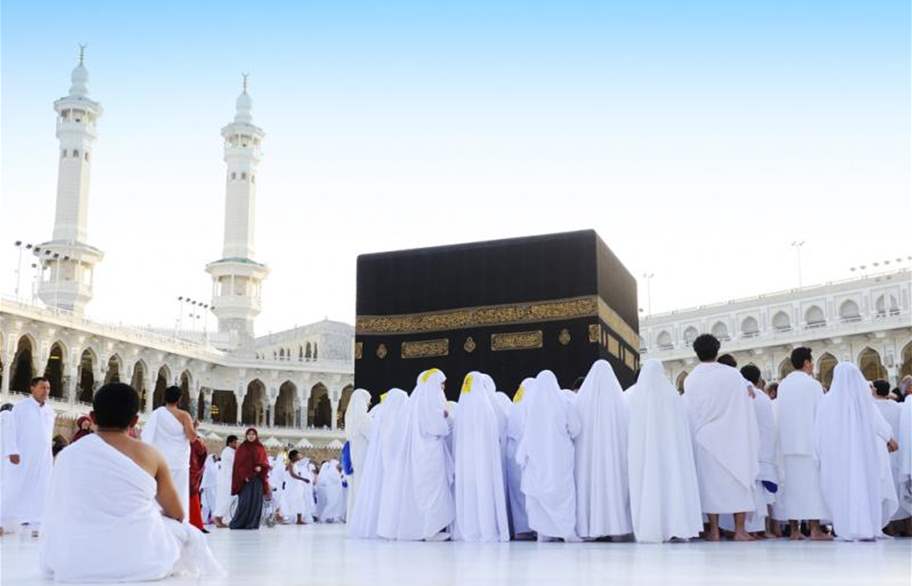
“Saudi Arabia looks forward to receiving 5 million pilgrims.” With this Declaration The optimist, the Emir of the Makkah Al-Mukarramah Region and Chairman of the Central Hajj Committee, Prince Khaled Al-Faisal, anticipated in a press conference in Mina the Hajj season that ended a few days ago, stressing that his country, which administers the affairs of the Sacred House – the most sacred site for Muslims, and which witnesses the most popular religious activity among Muslims annually – is looking forward to hosting 30 million pilgrims and 5 million pilgrims during this year. But Official announcement Regarding the numbers of pilgrims this year, he revealed an unprecedented decline in the numbers of visitors to the Holy House of God for about 10 years, since the Holy Sites recorded the visit of more than three million pilgrims in 2007, so that the percentage remained the same without less than two and a half million pilgrims, until 2014, which witnessed a turn of events, so that the numbers began to decline significantly until they reached their lowest values this year. And according to Statistics The Saudi General Authority for Statistics: The number of pilgrims this year decreased to less than two million, a percentage that activists questioned because of the official photos of this year’s Hajj, which showed a significant decline in numbers when compared to the numbers of pilgrims in the same scene a year or two ago.
Eradication plan
It has been facing Saudi Arabia for years Widespread criticism Because of its subordination of the Sacred House and its greatest ritual as part of its political struggle with opponents in the region, which previously consisted of preventing prominent activists and politicians from visiting the Sacred Mosque due to their danger to public security, or because of their fear of being arrested upon their arrival to the Kingdom due to the absence of guarantees for the freedom to practice religious rituals in the country. But recently, there has been a significant expansion in Saudi punitive measures against Hajjaj Countries that are politically opposed to it In the region, even if it was devoid of a direct official announcement…the most prominent of which was the complexity of the measures against a number of Arab nationalities, such as Yemeni, Syrian and Libyan, as well as the prevention of Qatari pilgrims from visiting the Sacred House in light of the escalating political crisis and the tripartite siege of Doha…that ban came in a semi-official nature, through the main editorial of the Saudi newspaper Okaz, which is close to the ruling Al Saud regime, which was entitled: To the Qataris… The House of God or the Two Praises. The International Commission to Monitor Saudi Administration of the Two Holy Mosques had… I denounced Saudi Arabia prevents Hajj or Umrah visas for Syrian and Qatari citizens from performing Hajj, as the Saudi authorities prevent Syrians from Hajj for the seventh year in a row and Qataris for the second year for political reasons. The authority, which is based in Jakarta, considered that depriving thousands of people from performing Hajj is a crime against Sharia and international law, quoting a source in the Syrian Ministry of Endowments that Saudi Arabia is still preventing Syrians from Hajj for the seventh year in a row, denying any rumors about allowing Syrians to perform Hajj rituals this year. It called on the international body to intervene after the failure of the Riyadh administration in administering the rituals and depriving thousands of Muslims of Umrah and Hajj for political reasons, in order to ensure the highest levels of transparency and integrity in the management of Islamic sites in Mecca and Medina.
Documented arrests
Earlier, the Ministry of Foreign Affairs of the Libyan Government of National Accord announced that it had asked the Saudi authorities for clarifications to find out the background Her arrest of two Libyan citizens After performing the Umrah rituals, weeks after two other Libyans were included on a terrorist list, the Mufti of Libya, Sheikh Al-Sadiq Al-Gharyani, and the prominent preacher, Sheikh Ali Al-Sallabi. All of them are leaders of the Libyan revolution and movement. The Libyan Foreign Ministry said In an official statement It immediately began following up on the news of the arrest of its citizens “at Jeddah Airport in the Kingdom of Saudi Arabia on their way back to the country after performing Umrah rituals,” explaining that it had made direct contact with the relevant Saudi authorities – led by the Ministry of Foreign Affairs and its branch in Mecca – to find out the backgrounds of this arrest, and requested clarifications. It later became clear, according to what I posted it Al Jazeera Network, quoting an official in the Libyan city of Zawiya, said that the two detained leaders are Mahmoud bin Rajab, first lieutenant in the police affiliated with the Government of National Accord, and Muhammad Hussein Al-Khadrawi, captain of the First Security Division in the city of Zawiya, who is in charge of securing the Good Day Prison, which includes prisoners from members of the former regime in the western region, and the former commander of the Al-Farouq Battalion during the February 2011 revolution before it joined the Ministry of Interior in the Government of National Accord.
Increase the cost
During 2017, Saudi Arabia implemented Decision package By raising entry and exit visa fees to the Kingdom for all arrivals and arrivals for visits or Hajj and Umrah, in accordance with previous decisions of the Saudi Council of Ministers, as part of an initiative presented by the Ministries of Finance, Economy and Planning to enhance revenues. The Saudi News Agency “SPA” said that the multiple-entry visa fee for Saudi Arabia has become eight thousand riyals, equivalent to $2,133.3, five thousand riyals for a one-year visa, and three thousand riyals for a six-month visa. As for one-time entry, it will cost two thousand riyals, with the state bearing this fee for someone coming for the first time to perform Hajj or Umrah. The decisions also included increasing exit and return visa fees to become 500 riyals for several trips over a period of three months. And 200 riyals for each additional month. The fees were previously 500 riyals for multiple exits for six months. As a result, I demanded Syndicate of Tunisian Imams The Mufti of the Republic of Tunisia temporarily suspended the performance of the Hajj in protest against the high cost and Saudi Arabia’s exploitation of that money to finance its wars against Islamic countries, according to what was published by Al-Quds Al-Arabi newspaper. The International Commission to Monitor Saudi Arabia’s Administration of the Two Holy Mosques also condemned the high cost of Hajj, and described the Commission In her statement These measures are unjust and lead to the reluctance of thousands of Muslims around the world to perform the fifth Islamic duty. The authority accused the Saudi government of “not achieving justice and equality among all Muslims. There are thousands of poor Muslims who are unable to cover the exorbitant costs of Hajj this year, as the Saudi authorities raised the prices of Hajj visas by 14% over last year, not to mention the outrageous high prices in all services provided to pilgrims this year, such as hotel prices, transportation, and visas.” The authority said that one of the goals of the Hajj is “equality among all people, but Saudi Arabia deliberately differentiates between the rich and the poor, the ordinary Muslim and the prince, the Saudi citizen and the citizens of other countries.” Adding that the Saudi government “lives in another world and does not care about the pilgrims and their circumstances and does not care about the basic message of Hajj.” The Commission concluded its statement by emphasizing the need for the Saudi authorities to reconsider the exorbitant fees and taxes they impose on Hajj this year and take into account poor Muslims who are unable to cover the costs of Hajj. The Commission also called for Islamic institutions and governments to be involved in the management of Hajj because the current Saudi administration has failed to manage feelings and achieve justice among Muslims of all nationalities, and exploits Hajj to achieve economic gains and cover the expenses of its wars with Hajj revenues. Whatever the reasons, this noticeable decline in the number of pilgrims reveals a real problem whose causes must be identified and addressed, before it worsens in light of the escalating collapse of the economic situation of the people of the Islamic region, and the absence of a horizon of practical solutions to the political dilemmas that the Kingdom is facing in the region. Perhaps the noticeable decline in the number of pilgrims will sound the alarm, before Muslims wake up to a Hajj season whose headline is: No one showed up.