
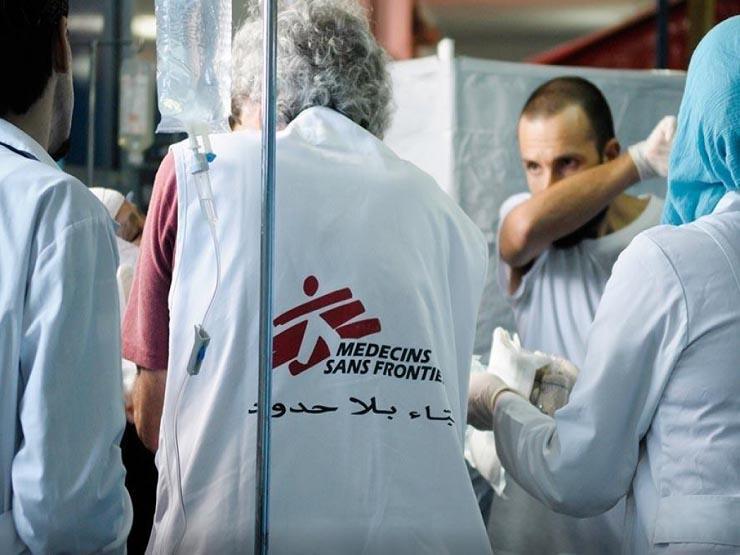
The world is now facing allegations of the worst global health crisis in the last hundred years, in what has become known as the new Corona virus pandemic. Medical organizations have become the last hope for humanity in confronting this lurking enemy. Among these organizations, “Doctors Without Borders” (abbreviated: MSF) is at the forefront, which is an international non-governmental humanitarian aid organization based in Geneva, Switzerland, providing high-quality medical care to countries affected by crises regardless of the race, religion, or political affiliation of the injured or sick. Every day, more than 27,000 MSF field staff around the world provide assistance to people affected by violence, neglect or crises, mainly due to armed conflict, epidemics, malnutrition, denial of health care or natural disasters.
Establishment and launch
In 1971, a group of doctors founded the organization with the goal of creating an independent institution focused on emergency medicine and speaking out about the causes of human suffering. The organization’s work is based on humanitarian principles of medical ethics and is committed to testifying and speaking out.
Administrative construction
The organization has offices in 19 countries that support projects in about 65 countries. The organization also includes five “relief operations management centers” that directly control field projects, and decide when, where, and what aid is needed and when to end its programs. The main roles of the other offices are recruiting volunteers, fundraising, supporting people at risk, as well as collecting donations from the private sector to maintain the organization’s financial independence.
A Pioneering History of the White Army
During 2008, the organization performed more than 8 million outpatient consultations and treated more than 312,000 patients in its inpatient departments. The organization’s teams cared for 230,000 patients infected with HIV/AIDS, and vaccinated 2.7 million people against measles or meningitis. The organization also conducted 100,000 births, including caesarean sections, 130,000 individual mental health consultations and 50,000 major surgeries, as well as treating 1.2 million people infected with malaria and 1.4 million children suffering from acute malnutrition.
The organization’s roles during the Corona pandemic
In light of the world’s preoccupation with the Corona pandemic, expectations from the organization were very high, given its charter, which considers the pandemic atmosphere a real test for it. Indeed, the organization chose to work in the hottest regions of the world in terms of events and danger. It warned from the first moments of the spread of the epidemic in Yemen and Iran. It also conducted extensive awareness campaigns in camps for asylum seekers in Greece, and in poor areas in France.
In Iran…Sinmar’s punishment
In Iran, which was the first region outside China where the epidemic spread significantly, the organization established an emergency center to treat those infected with the virus who have reached critical stages in the Isfahan province in the center of the country, with a capacity of fifty beds. But the Iranian authorities rejected the organization’s presence, and Iranian Assistant Minister of Health, Ali Reza Vahabzadeh, wrote in a tweet on Twitter: “While we thank Doctors Without Borders, after implementing the national mobilization plan to confront Corona and benefiting from the medical capabilities of the Iranian Armed Forces, we do not need to establish field hospitals by foreigners, and we reject the presence of this organization.” Experts attribute the reason for the Iranian decision to the fact that the organization had confirmed in a tweet on its account that “Iran is by far the most affected country in the region, and Isfahan is the second most affected area in the country,” which angered the Iranian political leadership, which was assuring the world at those moments that everything was under control.
Yemen.. war and the virus
On April 10, the organization warned of the spread of the virus in crowded places such as cities and camps for displaced people in Yemen, with the first case of infection with the virus recorded there, calling on the authorities in the country to urgently allow supplies and humanitarian workers to enter Yemen in order to facilitate the response to the disease. She added, “Yemen must import more personal protective equipment and tools that allow the necessary tests to be conducted, in order to provide the national health system and humanitarian organizations alike with the supplies they need.”
Europe’s refugees in the face of the virus
Also, the organization warned of the rapid spread of the “Corona” virus in the camps for asylum seekers on the Greek islands due to severe crowding there and the lack of hygiene conditions, and called on the Greek authorities to transfer the asylum seekers in the “Moria” camp on the island of “Medilli” to a safe place immediately, after a woman was diagnosed with Corona on that island. The statement explained that conditions in the camp were prepared for the spread of the virus. There are no conditions for hygiene and health services, and he added, “In some places in the camp there is one water tap for 1,300 people, and in some tents 10 people live together. Under these conditions, it is not possible to implement anti-Corona measures.”