
On the morning of July 17, 1947, Britain issued the Indian Independence Act, which ended the British occupation of it. Then, a month later, Britain issued the decision to partition the Indian subcontinent, and with it the Kashmir issue emerged as a complex between the newly formed states of India and Pakistan. The partition decision included that the Muslim-majority states would join Pakistan, and the Hindu-majority states would join India, provided that the accession of the states would be in accordance with the desire of the population, taking into account the geographical divisions in each emirate. The partition decision passed without significant difficulties in all states except for three states: Hyderabad, Junagadh, and Kashmir. In the Emirate of Junagadh, its Muslim ruler decided to join Pakistan despite the presence of a Hindu majority in the emirate, but in the face of opposition from the majority, Indian forces entered and held a referendum that ended with the emirate joining India. The same thing happened in the state of Hyderabad, where Indian forces intervened on September 13, 1948, making it submit to joining India. As for Kashmir, its situation was different from the previous two emirates. Its Hindu ruler, Hari Singh, decided to join India, ignoring the desire of the Muslim majority to join Pakistan and ignoring the previous British rules for partition. But his fear of the reaction of the Muslim street prompted him to present a treaty to the two countries to keep the situation as it was. Pakistan accepted the treaty, while India rejected it.
The first wars
Events developed rapidly after that. The first armed fighting broke out between Kashmiris and Indian forces in 1947, resulting in India occupying two-thirds of the state. Then the United Nations intervened in the conflict, and the Security Council issued a resolution on August 18, 1948 stipulating a ceasefire and holding a referendum to decide the fate of the region. The United Nations proposed that the parts that have a Muslim majority and share borders with Pakistan join Pakistani sovereignty, and that the other parts that have a Hindu majority and share borders with India join Indian sovereignty, but this decision remained a dead letter and did not find its way to implementation.
A second war
In 1965, tension returned between the two sides, and Pakistan tried to support the Kashmiri fighters, but events got out of control, and armed fighting took place between the Indian and Pakistani regular armies in September 1965 along the border between them, and no decisive victory was achieved for either of them, and international efforts ended with the conclusion of a ceasefire treaty between the two sides. The following year, the then Soviet Union tried to intervene in the ongoing conflict, and arranged a reconciliation conference held in January 1966 in Tashkent, but the conference ended in failure.
And a third one
The fighting between the two neighbors resumed at the beginning of the 1970s after Pakistan accused India of supporting East Pakistan (Bangladesh) in its secessionist attempt. A new war took place in 1971 in which the military balance tilted in favor of India and it was able to achieve military victories on the ground, which resulted in the secession of East Pakistan from Pakistan to form the Republic of Bangladesh.
Nuclear weapon
This round of wars changed Pakistani military strategic thinking, and plunged the two countries into a spiral of an arms race, the most important of which was the announcement of each of them possessing nuclear weapons. After this war, things seemed to be heading towards a solution through negotiations, which is what actually happened in 1972 when the Shimla Treaty was signed, which stipulated that the ceasefire line signed between the two sides on December 17, 1971 be considered an armistice line between the two countries. Under this agreement, India retained some of the Pakistani lands it controlled after the 1971 war, and Pakistan also retained the lands it controlled.
Kashmir uprising
Things continued to fluctuate between escalation and tension to calm until April 1987, when an armed uprising broke out in Kashmir after India “falsified” the 1987 elections. This uprising quickly turned to armed struggle. The year 1990 witnessed the beginning of the rebellion against Indian rule at the hands of young Kashmiri fighters who were motivated by the idea of achieving Kashmiri independence and supported militarily and politically by Pakistan. The militants carried out numerous qualitative operations against the Indian army, which responded by using excessive force against civilians every time. The two countries tried many times to reach an agreement to resolve the crisis between them, but each agreement carried factors that would explode it. Several agreements were announced between the two countries to settle all outstanding issues, including the Kashmir issue, but none of them had the opportunity to be implemented on the ground.
Kargil war
But what happened in July 1999 brought things back to square one, as Kashmiri militants were able to infiltrate the Indian part of Kashmir and occupy the Kargil peaks. India considered the incident a “stab in the back,” mobilized its forces in the region and was able to regain it. After that, the leaders of the two countries held a summit in the Indian city of Agra, but the summit failed due to the difference in the positions of the two countries regarding the settlement. The attack on the Indian Parliament on December 13, 2001 also contributed to the rise in tension between the two countries, and India escalated militarily and threatened a comprehensive confrontation with Pakistan under the pretext of eliminating “terrorist” bases in Pakistani Kashmir. Despite mutual visits between officials in the two countries, no solution was reached to the issue, which remained an obstacle to any peace negotiations between them, and statements were issued by the two countries confirming that “the Kashmir issue represents the core of the differences between them.”
Back to zero
The region flared up again when the far-right Indian government, early this year, abolished the “special status” law for the Kashmir region, in an effort to integrate its only Muslim-majority region with the rest of the country. For its part, Pakistan considered India’s cancellation of the constitutional autonomy status of the Indian state of Kashmir an “illegitimate” step, stressing that the region, over which Islamabad claims sovereignty, is internationally recognized as disputed territory.
The importance of Kashmir
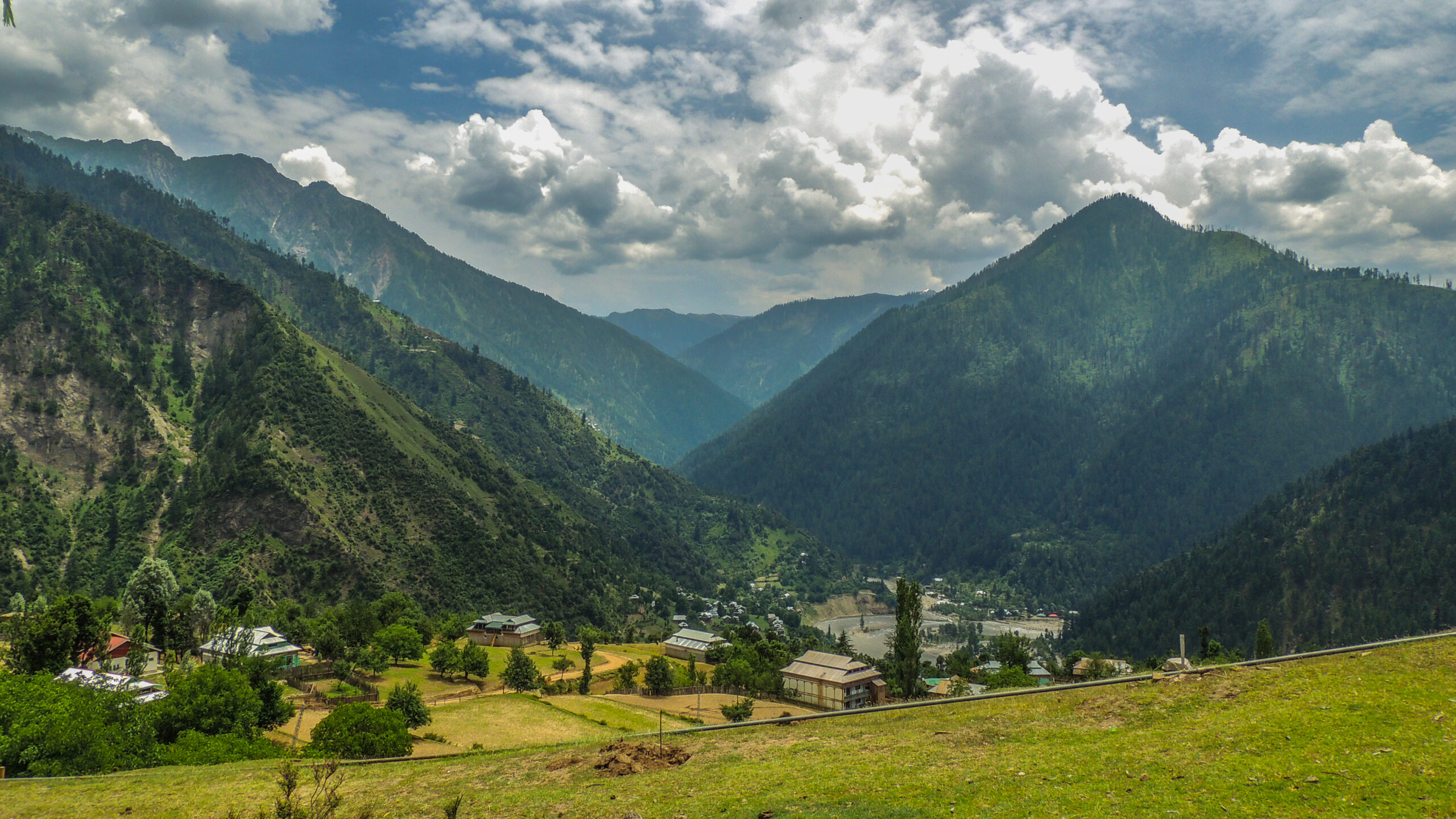
Kashmir represents a strategic importance for India, which has made it strongly attached to it, as it considers it a strategic security depth for it vis-à-vis China and Pakistan. It is viewed as a geographical extension and an important natural barrier to the Pakistani governance philosophy, which it considers to be based on religious foundations, which threatens the internal situation in India. India fears that if it allows Kashmir to become independent on religious or ethnic grounds, it will open a door that it cannot close for many Indian states. As for Pakistan, Kashmir is considered a vital region for its security, due to the presence of two main roads and a railway network in Sarhad and northeastern Punjab running alongside Kashmir. Three major agricultural rivers in Pakistan originate from Kashmiri lands, making India’s occupation of them a direct threat to Pakistani water security.