Mahmoud Mutawa – Lima:
“All human beings are born free and equal in dignity and rights.” Article 1 of the Universal Declaration of Human Rights.

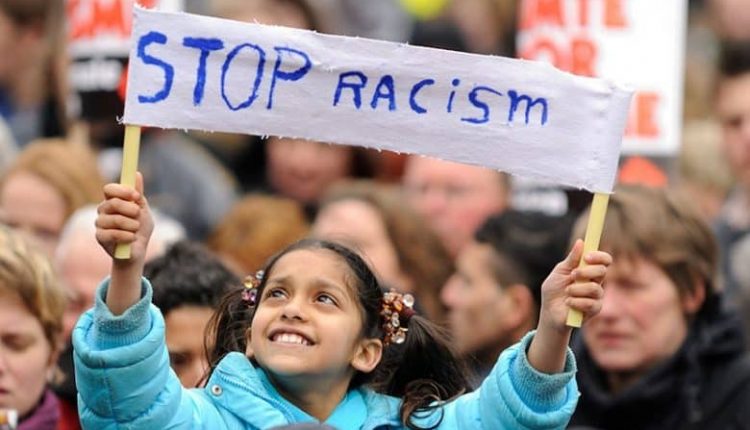
March 21, 1960, was not an ordinary day at all in South Africa. Police forces opened fire on more than 69 people who gathered in peaceful demonstrations in the city of Sharpeville in protest against the traffic laws imposed by the apartheid authorities in the country under the name “pass laws.” This incident was an episode in a long series of racism in South Africa against blacks, but this incident did not go unnoticed, as it was followed by a series of widespread protests that later led to the intervention of international organizations to impose calm in the country. In tribute to the victims of this memorable day, the United Nations General Assembly declared that day an international day to combat all forms of discrimination and racism in its declaration Resolution 2142 in 1966, and the General Assembly called on the international community to redouble its efforts to eliminate all forms of racial discrimination. Since then, apartheid has been abolished in South Africa, racist laws and practices have been abolished in many countries, and an international anti-racism framework has been built, guided by the International Convention on the Elimination of All Forms of Racial Discrimination.
Racists are rising…and the world is resisting
The victory of US President Donald Trump was a shock to advocates of freedom, as the right-wing president openly declared his hostility towards non-Americans and even towards Americans of color of Asian, African and Latin origins who were immigrants in his country and targeting them, especially those of Latin and African origins. In recognition of this, the United Nations chose the slogan for Racial Discrimination Day this year: (Recognition, Justice and Development for People of African Descent), with the aim of advancing social justice and inclusion policies, eliminating racism and intolerance, promoting tolerance and human rights, and providing assistance in forming prosperous civil societies, in accordance with the sustainable development goals adopted by the United Nations. The International Decade for People of African Descent, proclaimed by UN General Assembly resolution and observed from 2015 to 2024, provides a solid framework for effective measures to address these issues in the spirit of recognition, justice and development.
Shocking numbers
United Nations reports indicate that there are approximately 200 million people who define themselves as “of African descent,” and there are millions more who live in various parts of the world outside the African continent. In many cases, the situation of people of African descent remains widely unknown, and they often suffer from discrimination when resorting to justice, and are exposed to alarmingly high rates of violence at the hands of the police, in addition to racial profiling. Moreover, their degree of political participation is often low, whether in voting or holding political office, and they suffer from multiple, overlapping or increasingly serious forms of discrimination based on other relevant grounds, such as age, sex, language, religion, political or other opinion, social origin, property, disability, birth or other status. The Durban Declaration and Program of Action recognized that people of African descent were victims of slavery, the slave trade and colonialism and continue to suffer from their consequences. The Durban Process contributed to the definition their cause and helped make important progress in promoting and protecting their rights thanks to concrete actions taken by states, the United Nations, other international and regional bodies and civil society.
Wide spread
Today there are more than 150 million people of African descent in Latin America and the Caribbean, about 30% of the population, yet in most parts of the region people of African descent are invisible in the halls of power (economic, academic, professional or political), or at the local or national level. As for the United States of America, a report by the United Nations Working Group of Experts on People of African Descent, issued in August 2019, indicated that politicians from the United States used language that reinforced the negative image of people of African descent, pointing to the legacy of racial stereotypes and negative descriptions of people of African descent, which were made to justify the enslavement of Africans and the continued harm of people of African descent and the violation of their human rights. USA Today reported in June 2019 that more white supremacist propaganda appeared on American college campuses during that academic year, marking a three-year rise in the amount of racist material. In the spring semester alone, a hate monitoring group recorded 161 cases of extremist propaganda on 122 campuses in 33 states and the District of Columbia. According to a report published in the Huffington Post in April 2019, FBI Director Christopher Wray testified before Congress in which he said, “White supremacy poses a persistent and widespread threat to American security.” He also told Congress that most of the arrests related to domestic terrorism since last October are linked to the violence of white supremacists. The 2019 UN Special Rapporteur on contemporary forms of racism, ethnic discrimination, xenophobia and related intolerance stated that people of African descent in the United States continue to face murder and brutalization at alarming rates by law enforcement and vigilantes, who are rarely held accountable. CNN reported that in March 2019, a horrific incident of police violence occurred along with racial discrimination, as six police officers killed Willie McCoy (a 20-year-old rapper), firing about 25 bullets into his ear, neck, chest, arms, shoulders, hands, and back. McCoy’s sister, Simone Richard, said, “The police executed her brother and did not give him a chance to raise his hands.” The network reported on December 17, 2019, that Mississippi Attorney General Doug Evans had excluded many jurors of African descent from trials since he took office in 1992. Jurors of African descent were 4.4 times more likely to be excluded compared to their white counterparts.
Ongoing crisis
Discrimination in employment continues to create inequalities in economic prosperity, especially for people of African descent. Over the past 40 years, workers of African descent have faced an unemployment rate nearly twice the rate of their white counterparts. Where is this happening? The Los Angeles Times reported in July 2019, citing Federal Reserve figures, that racial disparities in wealth had worsened, with the typical wealth of a white family being 10 times that of an African American family. According to the report, which was published by USA Today in November 2019, in the Milwaukee-Waukesha-West Allis area in Wisconsin, the unemployment rate among African Americans reaches 13.9%, compared to only 3.9% for whites. The average income of families of African descent represents only 43.8% of the income of white families. Only 27.8% of heads of families of African descent own their homes, which is less than half the home ownership rate among heads of white families, which is 68.2%. According to a report published by the American Progress Center in August 2019, people of color are still exposed to common discrimination in the housing market, as it stated that 17% of Native Americans, 25% of Asian Americans, 31% of Latinos, and 45% of African Americans face discrimination when seeking to rent or buy housing. In contrast, only 5% of white Americans are exposed to discrimination in the housing market.
Long history of racism
For centuries, structural racism in the American housing system has contributed to the creation of stark and persistent disparities in wealth and financial prosperity, particularly between African American families and white American families. These disparities have become so entrenched that if current trends continue, it may take more than 200 years for the average family of African descent to amass the same amount of wealth as its white counterpart. As for non-white children, they suffer serious discrimination in education, as CNN reported, in a report in February 2019, that white-majority school districts in the United States receive $23 billion more annually than school districts that educate a non-white majority of children. White school districts also accept only about 1,500 students, while non-white school districts accept more than 10,000 students, which is equivalent to six times more. Is this due to the large number of white people?
A glimmer of hope
The International Decade for People of African Descent (2015 – 2024) represents a promising historical period during which the United Nations, Member States, civil society and all other relevant actors will join forces with people of African descent and take effective measures to implement the program of activities in the spirit of recognition, justice and development. It also represents an important and timely initiative and a unique opportunity for people of African descent to emphasize the important contribution that people of African descent make to our societies, and to propose concrete measures to promote their full inclusion and combat racism, racial discrimination, xenophobia and related intolerance.