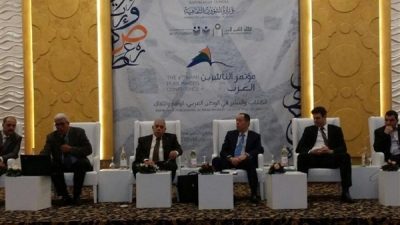
The ancient scientific school “Ikdi – Tiznit” will hold the conference “Islamic Sciences in the Contemporary Context: Conditions of Keeping Up and Prospects for Development”, on Sunday, July 14, 2019, at the headquarters of the Muhammadiyah Association of Scholars in Morocco. According to the statement of the introductory conference, “It draws the attention of those working with issues of contemporary Islamic thought to the rise of many voices calling for the necessity of reform and renewal, but sometimes those keen on this renewal may come to the point of demanding the abolition of the original.” He adds: “In contrast, other fundamentalist voices are active calling for the preservation of all understandings resulting from the interaction of reason, text, and reality at different stages of the nation’s history, without taking into account the various contextual particularities, so the concern for protection, clinging to the original, and jealousy of it turns into rejection of everything new.” The symposium seeks to reduce the gap between these two options. By calling for the renewal of Sharia sciences and making them up to date to the extent that preserves the constant originality; At the same time, it responds to contemporary givens; By developing it in teaching, writing, theory and analysis.
Conference problems
By reviewing the research of its participants, the conference attempts to answer the following questions: To what extent can Islamic sciences in the current era answer the questions that trouble the Muslim mind? What are the manifestations of the validity of Islamic law for every time and place in the theoretical aspect of this law, which is Islamic sciences? The conference also reviews how Islamic sciences can engage in the raging intellectual conflict over values, and what is their arsenal in this conflict? How can Islamic sciences of a theoretical philosophical nature: “Theology, Principles, and Objectives” be invested in the war focused on values? The conference examines the position of the humanities in our current era, in terms of the scale of competence and concreteness in the contemporary Islamic epistemological study. What are the necessary sciences for understanding reality as they are the guaranteeing condition for achieving the Manat and the integrity of the revelation? It also attempts to answer the question: How can the study of Islamic sciences restore their vitality and spirit that will enable them to carry out their civilizational role? How can educational curricula (content and methods) contribute to forming a critical mind and building intellectual immunity among students and learners?
Conference topics:
The conference will focus on four themes, which will be reviewed by researchers who will present a summary of their research papers, as follows:
The first axis: The dialectics of text and reality in Islamic sciences: reality and its effects on the interpretation and interpretation of the text. Constant and variable in the interpretation of texts. Towards linking the science of jurisprudence to issues of reality. The impact of reality in renewing legal concepts. Ijtihad and renewal: the specificity of the divine text and the requirements of the changing reality.
The second axis: Humanities and their role in developing Islamic sciences. Sociology and its role in the jurisprudence of manat and revelation. Field research methodology and its impact on diagnosing reality. Psychology and its role in creating and studying catastrophes. Linguistics and its role in deconstructing contemporary discourse. Philosophy and its role in the contemporary debate about values.
The third axisTeaching curricula are an introduction to reform and development of science. Rooting for innovation in teaching curricula among Islamic scholars. The reality of legal education in light of the needs of reality (diagnosis and analysis) Modern pedagogies and their role in developing the jurisprudential lesson (suggesting a concept) Modern pedagogies and their role in developing the fundamentalist lesson (suggesting a concept)
Fourth axis: Methodological investigation and value-based extensions of Islamic sciences. Fundamentalist thought and how to benefit from it in forming a critical mind. Ways to invest the verbal method in discourse and argumentation methods. Critical functions in hadith science and their impact on intellectual debates. The moral lesson in Islamic sciences: a topic and an example.
Conference objectives
The conference aims to identify innovative experiences in Islamic sciences, diagnose the nature of the relationship between Islamic sciences and the changing reality, and highlight the shortcomings of knowledge inflation and the weak level of methodological function. It also aims to measure the extent of methodological deficiency in linking Islamic sciences to issues of reality, while clarifying the need for Islamic sciences to be renewed in writing and teaching, and calling for innovation in the paths of reception, developing performance curricula, forming the critical mind and attaining intellectual faculties.